The Lake District

girl on lake at duskView of rolling hills in Lake Districtfeet in tent with view of lakeView of lakeJosh's spotScenic cottages in Lake DistricthighstJoshalderGirl climbing up hill in lake districtDaisyThe High StreetTaking a Break

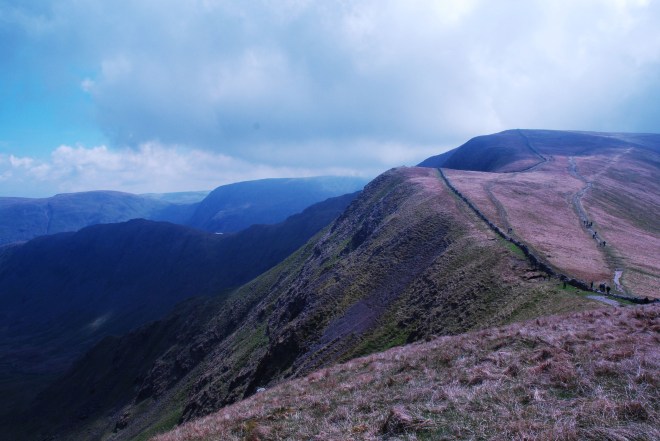
The beauty of the Lake District lies in the contrasts of its landscape. Wild, unruly weather, imposing mountains, and sheer cliff drops frame small, cobblestone-paved farming villages and pastoral hills sprinkled white with sheep and daisies. It’s no surprise that this landscape was a favourite with the romantic poets, who could revel in their closeness to nature on bracing winter walks on snow-tipped mountains, while no doubt later enjoying a comforting cup of Lady Grey by the cottage fire. Or, in Coleridge’s case, enjoying some comforting opium pills.

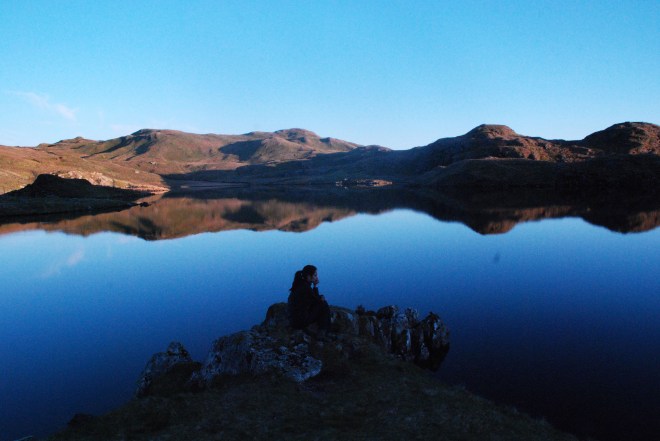
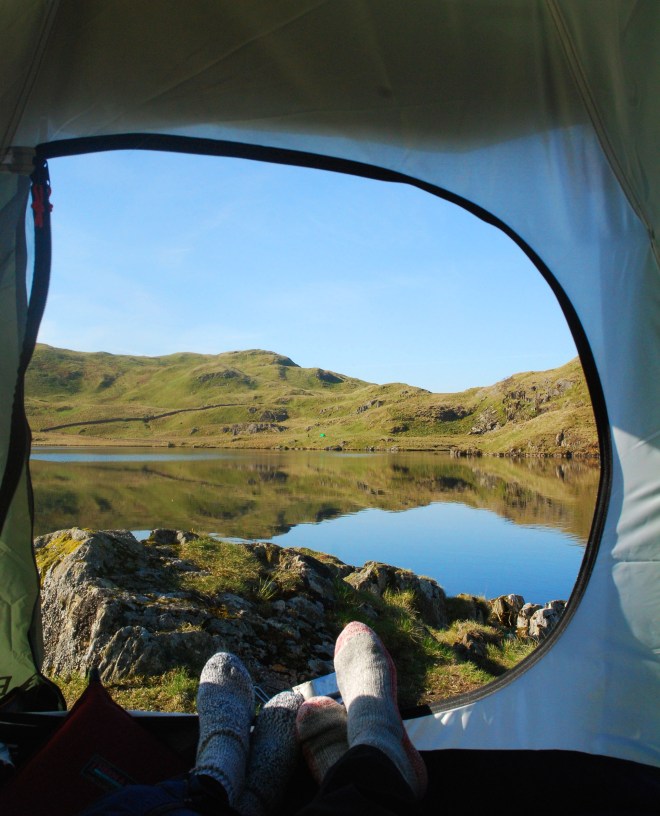
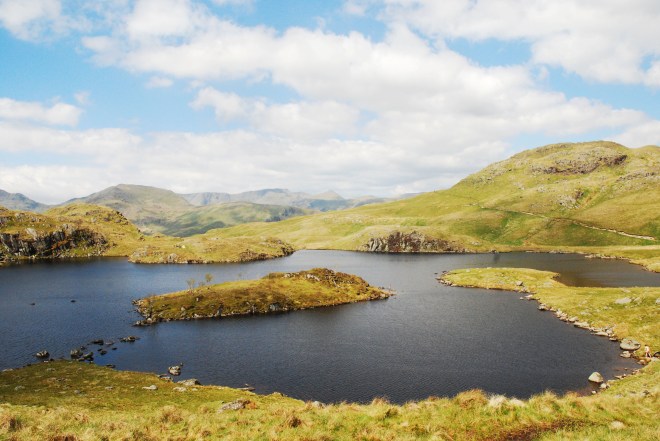
We started our hiking trip in the quaint village of Patterdale. We arrived quite late from London and since I had never been camping before, Josh suggested we spend the night at a nearby hostel. I was excited to set off however so, perhaps rather stupidly, we set off towards Angle-tarn Pikes as the sun was low in the sky.  It was an inauspicious start for my overly-excited self – we’d set off not half an hour earlier and I started to get vertigo on the very first leg off the walk; the path wasn’t even particularly steep, but it was quite narrow, and I kept having visions of slipping on the gravel or being stuck on the trail in the dark and out in the open. But I stuck close to the ground (Josh walked as if he was having a stroll in the park) and we got to the top of the hill to a stunning view of Angle Tarn as the sun was setting on the neon-blue water. We admired the scenery and looked for a dry spot to set up our tent. I was peeved that somebody had already nabbed the most picturesque spot to pitch theirs up- a little grassy peninsula that juts out into the tarn so that it looks like you’re on your very own little floating island! Next time, next time..

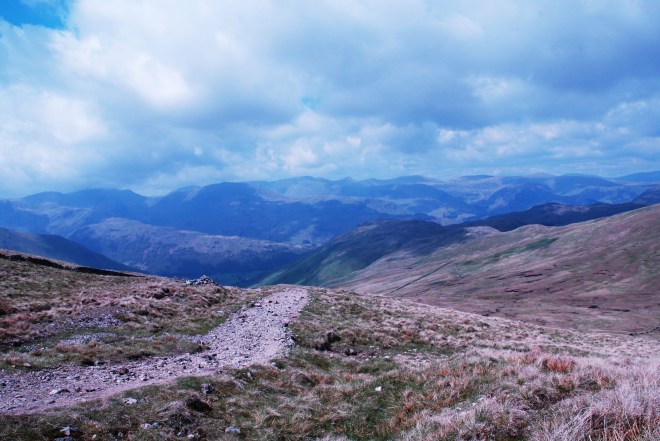
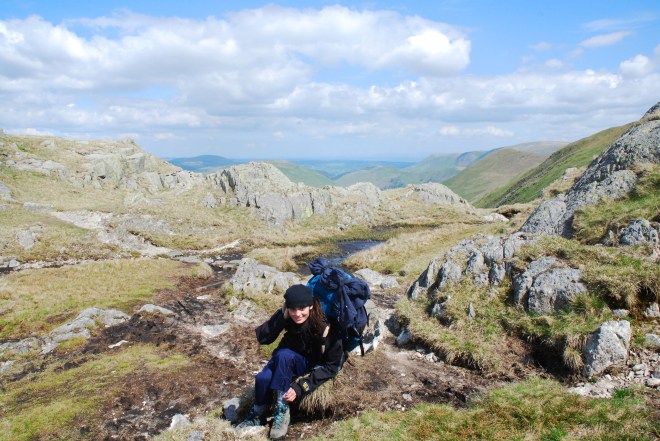
We woke up the next morning to a brisk and beautifully sunny morning. We made some much-needed hot coffee and bacon on our tiny gas stove and admired the tarn that was so clear and still it looked like a giant’s pretty mirror. We packed up and made our way around the tarn and towards Helvellyn, the Lake District’s highest peak. This part of our hike was the longest, most up-hill and most difficult of the whole trip. The best thing about the intense exercise of hiking up-hill while you’re carrying the combined weight of your tent, sleeping bag, clothes, cooking equipment, food etc etc is how it makes you really appreciate the small things you take for granted in daily life. Sitting down to rest on a jaggedy rock feels like being enveloped by a cloud while being fanned by cherubs, and eating chewy, overcooked pasta with Dolmio sauce from a sachet tastes like a three-course meal at a Michelin-star restaurant. As much as I love all types of travel, including leisurely city-breaks, this really was an amazing feeling.

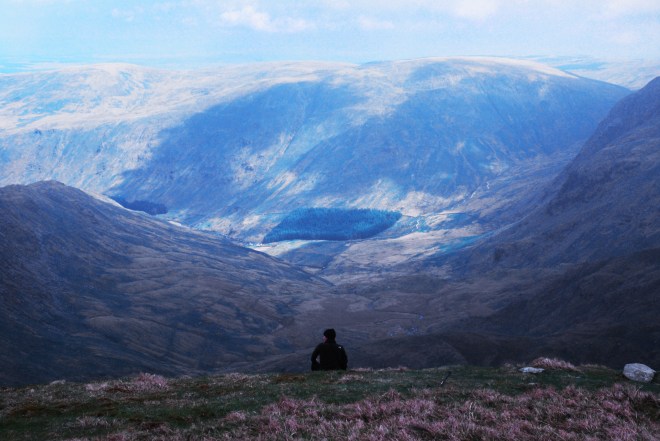
The summit of our trail was the hole-in-the-wall look-out across Helvellyn and Red Tarn. From this point a lot of hikers continue their walk to Helvellyn along the famous Striding Edge trail – a very narrow, very rocky trail with steep drops on either side. Needless to say, just looking at it made me feel physically ill, so we took the long way around. We continued up to the High Street to find Josh’s ‘favourite spot’ from when he used to go to the Lake District as a kid. The spot looks out onto Haweswater lake and the rolling peaks and troughs of the hills that surround it. The area is so high-up and so vast that you can watch the shadows of the clouds as they dance across the hills. We sat here for a long time just admiring the view.

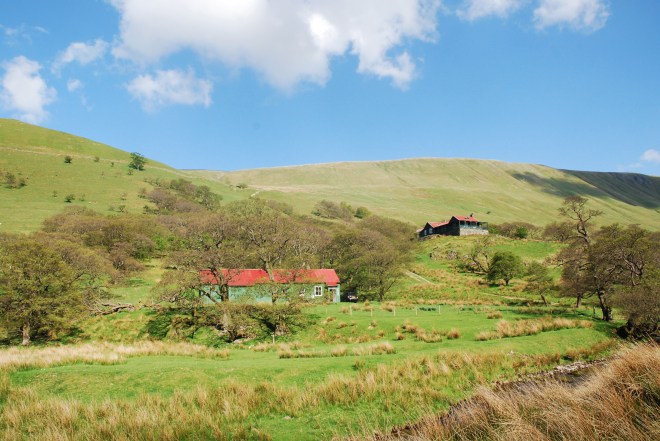
Our detour meant that we had to go off-piste and cut down to the Ullswater river valley below in order to make it back down by evening. Essentially this meant jumping a fence and sliding down a steep hill on my bum in front of a herd of bemused sheep. At the bottom we found probably the most picturesque scenery of the trip. The path northwards through Martindale and towards Sandwick took us past gnarled, beautiful Alder trees, bubbling brooks with natural stepping stones and every type of wildflower imaginable. Old stone cottages and hamlets reached by tiny bridges dotted the bucolic countryside. We found a deserted, forested spot by the river and pitched up our tent for the night.

The next morning we were invited to experience the other face of the Lake District. Grey skies and a light, intermittent drizzle while we fuelled up with coffee by the riverside turned into steady, torrential rain that despite waterproof gear, still had us soaked within no time. But we walked fast, and with the heat of the exercise and drama of the rain the walk ended up being really fun. The heavy rain, lush vegetation and waterfalls along the river made the atmosphere feel almost tropical. Running and laughing by the end, we eventually reached Patterdale. Drenched to the bone, we holed up by the the fireside at the White Lion Inn and had shepherds pie and chips.

Tips for hiking the Lake District:

    • We went in June, and although it was relatively warm in the day, it was freezing in the tent at night. I don’t think I slept for a minute the first night up on the hill. Never underestimate how cool it gets at night when on hills and bring plenty of warm gear/good sleeping bag. If you’re going as a couple I’d recommend getting a double sleeping bag so you can share body heat. I wish I’d known these existed at the time!
    • Not to freak anyone out, but if you do decide to hike Striding Edge then do it when the weather is good i.e. good visibility/not too windy. There are casualties every year, mostly due to bad weather.
    • Lots of water. We bought water purification tablets so we could fill up our water in springs but it tasted funny and never felt entirely full proof. Water filters are a better option. Failing that, you can always boil it if you’re bringing a portable stove.
    • And then the obvious stuff; good hiking boots/really thick socks!(seriously you’ll be in pain otherwise)/waterproof gear (including a waterproof case for your clothes in your rucksack- seems like overkill but trust me!) /good hiking map/first aid kit especially plasters and disinfectant for blisters/gas canisters for stove/energy-rich food and snacks.
Yucatan Diary

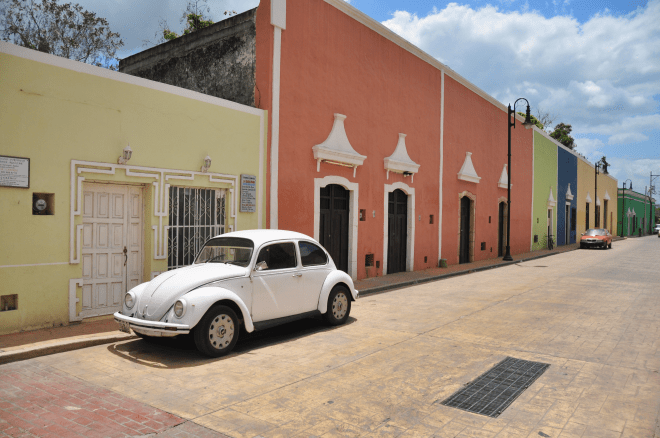
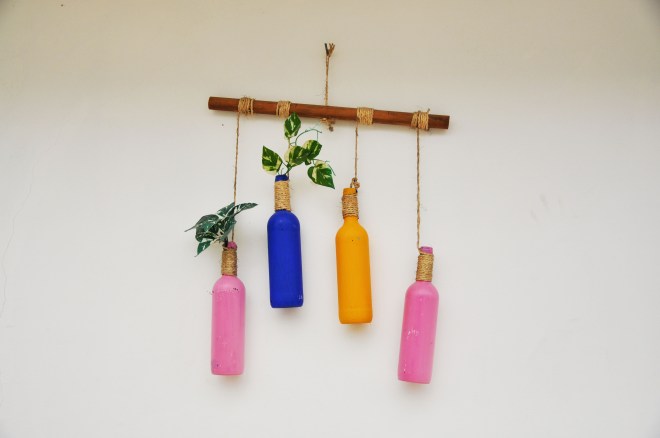
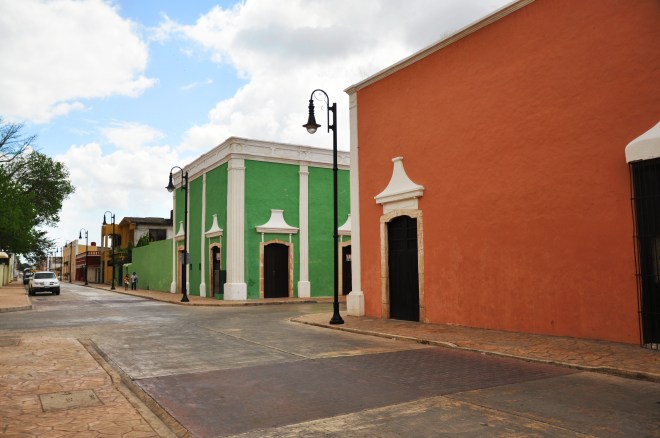
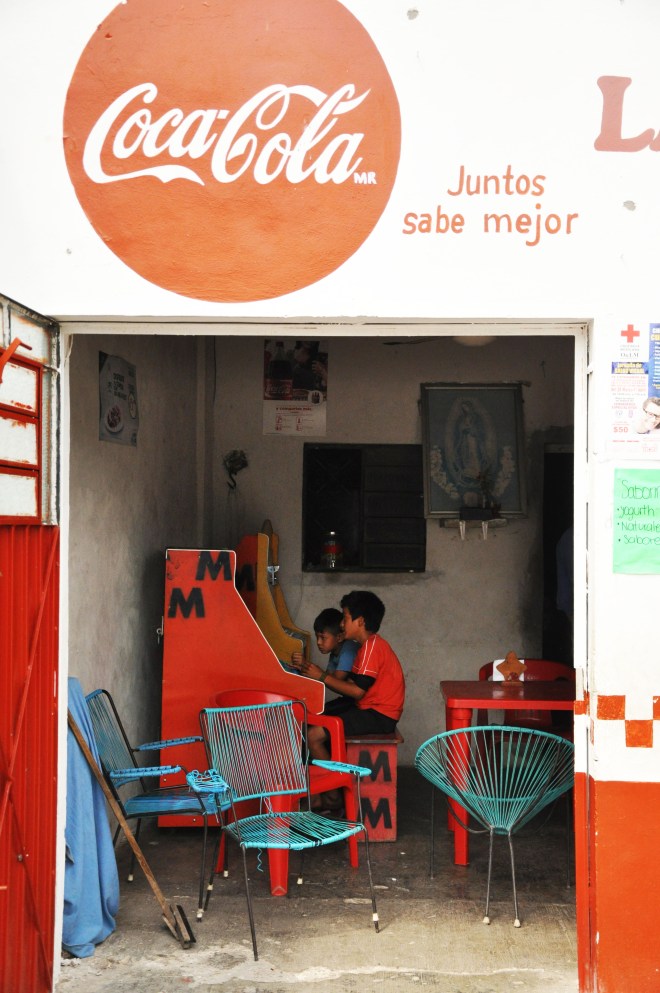
Girl in street in ValladolidColourful houses in valladolidcolourful bottles with plants in mexicogreenokids playing in coca cola shop in mexicocart

Valladolid – 

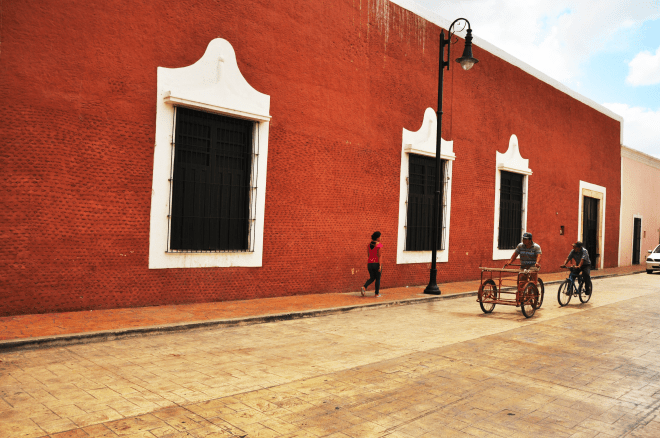
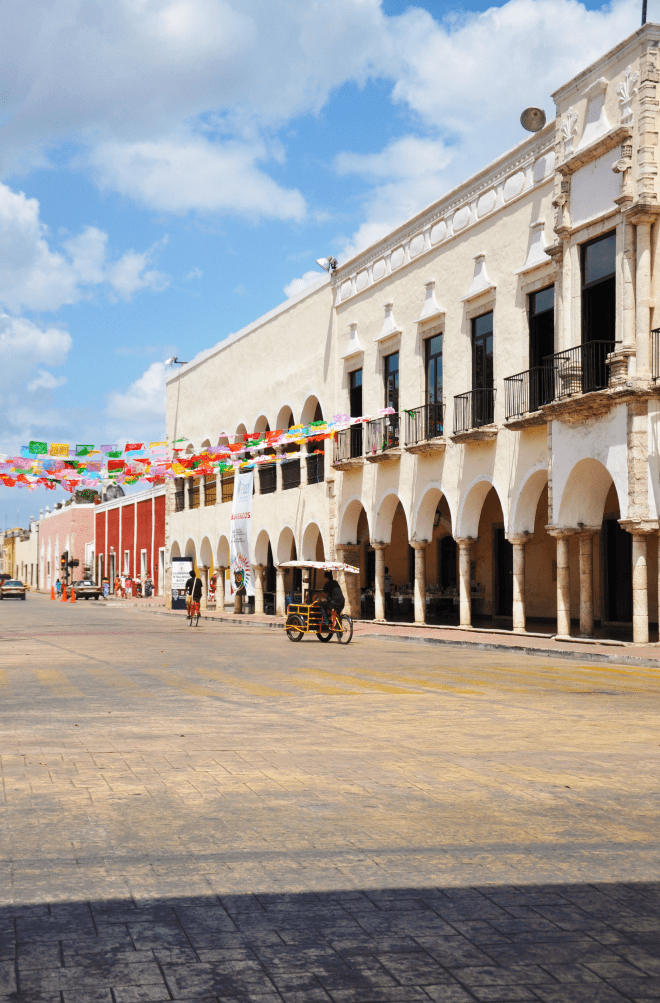
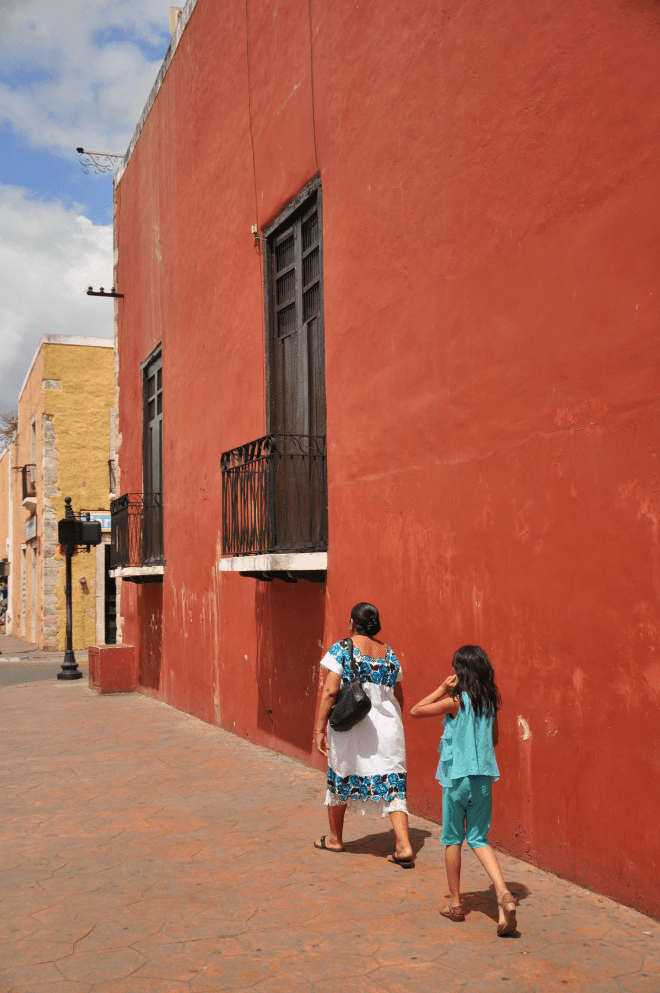
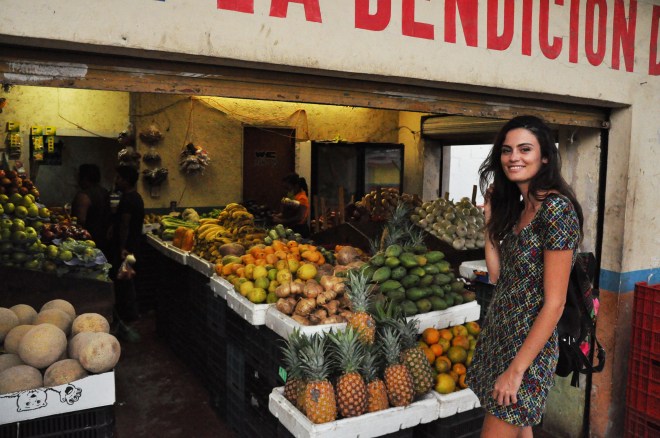
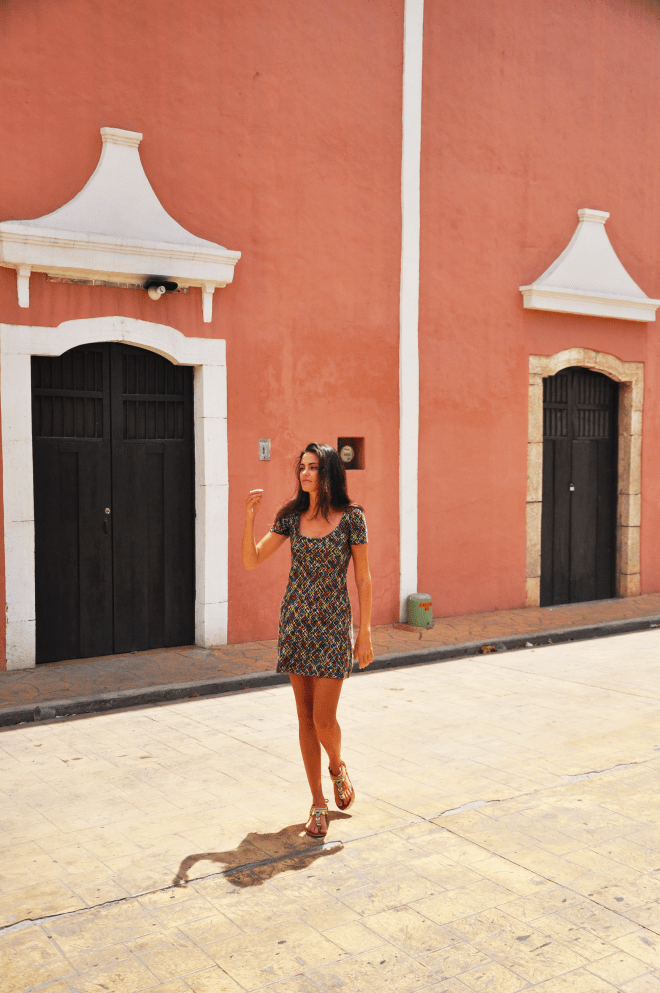
As much as we enjoyed pretty Tulum, we couldn’t wait to hit the road to inland Yucatan and see a more genuine, less tourist-oriented Mexico. Our first stop was Valladolid – a charming, unpretentious and serene little colonial town. While it isn’t exactly a tourist-free backwater, the city feels lived-in – its raison d’etre not being simply to cater to foreigners. Valladolid looks exactly how you would imagine a typical Mexican town to look – stucco, sherbet-colour colonial houses line wide and dusty cobbled streets that feature the occasional and elaborately painted horse-drawn carriage. Though the architecture is Spanish, a large part of the population is actually made up of Mayans, and a lot of them still speak the strange and beautiful ancient language and wear the traditional embroidered clothes.

What struck us most about this area of Mexico was how unconsciously ‘trendy’ it is; as we strolled under sun-bleached arcades we came across artisanal stores and trendy niche boutiques selling what at home would be sold as over-priced, pink crepe-paper-wrapped cult objects. Tiny artisanal shops sell Mayan chocolate made using ancient recipes, while others provide tastings of their home-made, organic Tequila and Mezcal. Coqui Coqui, a Yucatan perfumery decorated with elaborate coloured tiles and minimalistic black laquer display cabinets, uses recipes inspired by Franciscan monks who worked closely with Mayan alchemists to produce their floral-scented potions.

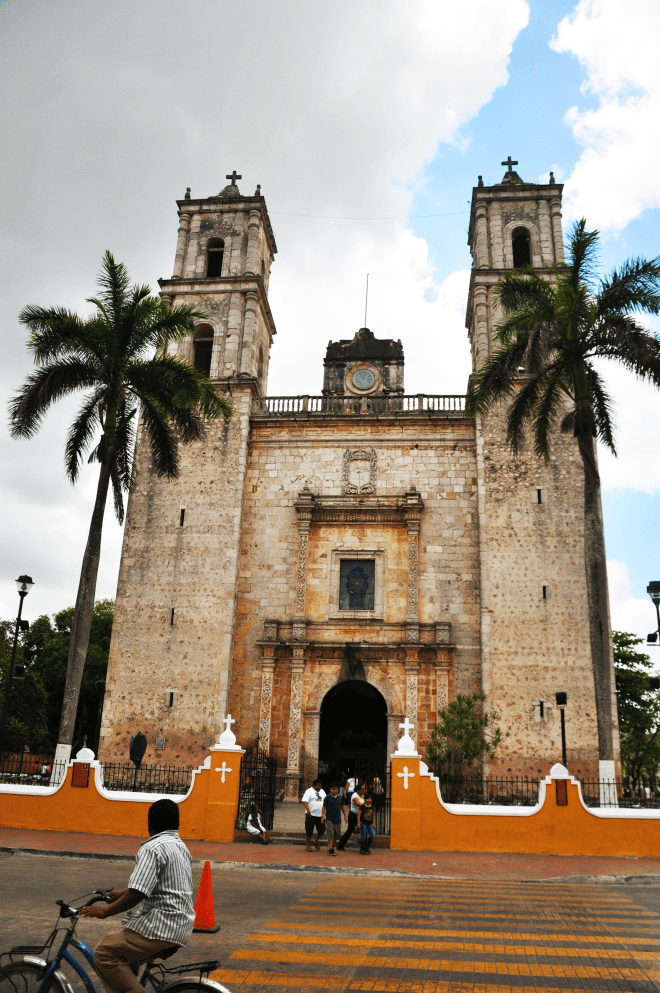
Then of course there’s the traditional Mexican food – inevitably trendy after having undergone a seemingly international, instagram-fuelled revival. Predominantly vegatarian restaurant Yerabuena del Sisal serves up chia lemonade and whole-wheat Tortugas with fresh avocado. After our inevitable over-consumption of every possible variety of  taco and avocado in Tulum we were happy to try something simple. Wandering around Avenida de los Frailes we noticed a long line of locals heading out of an inauspicious-looking backyard patio that was cooking up whole fresh fish from the market in nothing but olive oil and salt. We chose a big red fish that was cooked right in front of us, grabbed a double-sized Pacifico beer and ate in the Parque Francisco Canton in front of the imposing San Gervasio Cathedral.

Girl in front of pyramid in chichen itzaMan selling colourful hand-made rugs mexicocolourful skulls in mexicoIk Kil cenoteGirl in Yokdzonot cenoteGirl floating in cenote

Chichen Itza

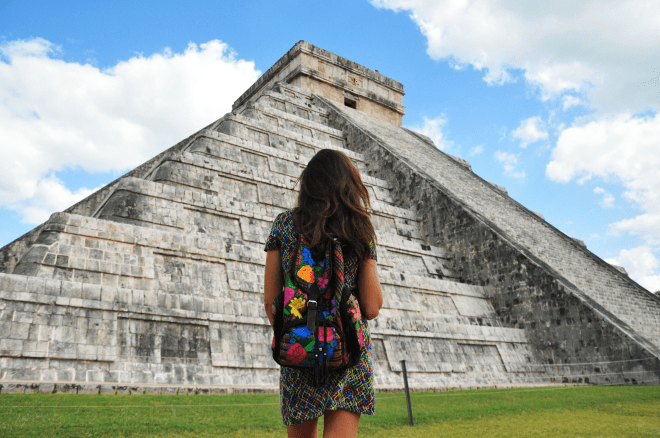
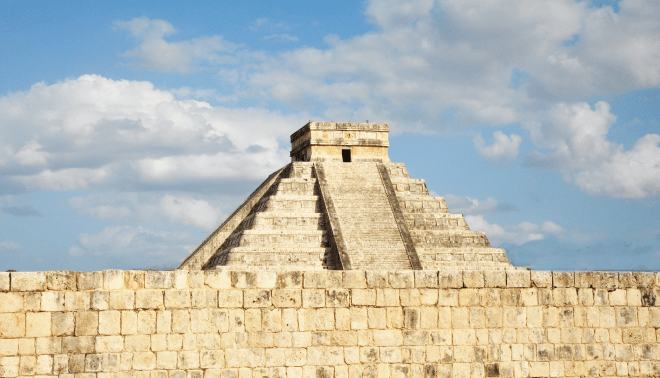
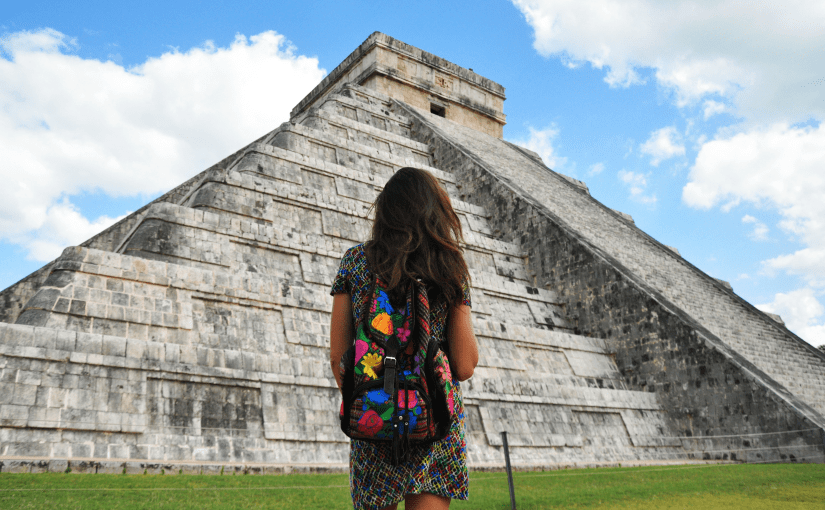
The cultural highlight of the Yucatan is without a doubt the Mayan ruins of Chichen Itza, though it seems almost inappropriate to call them ruins when they are so amazingly well-preserved for 1400 year-old structures. The most well-preserved and spectacular is El Castillo, temple of Kukulcan God of the wind (and Josh’s new nickname). It’s sometimes difficult when travelling, at least it is for me, to fully realise the significance of certain cultural landmarks, and get that immediate sense of wonder that you want and expect. I especially find this with certain religious icons and especially ruins. As spectacular as El Castillo is, I was disappointed to find that this anticlimax is exactly what I felt when I first walked into the Mayan site. I can only put this down to the heat, the ridiculous number of people and the jaguar whistle-wielding peddlers (they make a loud jaguar roaring noise, kind of cool at first, really annoying thirty seconds later).

I soon realised however that while the atmosphere may not have been the same as the Tulum ruins (that boasted stunning sea views and were virtually empty thanks to good timing), the temples themselves were far more beautiful and dramatic at Chichen Itza. Rather than stroll lazily through the site, it made me think about the beauty and significance of the buildings themselves. Each individual structure was testament to the amazing ingenuity and artistry of the Mayans. During the spring and autumn equinoxes, the late-afternoon sunlight hits El Castillo’s principal facade to create the illusion of snake slithering down the steps. El Caracol, dubbed ‘the observatory,’ seems carefully aligned with the movements of Venus – which was of tremendous spiritual significance to the Mayans. One of the observation points on El Caracol marks an appearance of Venus at a particular point on the horizon that takes place exactly once every eight years.

Of course you don’t have to visit Mayan or Aztec sites to experience Mexican culture. One of the things I loved about the Yucatan was how art seemingly permeated every aspect of life – whether this be the unrelenting aesthetic conciousness of Tulum or a beautifully embroidered and kaleidoscopically coloured hammock swinging from the ceiling in a bare and otherwise furniture-less thatched hut in the most remote of towns.

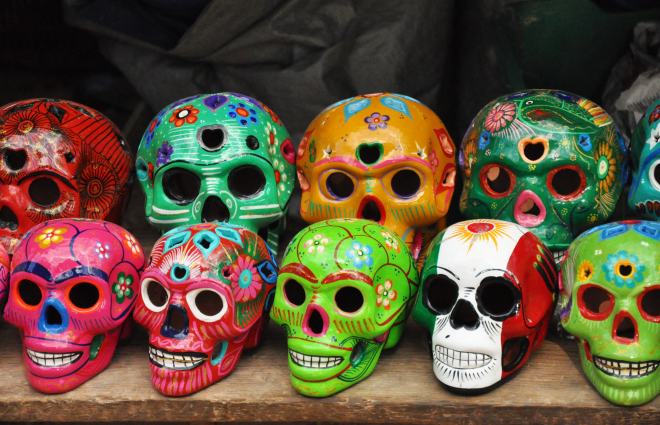
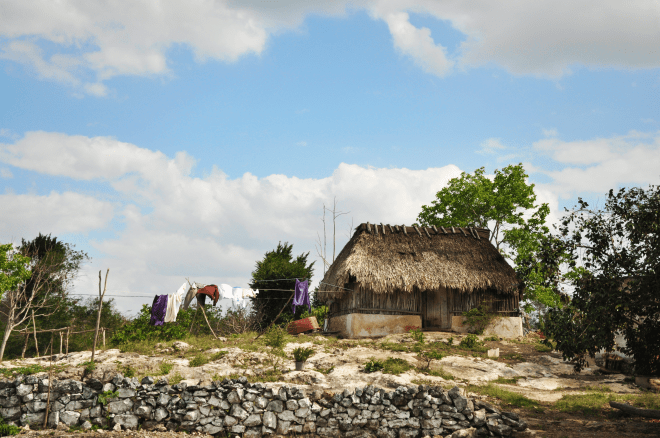
A lot of Mexican art seems laced with subtle irony. From the oxymoronic, cheerfully coloured skulls which reflect what Octavio La Paz would surely describe as a Catholic nation’s baroque fascination with the macabre, to a tiny bamboo hair salon we came across in a remote rural town that was painted red, white and blue in the traditional barber shop colours – a symbol not only associated with the service of bloodletting (originally the image denoted bloody bandages around a pole) but also reminiscent of the patriotic colours of the US flag and fifties consumer culture when this style of barber-shop predominated.

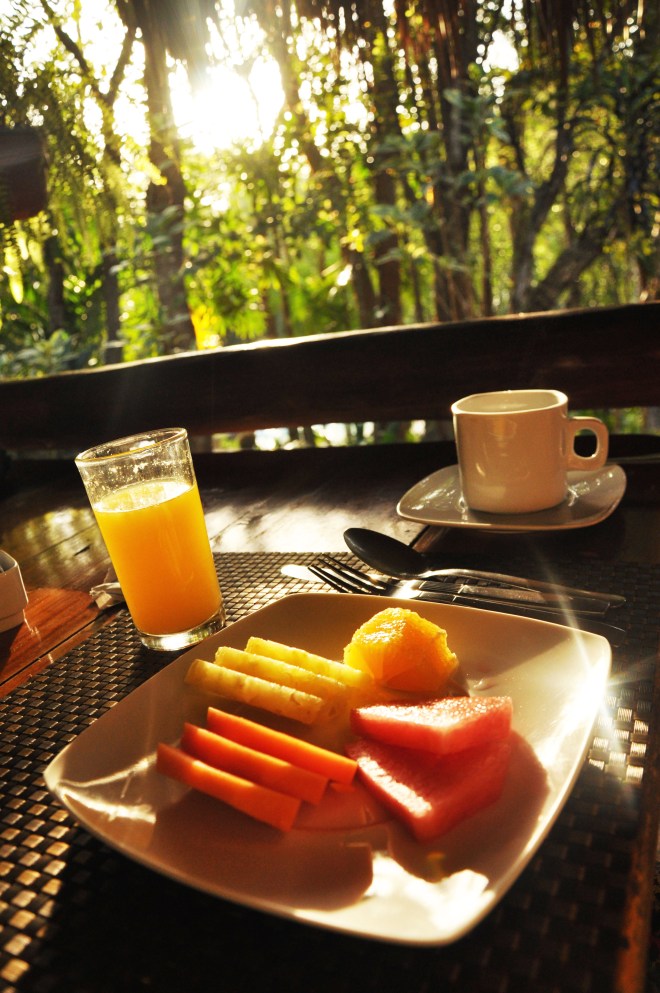
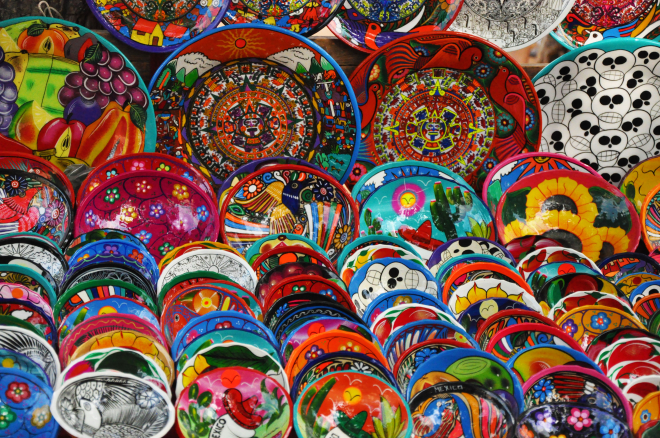
Breakfast in the jungle with sunriseColourful plates in MexicoValladolid street with flagswomchSan Servasio cathedralThatched houses in mexicoGirl in mexican fruiteryBamboo barber shop in mexico

IK-kil and Yokdzonot Cenotes

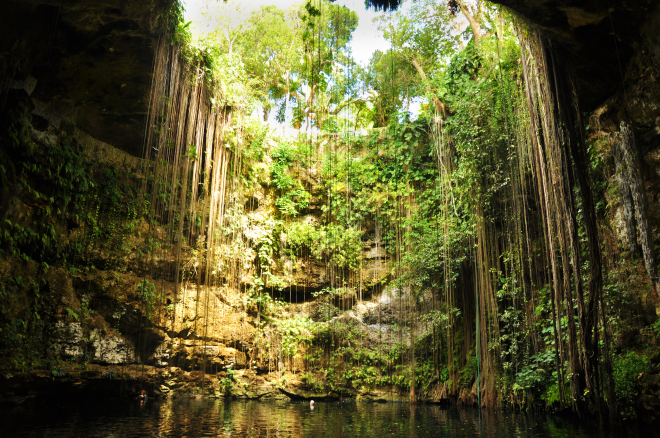
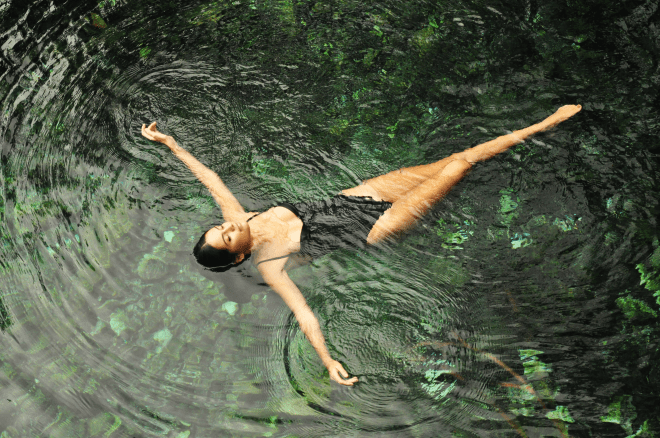
IK Kil cenote, a limestone sinkhole not far from Chichen Itza, is one of those surreally magical places that will demand a permanent and happy place in your memory. Lush, tropical vegetation suddenly gives way to a Lewis Carollesque hole of climbing ivy and seemingly endless vines that caress the clear blue water 90 feet below. Eager to swim with the hundreds of cute, mini catfish that inhabit the cenote, me and Josh climbed down and dove from the highest platform into the cool water below. Lying on my back and staring at the blue sky while ivy leaves fluttered down and dappled sunlight streamed through the vines forming tiny rainbows is an experience that I will remember forever. I felt like Alice in her dream.

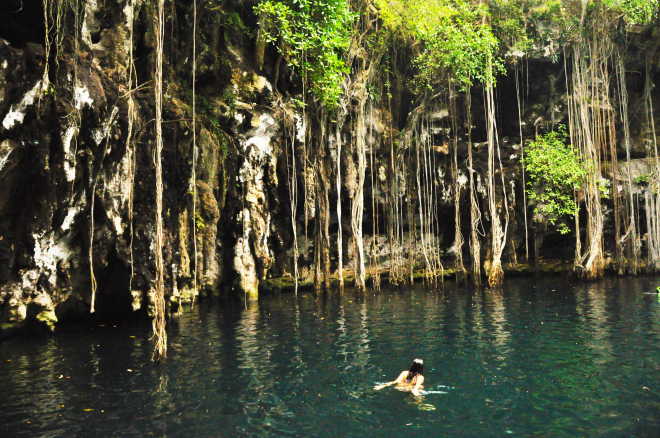
I was so eager to get to IK-Kil early that we actually had to return to the hotel as the ticket office hadn’t even opened, but even when it did we had the cenote to ourselves for at least half an hour. It did busy up later though so if you want to have a more tranquil cenote experience, nearby Yokdzonot is beautiful. Though not as precipitous and immediately striking, it gets more sunlight, which makes the water warmer as well as a beautiful turquoise colour. Yokdzonot is more frequented by locals, and is actually owned by the community as part of a cooperative. We had lunch at the restaurant above the cenote where local women cook traditional Yucatan dishes like lime soup and flaky cochinita Pibil, washed down with with a local berry drink that I haven’t been able to find since. It was our last and without doubt best meal of the entire trip.

Tulum

girl on swing in tulum beachTulum beachchicken tacos and guacamole in TulumGirl in front of tulum mayan ruinsView of tulum mayan ruinsgirl in swimsuit in cenoteGirl floating in cenote with lily padsThatched hut tulumcenlogirl sitting over cenote at sunsetGirl swimming in dappled cenoteGirl coming out of cenote in swimsuit

If fashion blogs and instagram hadn’t entirely convinced me that I needed to drop everything and immediately go to Tulum, a new low-budget airline that has just started a direct Puerto Rico to Cancun route did. Given that where I live inter-island travel is notoriously painful, it seemed like the perfect opportunity to finally visit Mexico. We arrived quite late and so spent the first night in what is one of the few boutique hotels in Cancun. From the taxi there we saw some high-rise hotels and enormous multi-tiered clubs that looked like awesome fun if you were an excited 15-year old on Spring break. In our case we looked in vain the next morning for a Mexican-style breakfast in a deserted mall (we ended up in Mcdonalds (but at least they had a salsa/guac bar!)) and then high-tailed it out of there.

I’d heard that a lot of people biked around Tulum so we didn’t bother with a car rental and got the bus. I’m so glad we did – at Playa del Carmen we picked up a group of young Mariachi musicians who sang and played their beautiful guitars all the way to Tulum. Half-way through the set an English guy who was visiting started playing his trumpet along-side them and the entire bus started singing and clapping – I felt like I was finally in Mexico!

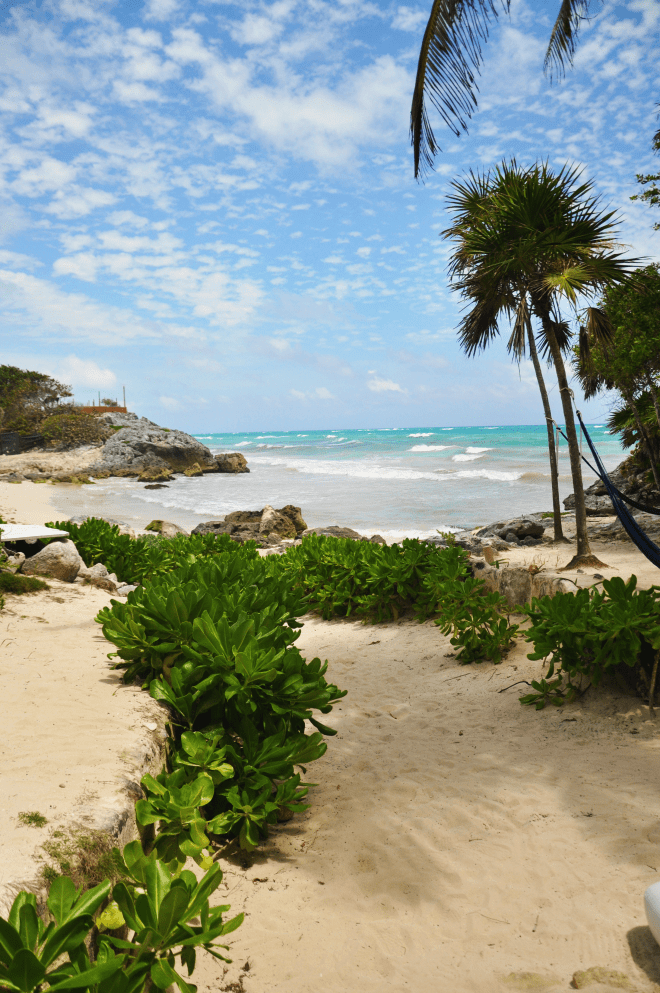
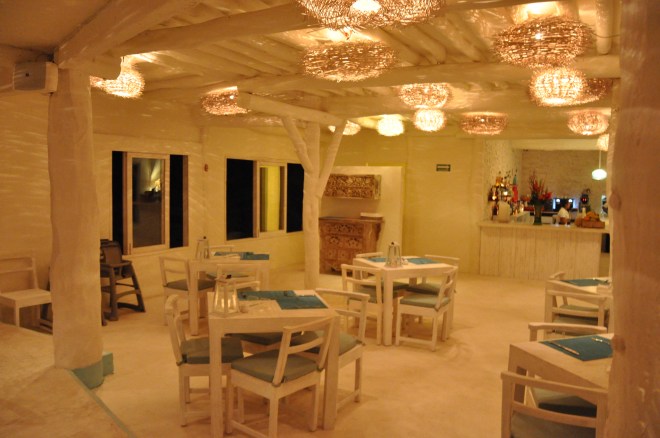
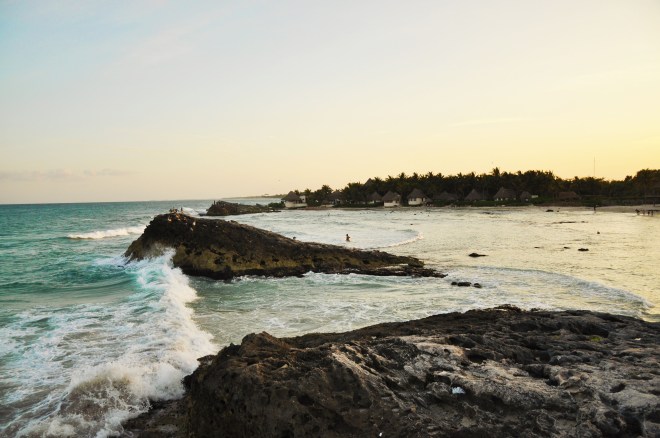
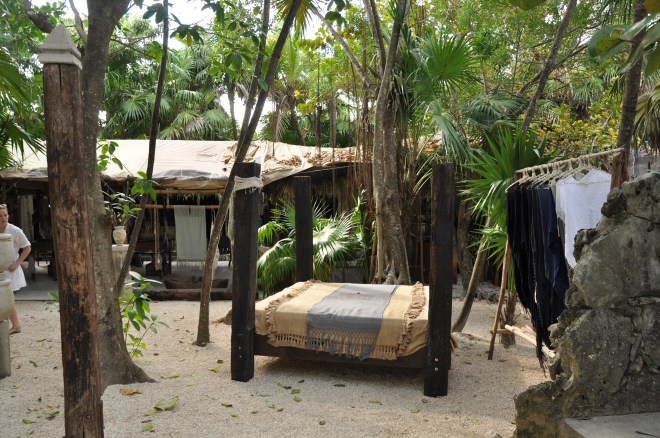
If you’re looking for a low-key vacation but want to avoid the gargantuan monolith-resorts of Cancun, Tulum is paradise. No structure is higher that the nearest palm tree – the predominant look being faux-rustic and sun-bleached and flawlessly stylish. The boutiques across from the sea are decorated with plush, four-poster beds and lined with powdery white sand so that it feels like an extension of the beach. It’s an instagrammer’s dream. I was particularly impressed by the restaurants and bars at night – think tiki torches guiding your way to your seat, or low-hanging candles and hispter-esque lightbulbs amidst tropical plants and the sound of cicadas. Aesthetically, I could not fault these lovely restaurants, but actually when it came to the food itself we found that the more basic the place, the better the food tended to be.

Where to eat and drink:

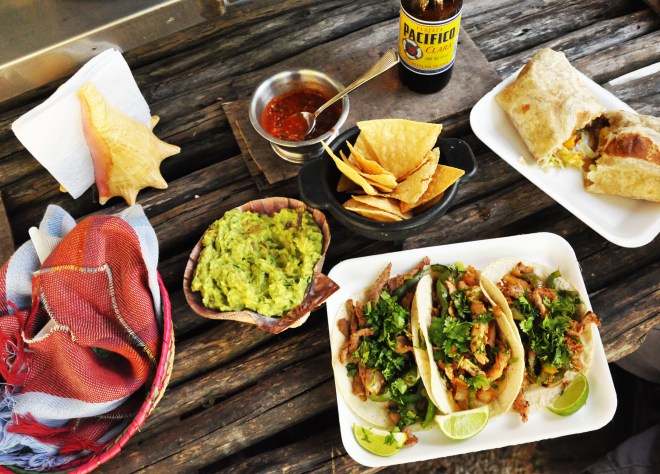
– One of the best meals we had in our time here was from a family-owned, road-side van with a couple of plastic chairs and tables outside. They made the food right in front of us and we had what was quite possibly the freshest, most delicious guacamole and ceviche we’ve ever had. As a bonus it doesn’t cost half as much as some of the more established places. Unfortunately I couldn’t see a name but the place is hard to miss as it’s pretty much the only one of its kind (along with another family-owned stall right next to it) on the beach-strip.

Mateo’s Mexican grill – Delicious and fresh. The nachos come out still warm from having been cooked then and there and the fajita’s are served on a sizzling hot-plate.

Pollo Bronco – this one’s in the town of Tulum. Lively and bustling with locals and tourists alike, the chicken is cooked in a wood-charcoal oven (hole in the wall) and is simple and delicious. It comes with fresh cabbage and salsa.

El Pez – We had cocktails on the beach here a couple of times, watching the dive-bombing pelicans and circling lemon-sharks as the sun went down. I highly recommend the Spicy Senorita cocktail – Tequila, ‘muddled’ red pepper with cilantro and chipotle and a dash of lime.

Restaurare – A vegan restaurant and bar that makes delicious juices and smoothies. I recommend the tropical mango, orange, papaya and mint.

Things to do:

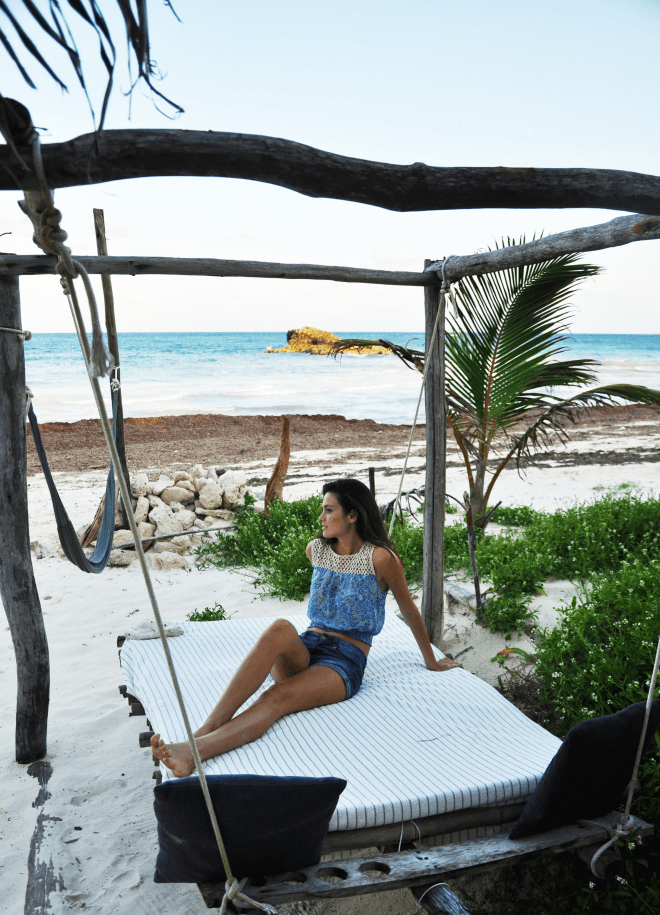
– Nothing. Unwinding on the beach is the name of the game in Tulum. Everything seems geared towards total relaxation, even down to the king-sized, swinging sun-beds and swing-seats at the bars. As an indication the only club to ever open in Tulum closed down after a month – it just isn’t that kind of place. If you’re into yoga, massages and spa treatments by the sea on the other hand, the options are limitless.

– Go to Sian Ka’an biosphere reserve, or more accurately, get lost on your way there and go to Punta Allen instead. Sian Ka’an is a UNESCO site and comprises of more than a million acres of tropical forest and wildlife. Unfortunately, we didn’t really see any of this! Thinking we were going to the biosphere, we rented a 4×4 and set off to the park from the Tulum entrance which happened to be right by our hotel. We passed by what looked like may have been an entrance but the gate was shut so we just kept on driving, and driving…and then driving some more..2.5 hours of dwindling hope later on some of the worst pot-holed roads we’d ever seen, and we reluctantly admitted that perhaps we’d missed the entrance!  Luckily this road follows the narrow Boca Paila peninsula – which meant stunning scenery of the caribbean ocean and salt-water mangroves on one side and a milky-blue lagoon on the other.

Still, we hadn’t seen a single sign of civilisation and were getting really hungry and thirsty, so given that we had absolutely no idea if there was anything at the end of the road we nearly turned back when we came across Sol Caribe – a beautiful restaurant/ranch/life-saving oasis. I was so relieved at the thought of a cold beer and guac after hours on dusty, ridiculously pot-holed roads I could have kissed the hotel owner. I have absolutely no idea how they get their ingredients but the food was delicious. We had delightfully cold, Pacifico beers on a beautiful veranda overlooking the stunningly turquoise Caribbean ocean. We asked the waiter if there was anything at the end of the road and he told us there was a small town called Punta Allen, so we decided to keep going a little longer.

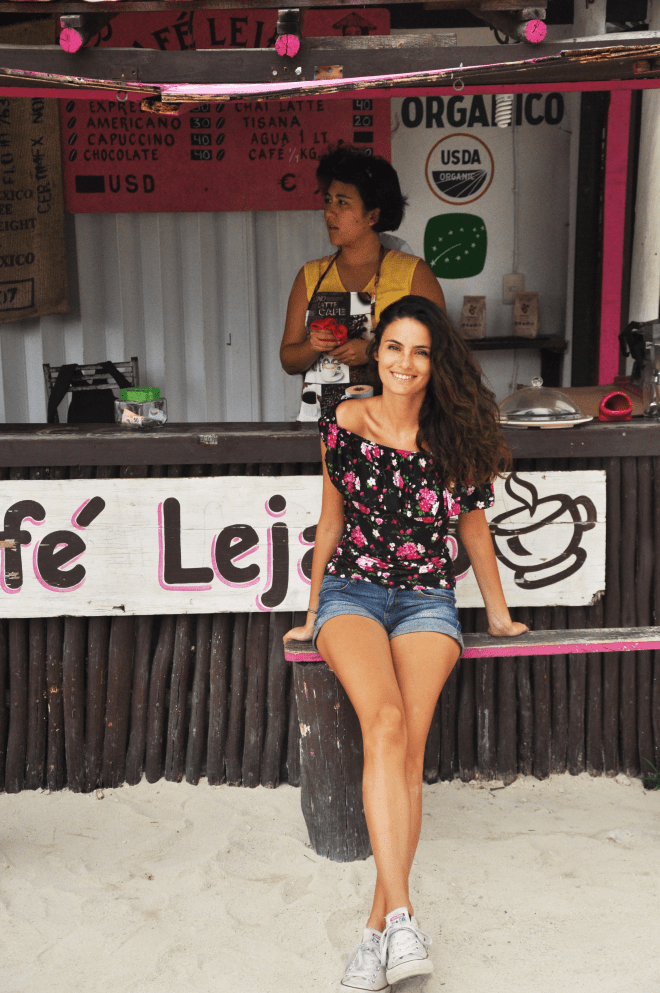
I’m so glad we did. Punta Allen is a tiny and sleepy sleepy lobster-fishing village, perhaps a bit what Tulum was like once upon a time. We felt like we were at the ends of the earth so naturally the first thing we came across was a hipster coffee-stall serving organic Mexican coffee served in genuine Mocha machines with some sort of ground demerara sugar emulsion. It was unexpected and lovely. It’s not on Tripadvisor but is right by the visitor centre and is called Cafe’ Lejana. Other than drink and eat there’s not much to do in Punta Allen except for stroll down the palm-fringed beach or go and visit the lighthouse. We saw a fishing boat that had been converted into a holiday ‘villa’ which I would love to go back and stay in if we ever go back. N.b. If you want to explore more of the biosphere and can’t find much info (we certainly couldn’t) there is a very thorough run-down here.

Tulum beach viewGirl on swing bed in tulum beachResort in siaan khan reserveGirl in front of wall punta allenPunta Allen coffee stallGirl in pond with lily padsLily pad with flowerTulum beach and ocean  with wave

Black one-piece – American Apparel; Floral Romper – Urban Outfitters; Black bardot top – H&M; Denim shorts – Mango; Shoes – Converse.


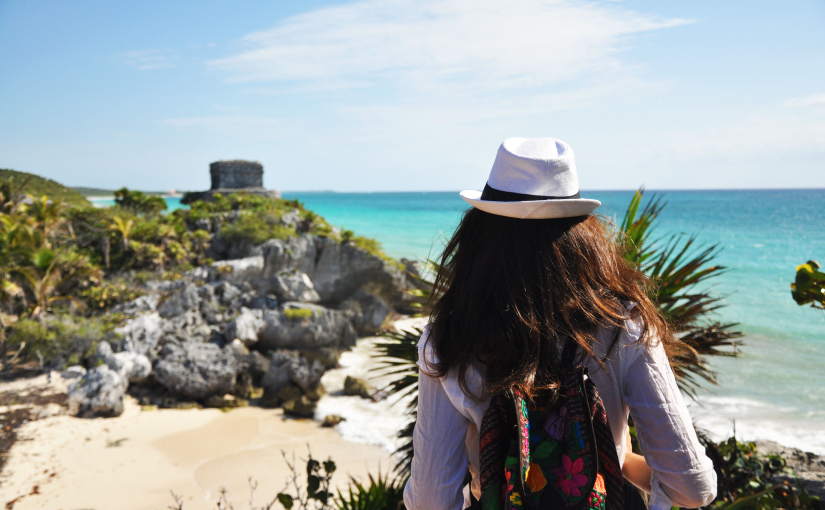
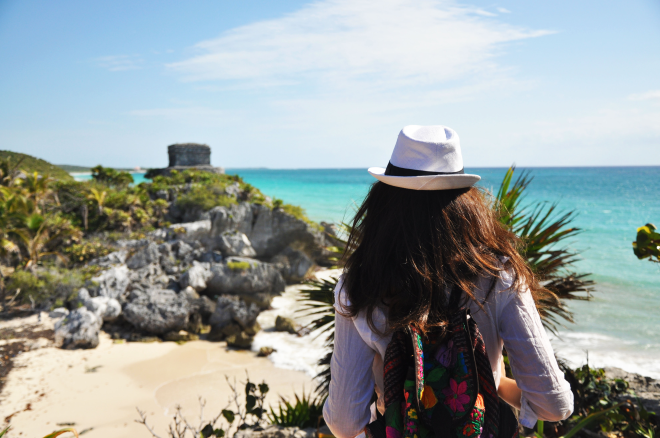
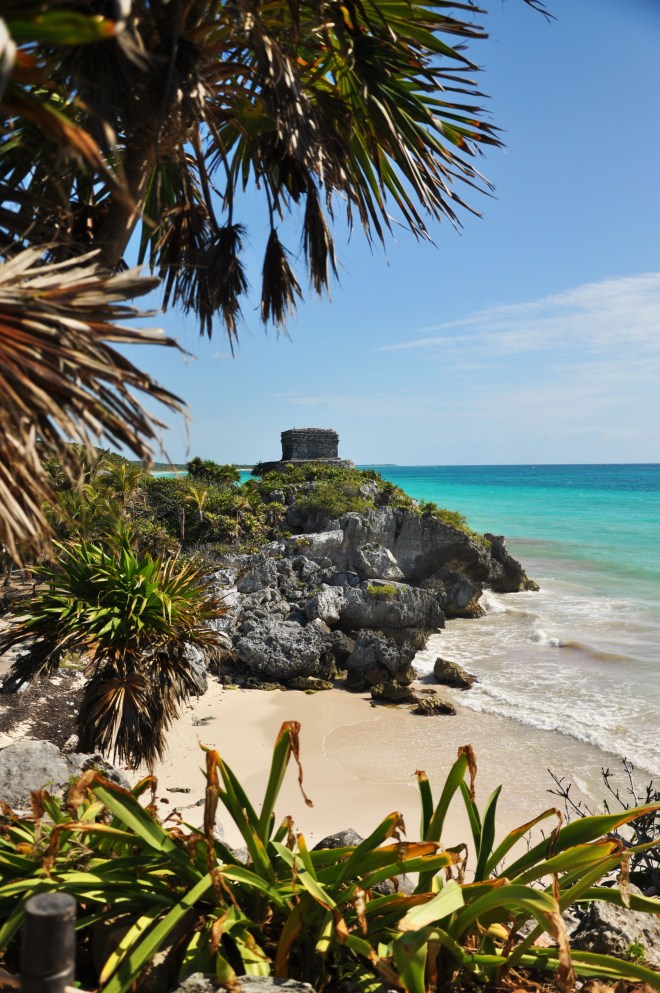
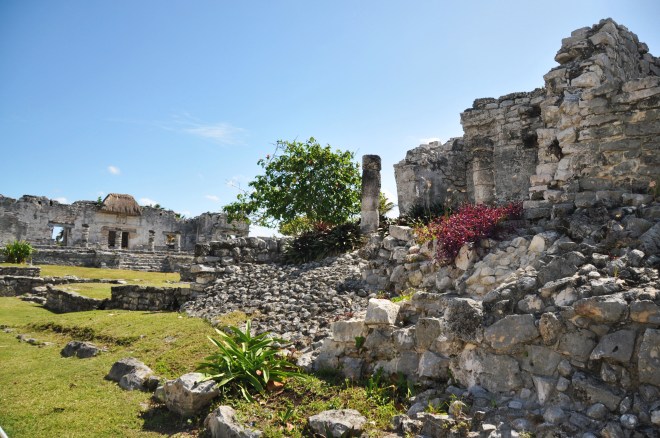
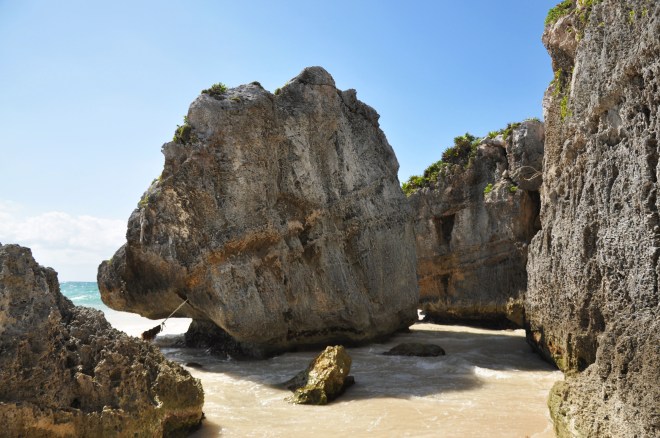
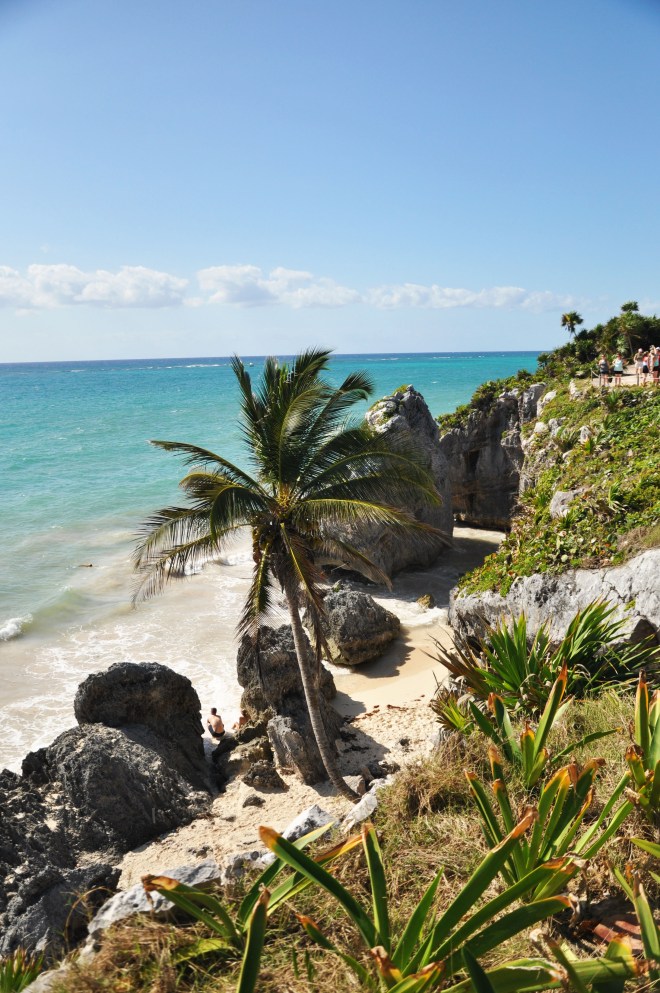
Tulum ruins. Dramatically perched on the edge of  a limestone cliff overlooking the ocean, the Mayan ruins of Tulum are undoubtedly the most stunning ruins I have ever seen. Come to think of it, they are the only ruins by the the sea that I have ever seen. We got there early so that it was just us, a few other tourists and what seemed like thousands of huge Iguanas who looked as old and still as the vestiges of the royal buildings they love to sunbathe on. There are so many of them and they are so majestic looking that you can’t help but think they are somehow aware of the significance of these crumbling edifices. You can access the beach (where turtles go to lay their eggs from May to October) from the site of the most significant ruin- El Castillo.

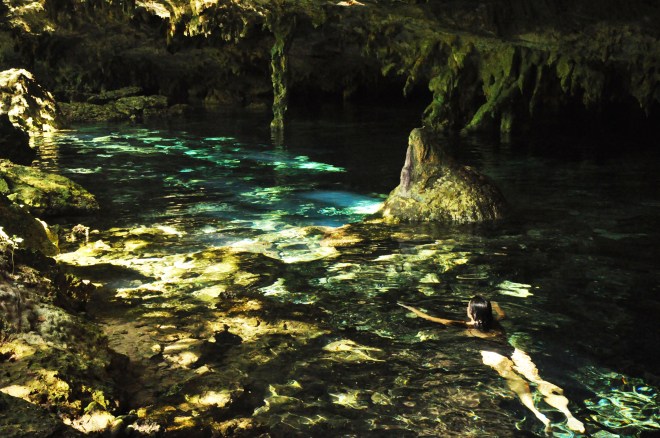
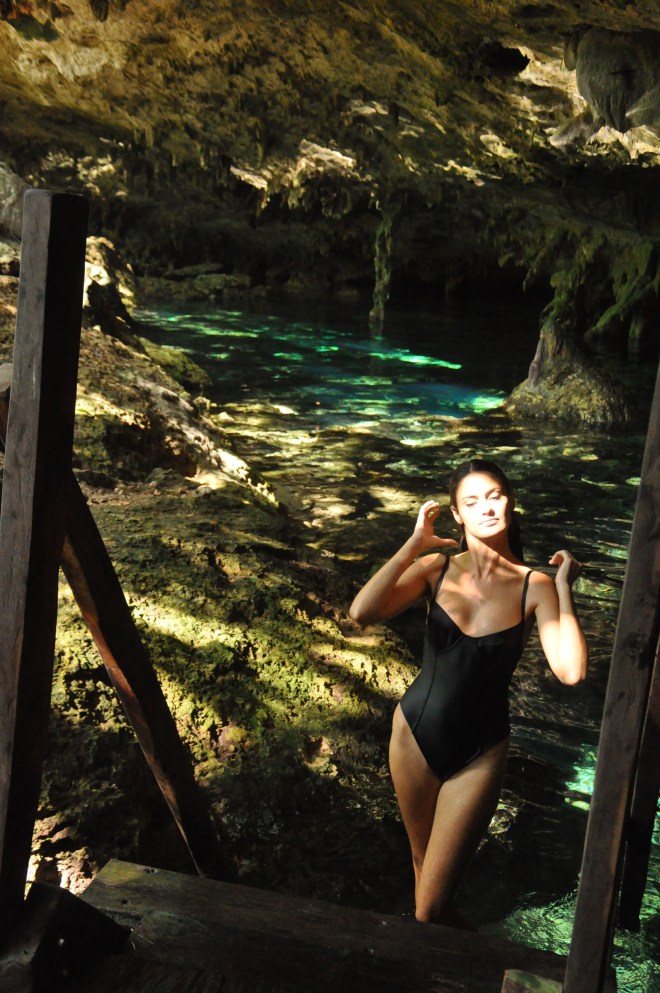
Dos Ojos and Nicte-Ha Cenotes. I’ve left the best ’til last. Cenotes are underground freshwater sinkholes that are thought to have formed when an asteroid crashed in the region around 65 million years ago. At Dos Ojos, breaches at the top of the caves means that the sunlight streams in from above, bouncing off dozens of stalagtites and turning the water unearthly hues of green and blue. You can get a diving guide to take you deeper into the caves where you can explore the incredible limestone formations with artificial lighting.

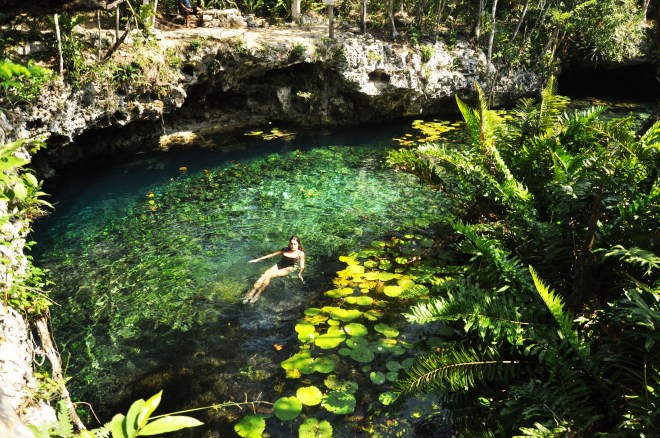
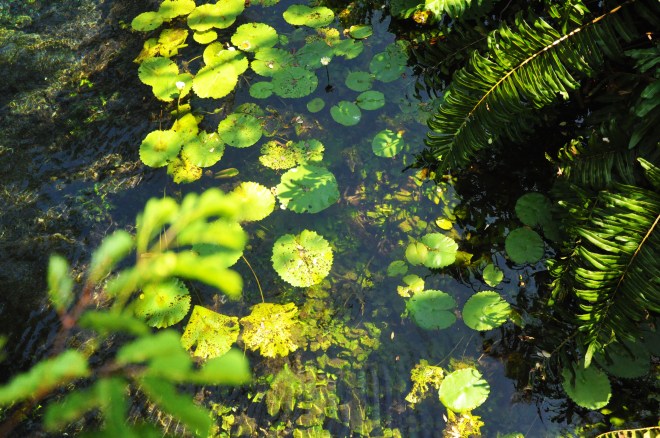
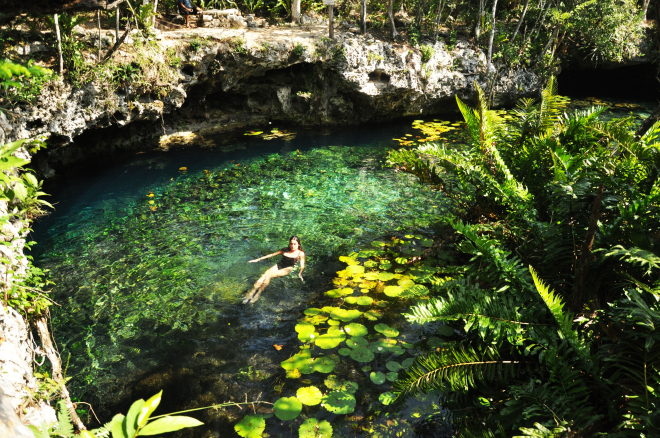
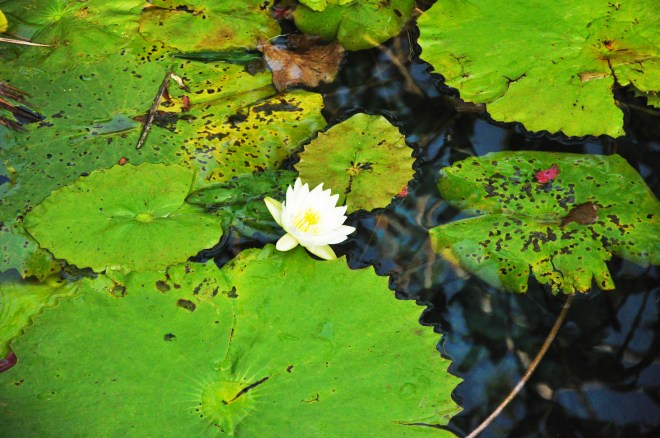
Nearby is serene Nicte-Ha cenote, which is more freshwater pond than cave. Flowering lily-pads and other freshwater plants float on stunningly crystal-clear water filtered by the surrounding limestone rock. I could have spent the entire day happily floating in this surreally beautiful cenote that looked like something out of a pre-Raphaelite painting. We were lucky to have Nicte-Ha all to ourselves but get to Dos Ojos early before the throngs of tourists show up in their fluorescent orange life-vests.

Where to stay:

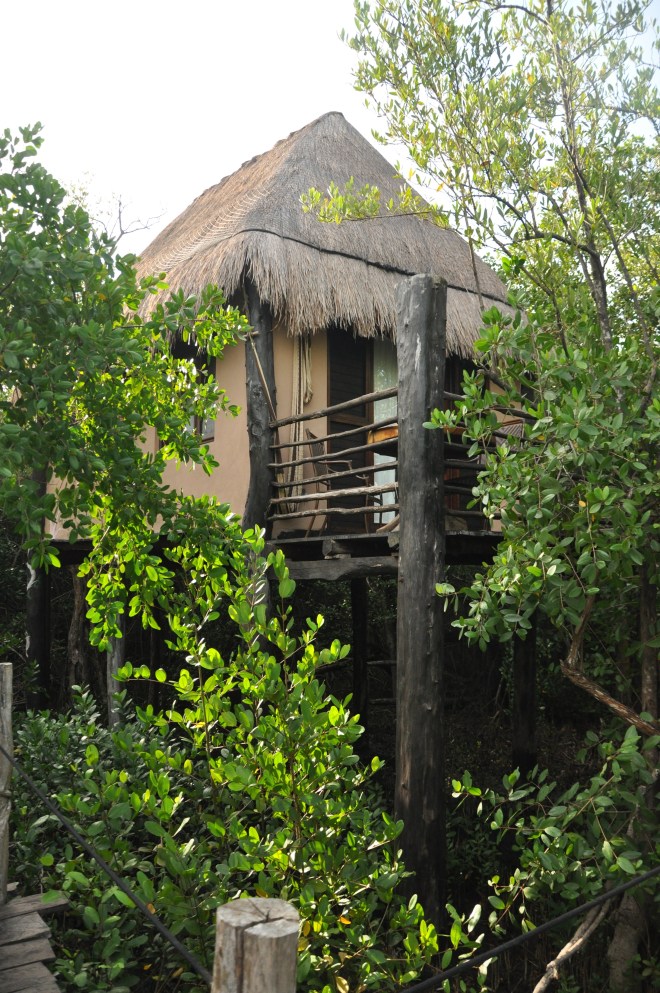
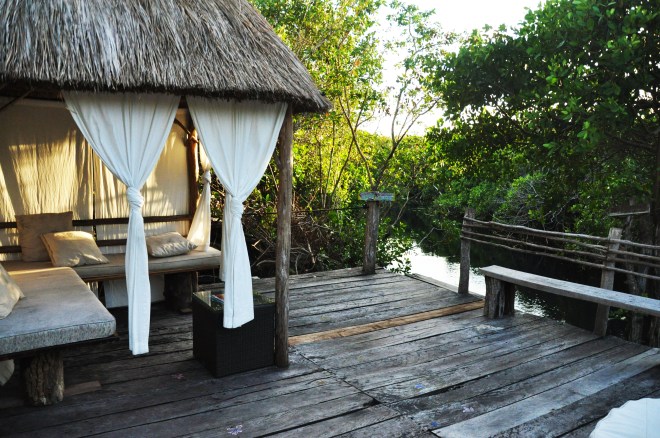
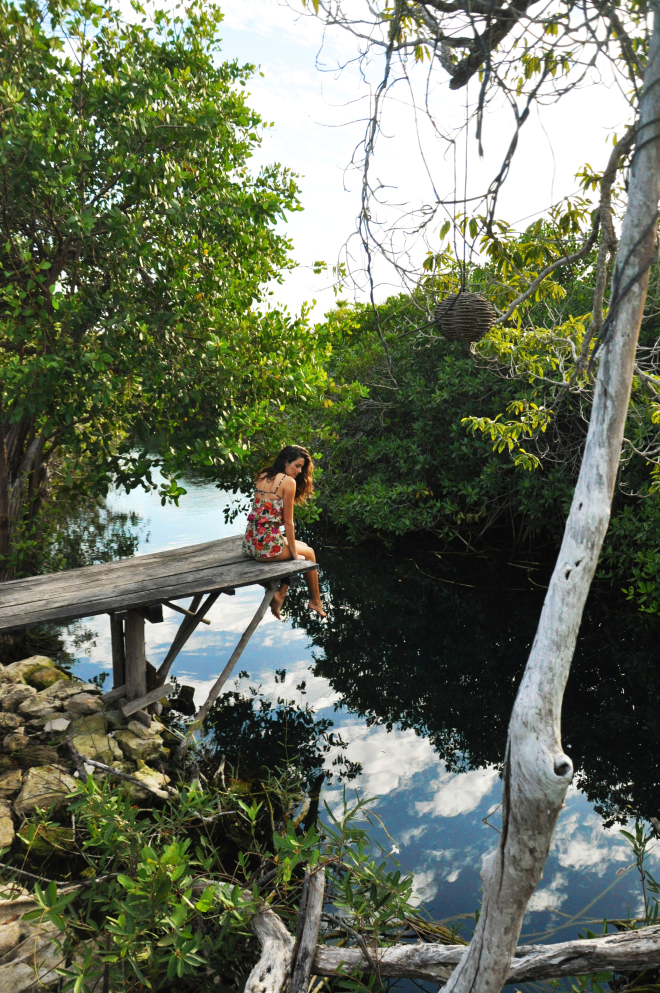
– There are plenty of lovely boutique hotels in Tulum but knowing that we would love the cenotes we decided to book Manglex eco-hotel, which has it’s very own private one. The hotel is made up of four tree-level jungle cabanas that each have four-poster beds and mosquito nets. To get to the cabanas there is a wooden pier above the mangrove that ends in a sun-deck with white canopied lounge-beds overlooking Manglex cenote, which we explored at sunset with one of the hotel kayaks. We didn’t see any but apparently you can see the occasional small (and I’m told not dangerous) crocodile! The pier is very pretty at night when it’s illuminated green and they light lanterns and tiki torches to guide you to your suite.

If you’re after luxury rather than eco-chic this may not be the hotel for you – the ‘hot’ water was tepid at best (at least for us), and they turn off the power at night. I don’t know if we were just lucky but we were surprised that we didn’t have a problem with insects but I’d definitely recommend bringing repellant in case.


West Coast Road triP: Ultimate guide PART ii

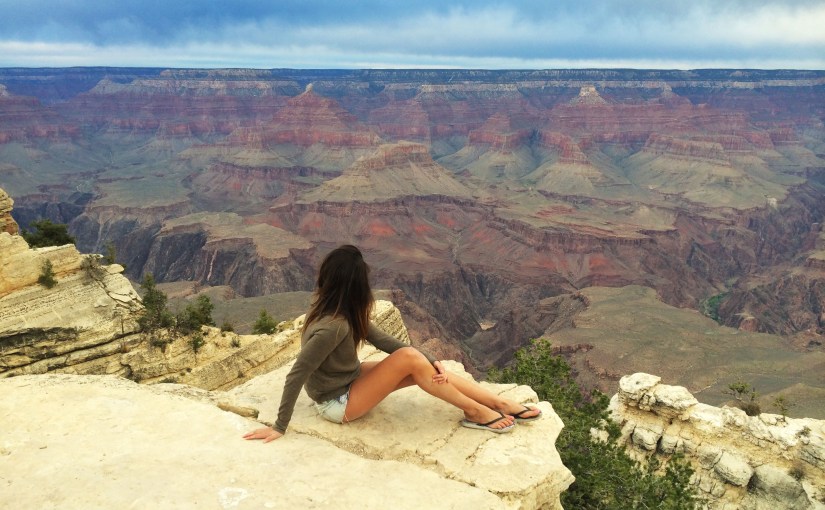
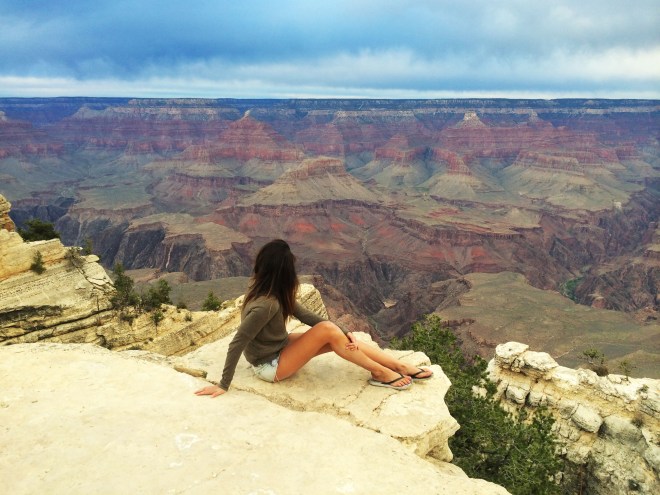
Girl sitting in front of grand canyonponte vecchio in nevadaredc

Vegas to Grand Canyon:

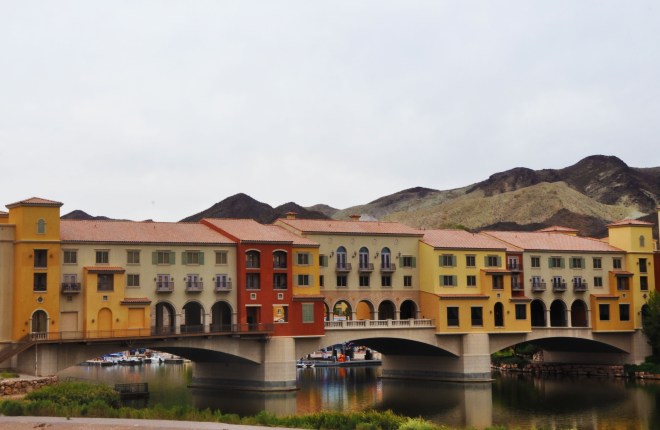
There aren’t as many Kitschy tourist attractions on this route as there are on East to West Coast U.S. road-trips i.e. the world’s largest ball of twine, but there is a quasi life-size replica of Ponte Vecchio in the middle of the desert in Henderson just outside Vegas, and it’s pretty much as surreal as you’d expect. (I’m noticing a theme about this trip).

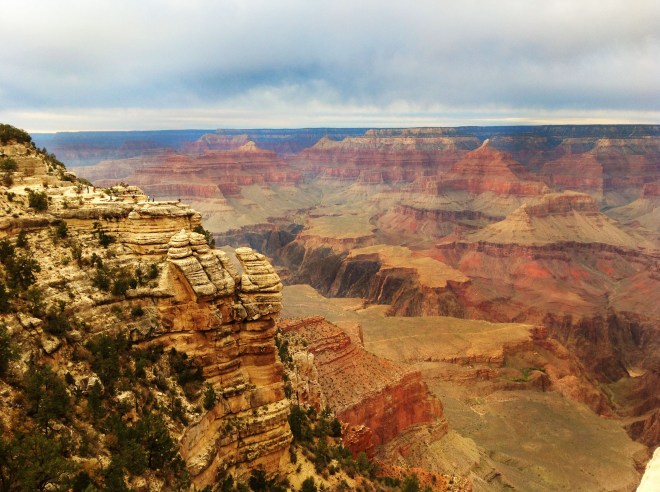
After Henderson the route from Vegas to the South rim of the Grand Canyon takes you through Lake Mead National Park. I love driving through National parks in the US – you pay a small fee to drive past amazing views on immaculately kept roads. You also usually get a pamphlet upon entering explaining the surroundings, which is good for passengers to enlighten/bore their drivers with trivia. We got to the Canyon later than I’d have liked but we did manage to catch an incredible sunset. There’s not much I can say that does justice to seeing the Canyon for the first time. The best I can say is that if like me you’ve wondered whether it might be anticlimactic given just how famous it is, it definitely isn’t!

Doing it again I’d try to spend at least a couple of days at the Canyon to take in the breathtaking views from all four rims. I’d particularly like to try the skywalk, which is not technically in the National Park but on Hualapai tribe land on the West rim. We vowed to return to go white-water rafting on the Colorado river one day among the stunning, iconic crevices of the West-rim canyons.

Where to stay – There are various different bases for the Canyon but for the South rim I would suggest Flagstaff, which is a charming college town that was originally part of historic route 66. This was actually the only part of the trip where we got to drive the route for a few exciting minutes! Because it’s a popular base for visiting the Canyon, there are a lot of generic hotels like Comfort Inns etc in the area. We chose to stay at the Weatherford hotel – a really characteristic, quaint, and creaky old hotel with an interesting history. They have frequent live music events in the bar and you can have meals on their balcony overlooking the town.

View of cliffs in Zion national parkzion4zion2zionchipmzion1DSC_0789_3DSC_0778_3

Canyon to Mount zion

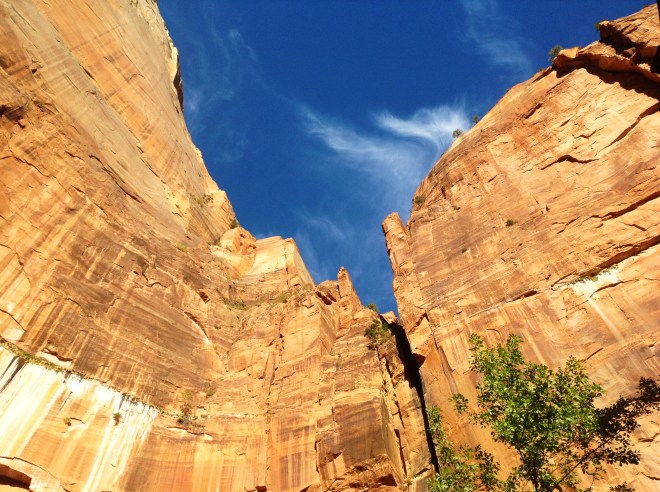
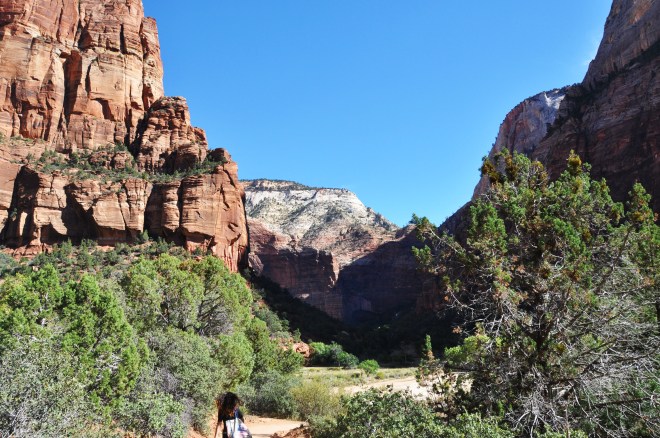
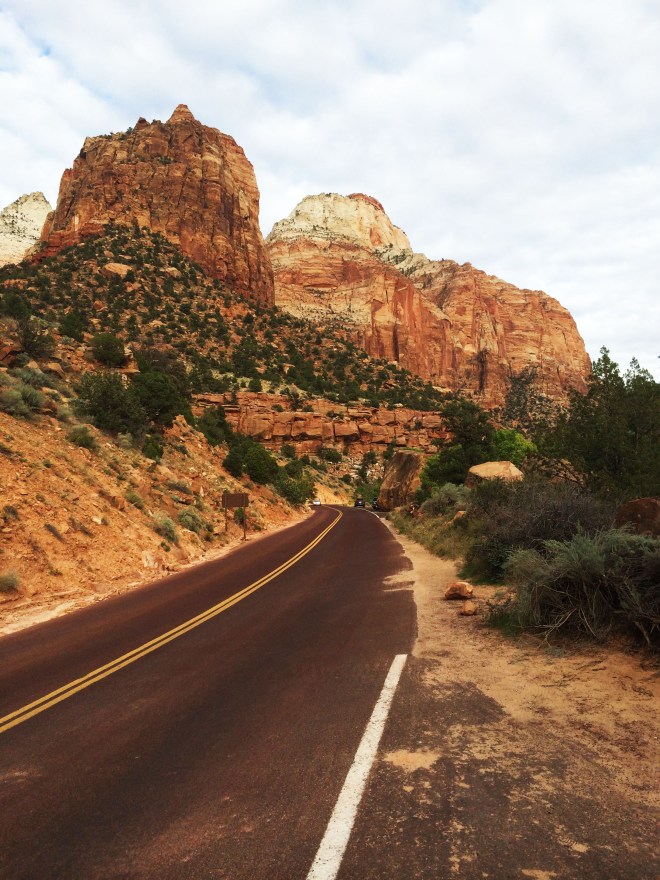
We weren’t sure what to expect from Zion National Park as we hadn’t heard as much about it as the more famous landmarks on our trip, but it ended up being one of the highlights. Driving into the park you’re immediately struck by the strange and dramatic sandstone cliffs and their unique, burnt red colour. Even the park roads that tunnel through and weave around the rocks are a dark burgundy. It is a dramatic entrance and a fitting introduction to the Park.

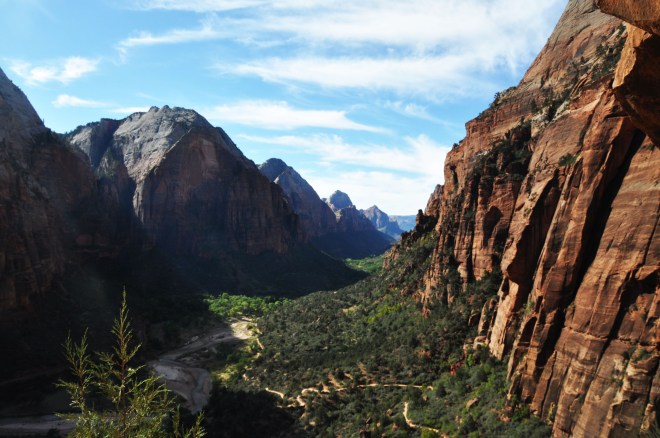
Trails – We did Angel’s landing (5 miles), Lower Emerald Pools (1.2 miles) middle Emerald Pools (2 miles), upper Emerald pools (3 miles) and the Riverside Walk (2 miles). Angel’s Landing is probably the most famous and most strenuous of the trails. Hugging the Virgin river, it starts as a serene riverside walk among the pines and then slowly and steadily begins to gain elevation through steep switchbacks up to the summit, where you get amazing, precipitous views of the cliffs and valley down below.

Emerald Pools is actually three different parts of one longer trail – each part ending in a clear-water pool formed by waterfalls cascading from the top of the cliffs. There are parts of the trail where you walk behind the waterfall itself.

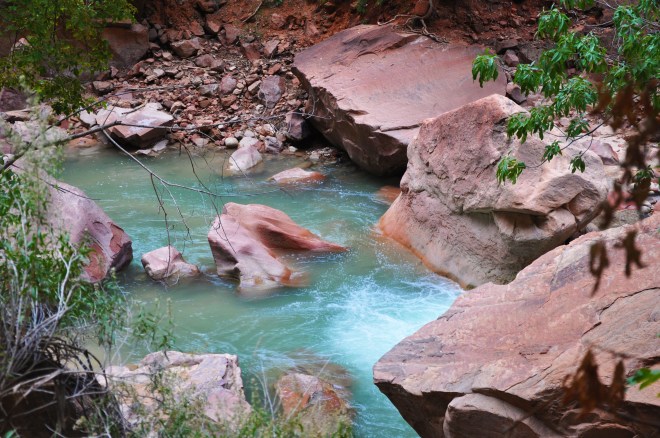
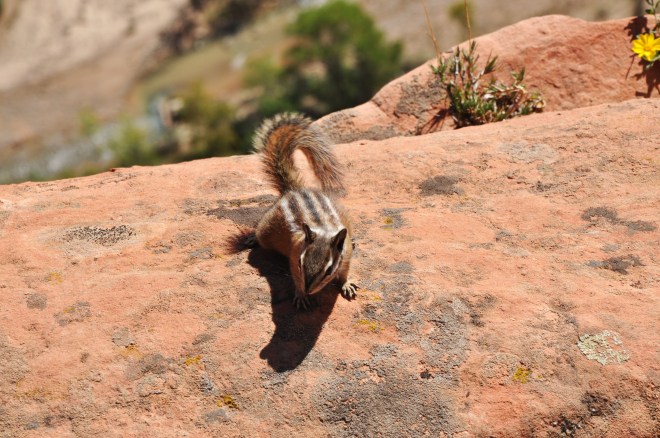
Riverside walk is by far the easiest of the three trails. Completely flat and paved, the trail goes through a valley by the river with bubbling brooks and waterfalls along the way. We saw a lot of mountain deer on this trail.

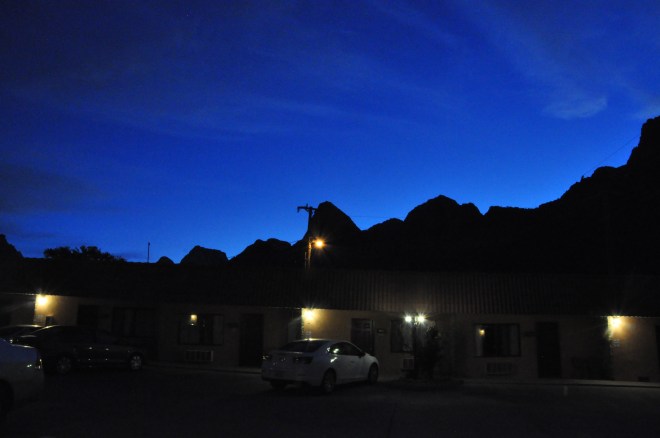
Where to stay: Zion Park Motel. Not only is this the closest accommodation to the park but because it’s nestled at the base of Zion’s cliffs it has spectacular views. I loved the out-dated, 60’s motel charm of the rooms. I tried to do an artsy shoot but I don’t think I’ll be quitting the day job anytime soon.

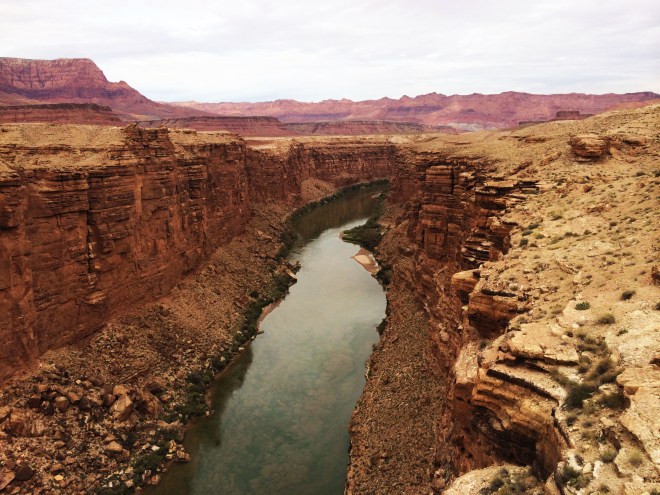
Where to eat: Cliff Dwellers. Just after the Navajo bridge on our long drive from the Canyon to Utah, we stumbled upon this cute but inconspicuous restaurant/lodge.  We weren’t expecting much in the way of food from the middle of nowhere the menu turned out to be amazingly varied with options like seared Ahi Tuna and Sauteed Bree with home-made ciabatta. We asked the owner how he managed to make such food in the middle of the desert and he said he gets fresh deliveries every day by truck all the way from Vegas. He had some really good craft beers too. Oscar’s Cafe’ is right by Zion Park motel and is well-known for its good Mexican-style breakfasts.

West Coast Road-Trip: Ultimate Guide Part I

vbeaDSC_0190road1

“Sleep late, have fun, get wild, drink whiskey and drive fast on empty streets with nothing in mind but falling in love and not getting arrested.” Leave out the whiskey part (while you’re driving, anyway) and I’d say Hunter S. Thompson has a pretty good outlook on life on the road. There’s just something about looking in the rear-view mirror and seeing nothing but endless stretches of empty, dusty roads while you’ve got your favourite tunes on full-blast. I don’t know if it’s the not knowing what lies at the end of the road that feels so satisfying, but I’m sure it’s also got a lot to do with the sense it gives you of that most treasured of American dreams – freedom.

LA to Vegas

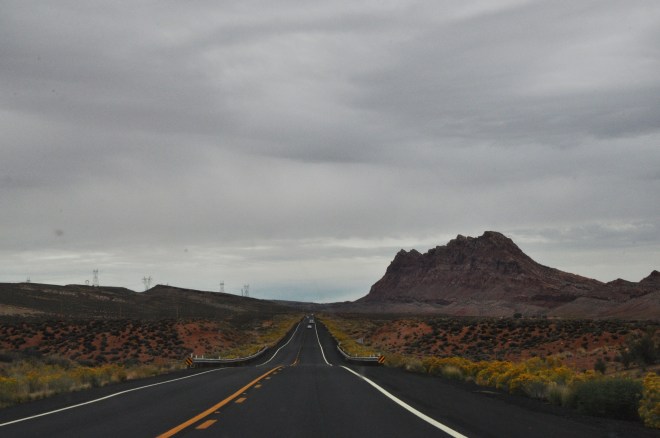
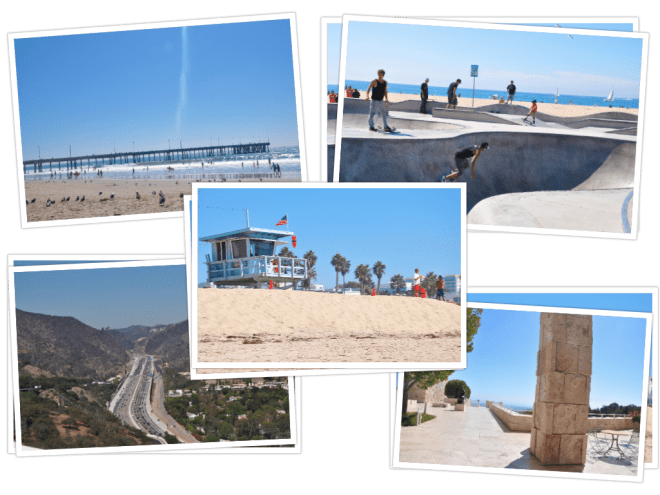
The road from Los Angeles to Vegas is pretty uneventful for the most part, but the dry, arid scenery does start to give you an idea of that movie-like atmosphere you’ll come to expect if you’re continuing on to Arizona and Utah. By far the most stressful part of the journey for us was driving out of L.A. The highways there are some of the most terrifying I have ever experienced – four lanes on either side with very little warning about when you have to exit! Unless you’re used to this kind of driving (or you really, really love maps) I would strongly recommend getting a GPS system when hiring your car. We got a super-generic four-door hatchback.

As I’m sure it is for many people, our only stop on the way to Vegas was Peggy Sue’s diner – a super kitschy diner with menu options like meatloaf and Buddy Holly bacon cheeseburgers served by women in baby-blue aprons and soda jerk hats. It was our first tiny taste of the totally unapologetic ostentatiousness that is Las Vegas.

If you can, I would try and time this trip so that you arrive in Vegas at night-time. We had a few false alarms where we thought we’d arrived but were actually in surrounding casino towns like Primm, but there is definitely no mistaking it when you do arrive. Nothing quite prepares you for the sudden spectacle of lights you encounter when you roll in to the city from the pitch-black and desolate Mojave desert.

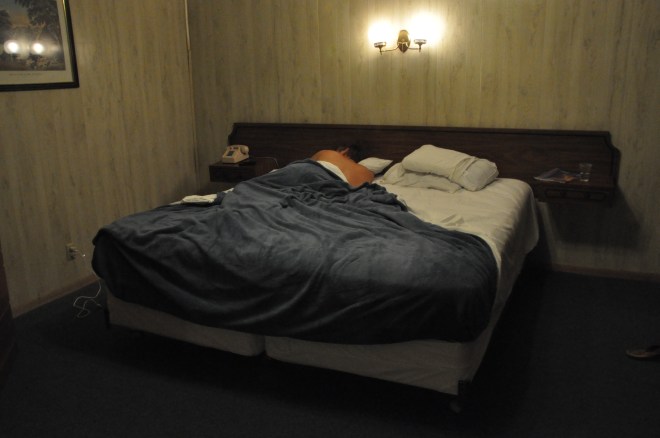
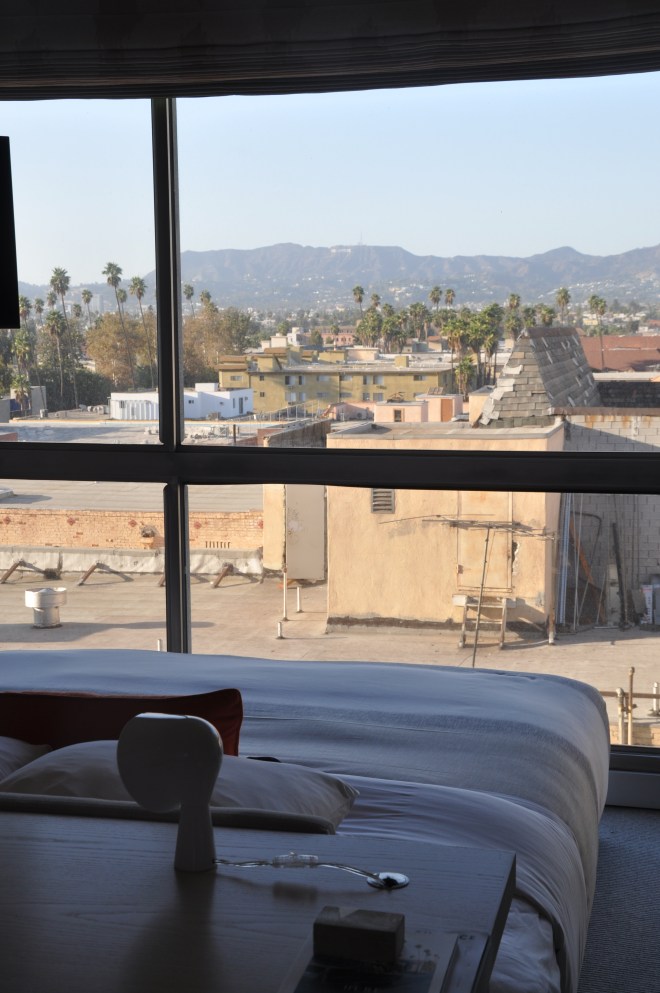
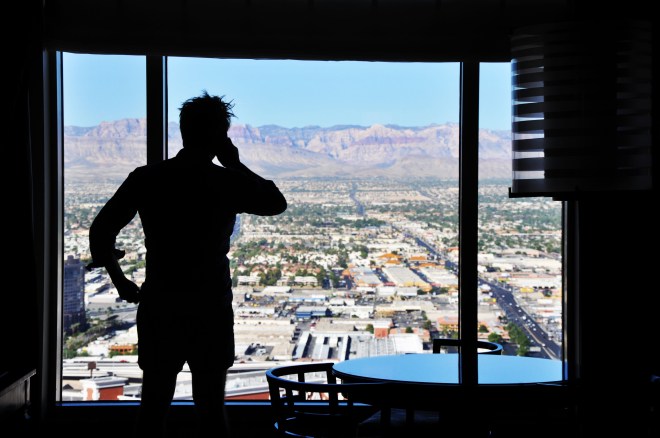
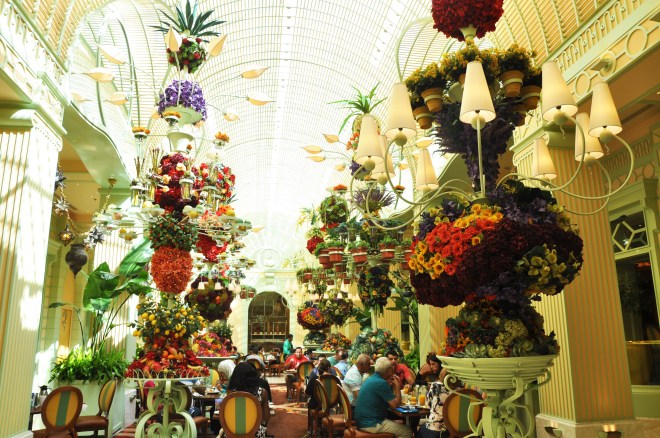
Where to stay: We decided that the only way to do Vegas was to really do Vegas, so we stayed at the Venetian. Of course there are plenty of hotels that are synonymous with Vegas but I liked the thought of the especially tacky, themed ones like Ceasar’s Palace. Our room had an amazing view overlooking the Nevada desert but was otherwise quite understated. The real spectacle is the lobby downstairs, where you can take a totally surreal stroll through the streets of a fake Venice with actual water canals and eat at your own ‘al fresco’ table in a fake Piazza San Marco. The most impressive part for me was how the clouds on the ceiling are painted so that they move while you walk!

If staying at one of these huge hotels I definitely recommend taking a chance at an upgrade. They’re so massive that they quite often have empty rooms and some are quite willing to bump you up at no extra cost, especially if you go on about how much you’re going to gamble at the front desk!

Where to eat: We took the same approach to where we ate as where we stayed. We were lucky that we happened to be in Vegas on a weekend when the Wynn hotel does its famous buffet brunchWe’d read about it and knew to expect a big buffet but it really has to be seen to be believed. Quite simply, there was A LOT of food – and I’ve been to weddings in southern Italy. Any type of food that your imagination can conjure up, and they will have it, all at a very reasonable price of $30 on the Saturday and $40 on the Sunday. Try to get a seat in the incredibly elaborate dining area in the front and pace yourself! It’s definitely a once (only) in a lifetime experience!

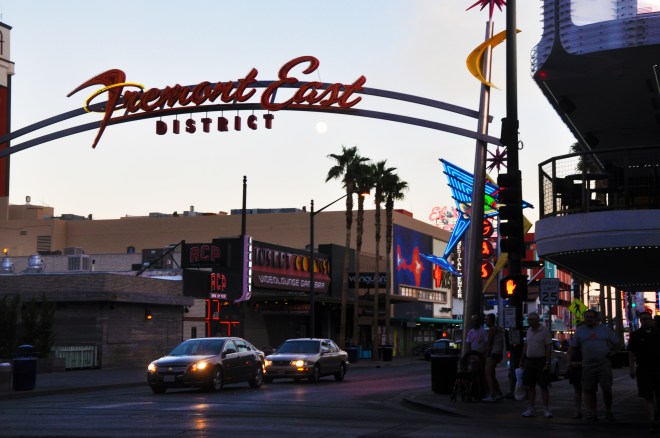
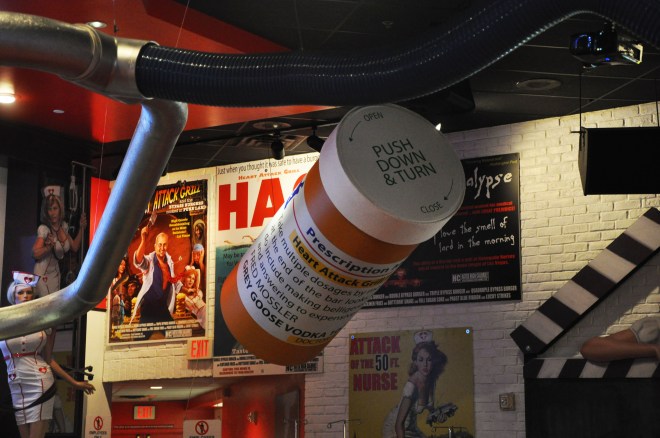
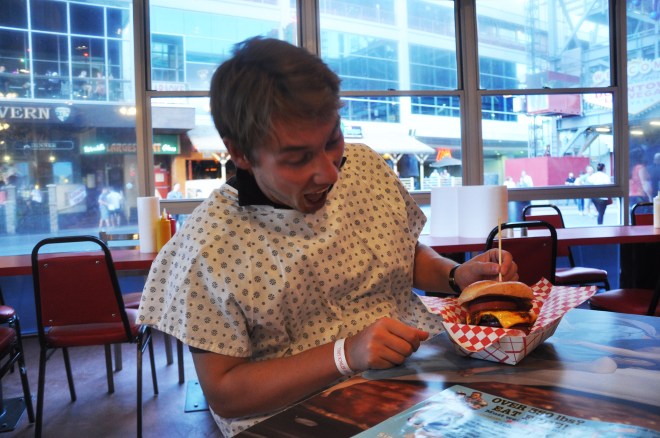
Heart Attack Grill – Like a lot of Vegas, this place is totally ridiculous. We stumbled upon it in the Fremont East district of Vegas and saw its flashing neon sign outside proudly claiming that people ‘over 350 lbs eat for free’. We tried the scales outside and didn’t quite qualify but we had to try it when we saw the giant syringe needle and pill-box they had as decor. You get a wrist-band and scrubs when you go in and the waitresses are all dressed as nurses in – naturally – glossy, red high-heels. But the best part – you get a spanking from the nurses in the middle of the restaurant if you don’t finish your meal. The food must have been good because both me and Josh finished ours. Definitely the most surreal dining experience I’ve ever had!

Things to do:

  • Bellagio fountains. You’ve heard a lot about them and the show is actually really impressive. It happens regularly throughout the day and is set to a different song each time.
  • Go to the Fremont East district – this was probably my favourite part of our time here. While it’s not exactly surprising, the main strip can seem a bit, lo-and -behold, commercial – i.e. souvenir shops and throngs of tourists sipping from giant neon-colour cocktail pipe-things (I’ve still got no idea what they were). ‘Old Vegas’, as I called it, felt a bit more like what the city may have been like once upon a time. It feels more dated and seedy but that’s exactly what I liked about it. Also, games and drinks are cheaper – Josh actually had a pretty good Poker streak here.
  • Lose money. Josh did not have a good streak on the main strip. If you’re like me and hate gambling, do the slots and wait for the waiters to come around with free drinks 🙂
  • Forget your own name
  • Get married. We did not.
  • Whatever you want. Remember, what happens in Vegas…

lvrfveg1veg3veg2hab

Coast Starlight

collage-2016-03-16 (1)

Train travel is one of the few forms of transport left that’s not just about reaching your destination but about savouring the journey itself. Going on a long train trip feels like a journey within a journey, where you’re not just experiencing present adventures but are also transported to a nostalgic, bygone time, where everything seemed to happen at a slower pace. You can admire beautiful views that you would never get to see on a plane or a bus, catch up on a book you keep meaning to read, or chat to other people who like you are in no immediate rush to do something, or be somewhere. Slowness seemed to be the theme of this West Coast trip. I flew from Miami to Seattle to visit my best friend from university who lives in a pretty, very tiny town in central Washington. It was one of those typical American strip towns with buildings on either side of the highway that takes all of a minute to drive past. I stayed here a leisurely two weeks visiting horse ranches, fossil-hunting and riding quad bikes through abandoned Cougar dens. (To be fair that last bit wasn’t really slow, those things really pick up speed! )

When the time came for me to catch my Amtrak train down to L.A., me and three friends took a road trip to Seattle along the scenic North Cascades highway. I felt like I was having the true American travel experience!  The highlight of this route is definitely Lake Diablo. The North Cascade mountains that surround it are huge and usually snow-peaked, and the lake itself is an incredibly distinctive green-turquoise colour caused by the melting of nearby glaciers. The lake is a very do-able 2.5 hour drive from Seattle. While you’re there you might as well visit nearby Leavenworth too, a faux-Bavarian meets Wild West town where you can eat Schnitzel and order giant steins of (really good) craft beer from men in Leiderhosen.

collage-2016-03-16 (1)

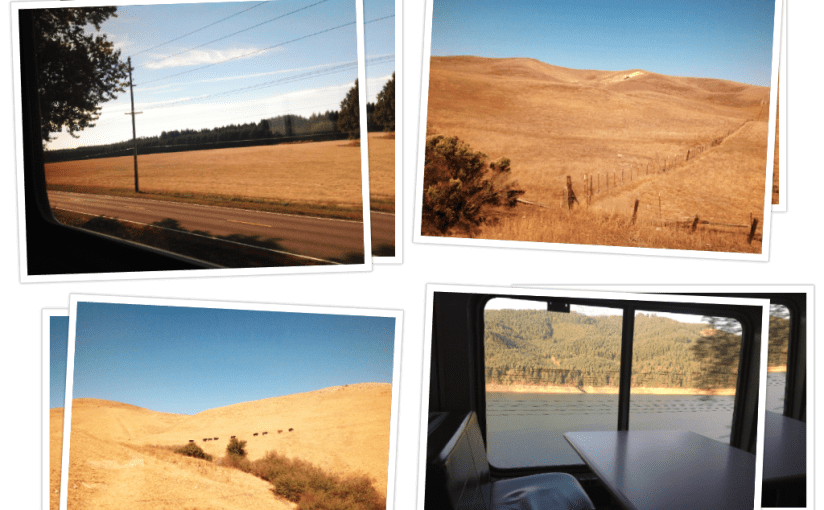
The Amtrak Journey from Seattle to Los Angeles is called the Coast Starlight and takes about 2 days. I was a. On my own and b. Not in a sleeper coach, so I knew this was going to be a test of my boredom threshold as well my endurance! I shouldn’t have worried; the views were beautiful enough that the journey did not seem anywhere near its 35 hours, though I’d be lying if i said they flew by! In this direction, the views really start to become spectacular after Klamath Falls towards Dunsmuir in Oregon, with dramatic views of tall pine trees surrounding snowy Mount Shasta.You would normally be arriving here by evening, so the view is made even more dramatic as dusk turns to silvery moonlight. The next morning I woke up in Northern California, greeted by rolling oat-colour hills and grazing deer and cows. I spent most of the rest of the day in the Observation car, which has comfy seats and floor to ceiling windows for the best views. It was here that I watched the train roll into Santa Barbara at sunset, with its stunning Pacific ocean views and surfing beaches. collage-2016-03-16 (1)

Coast Starlight Travel tips:

  • If you can afford it, stay in a private ‘roomette’. I was lucky that nobody was sitting next to me in coach so I managed to get some sleep by lying across the seats, but I’d have been wide awake all night if not. I was on a budget and a roomette is much more expensive, but you do get all of your meals included and they are served in the private Pacific parlour car. Here they have a bar, cushy swivel easy-chairs, free wi-fi, coffee and they also do free wine and cheese tastings every afternoon. There’s even a mini-cinema room! I had breakfast in the dining room on the first morning as the train rolled along the Puget sound and the food was actually much nicer than I expected.
  • If you’re planning to share a roomette, do it with someone you  really like – they are extremely small!
  • Bring all the usual sleeping comforts – eye mask, toothbrush, inflatable pillow etc. (Especially if you’re in coach.)
  • If you have the option, do the route when the days are longest, as it was already quite dark as we got to the Cascade mountains, the prettiest part of the trip. Otherwise try and go when it’s a full moon!
  •  For the same reason as above, do the option from L.A. to Seattle – if you have the choice.
  • Seats are not assigned when you book and are given out as you board so they’re pretty much luck of the draw – if you find a nice controller ask if you can get a seat on the Ocean side.
  • If you get bored, go to the viewing car and strike up a conversation with someone. Everyone is unhurried and relaxed and probably bored so I found that people were pretty chatty!
  • Use the ladies powder room – they are very clean and there’s actually a little powder-room area.
  • If you’re bored easily download some things to watch on your phone, ipad etc. There are sockets by the seats.
  • Bring your own food if you’re not keen on the menu and don’t fancy eating snacks.
collage-2016-03-16

Amalfi photo diary

collage-2016-03-09 (2)

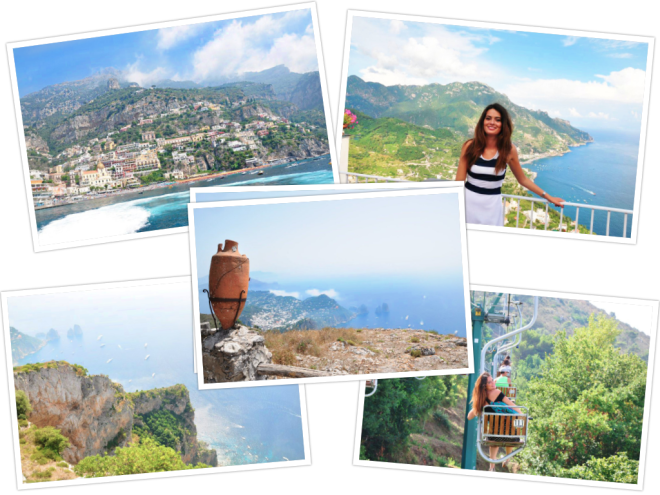
There are places that I’ve travelled to that I know I will return to again and again, and I know that again and again I will fall even more in love with them. There is just something uniquely magical about the Amalfi coast and the picturesque little towns dotted along it. Even the journey there feels like a dream – the bus from Sorrento, the main pick-up point, takes you on a ridiculously beautiful and terrifying coastal drive along hair-pin curves and vertiginous drops to the glittering Mediterranean sea below. A few miles of lemon and bougainvillaea bedecked houses and gardens later, and you’re greeted by towns of pastel-colour houses stacked precipitously on cliffs above an impossibly blue sea. Not a bad start.collage-2016-03-09 (2)

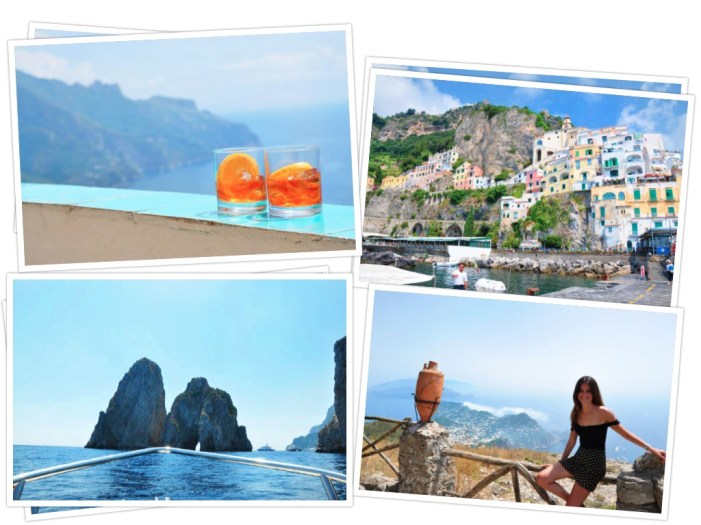
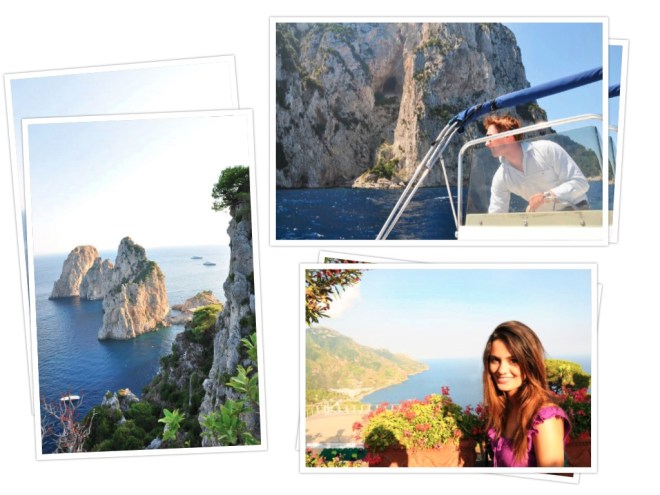
Things to do: The first time I visited I went to Positano. This is possibly the most visited town along the coast and rightly so as it is stunning. You’ve probably seen pictures of views from hotels with the iconic yellow church steeple all over instagram. On our most recent visit we went to Capri and Ravello. Capri is its own island rather than a town along the coast, and has its own magnificent views – most famously of ‘I faraglioni’ – the two giant, iconic rocks that jut out of the sea. We decided that we wanted to see them up close so we rented out a powerboat and did a tour of the island from the sea. We went through the famous hole in one of the Faraglioni and visited one of the many cool caves that are dotted around the island. In the bay outside the cave we had a picnic on the boat and I think I can categorically say that was one of the loveliest days of my life.

Capri is also famous for the blue grotto – a cave that is illuminated bright blue inside because of the angle at which the sunlight hits it. You get in on little rowboats and the men that steer them love to sing Neapolitan songs inside the cave as they echo so loudly. This and the strange blue light make it one of the most eerie and magical experiences I’ve ever had. Some people go swimming in the cave after hours when the boats have left. This is illegal and we definitely did not do this…nope…

If you go to Capri you must make sure to visit the area above Anacapri – the most elevated part of the island. Getting there is fun as you have to get the funicular, and the views from the top are totally breathtaking.collage-2016-03-09

We wanted to go to Ravello on this trip as it is one of the most high-up of the towns along the coast (you have to get a bus that goes up the mountain from Amalfi) and thought it would have amazing views. We were not wrong. The most memorable moment here was the view from the Terrace of Infinity in the gardens of Villa Cimbrone. This Medieval villa is famous for its beautiful flower-filled gardens that gradually lead the way to a statued terrace with stunning views. I don’t usually mind heights but looking down here made me feel very dizzy. There is a tiny, half-hidden bar below the terrace with a balcony overlooking this view that’s about big enough for two people. We got my favourite pre-prandial, a bright orange Aperol.

I’ve been to the Amalfi Coast about four times now, and even though I love ticking as many countries as I can off my bucket list, it keeps beckoning me back. My grandparents are from this area originally, so I guess there’s a sort of psychological affinity there, but really I just think it is uniquely beautiful. Perhaps Steinbeck said it best in his book about Positano;”Positano bites deep. It is a dream place that isn’t quite real when you are there and becomes beckoningly real after you have gone.”

Where to stay: Hotel Rufolo. Nice decor and great views. It is one of the more slightly affordable hotels for the view that you get. My dream is to one day stay at Villa Cimbrone.

Where to eat: Anywhere. Really, I have never had a bad meal in Amalfi, even in the most touristy of areas. The seafood especially is consistently amazing. One particularly memorable restaurant was at Cumpa’ Cosimo in Ravello. The food here is trattoria style rather than Michelin and is run by a lovely, frilly apron-clad woman called Netta. She’s such a larger than life figure that most locals simply call the restaurant Mama Netta’s. The food was so good here that I can still remember the taste. I recommend the pizza.

Anegada

Girl on boat with hathammockGirl in front of yellow jeep wranglerdvanbgirl on bench in anegada with skybluocGirl at Anegada Beach clubroomteBreakfast at anegada beach club luxury tentsgirl eating coconut on beachAnegada ocean and beachbuoyccoconutGirl in bar in anegadaduskanldandonkeygirl in anegada mangroveloblfGirl in bikini with conch in anegada in ocean

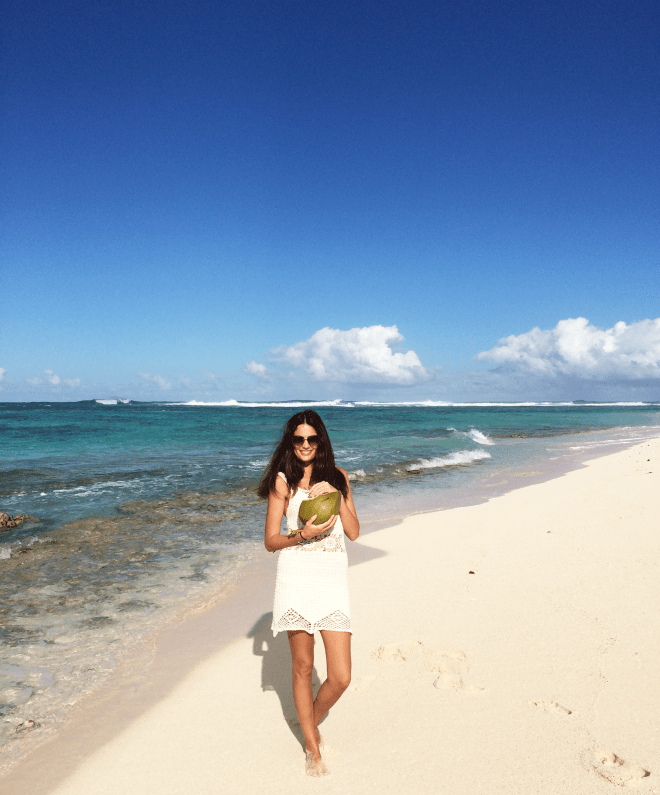
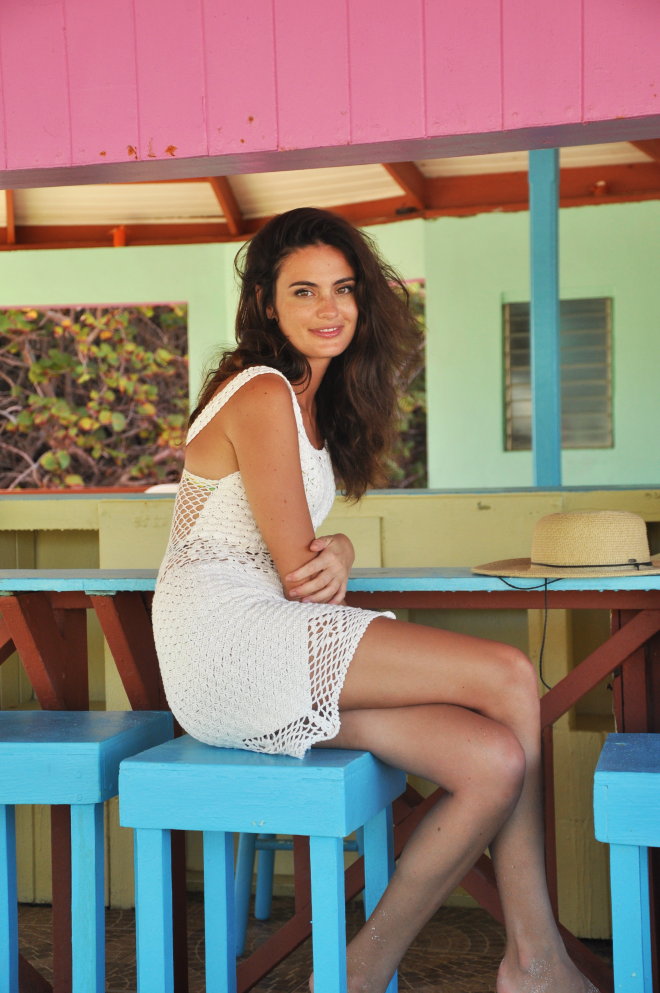
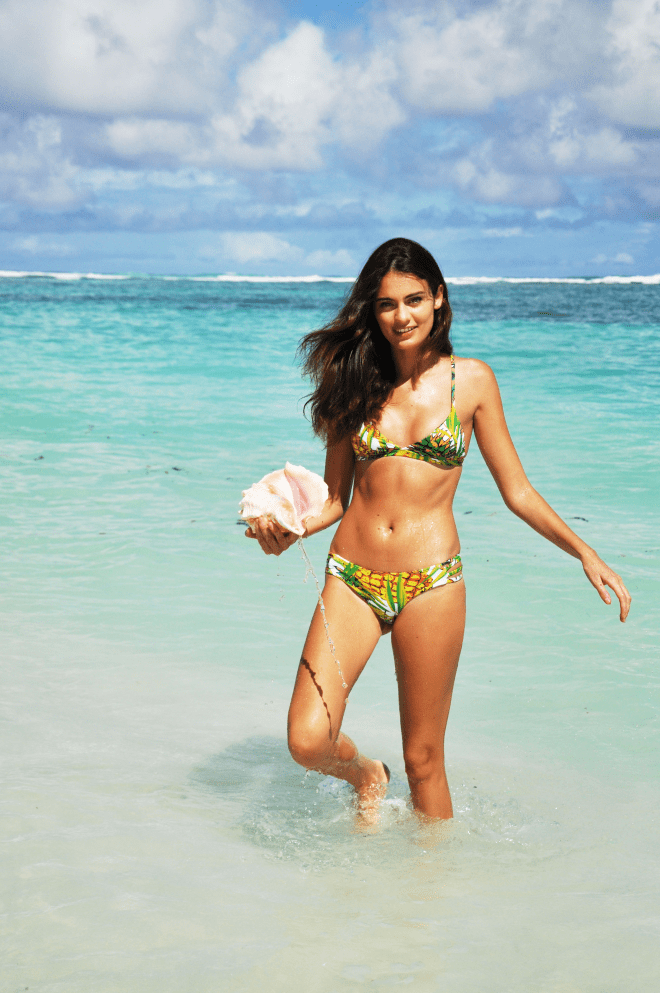
Pineapple bikini – Midori Bikinis – Top, Bottom; Crochet dress – Souvenir from Cuba.

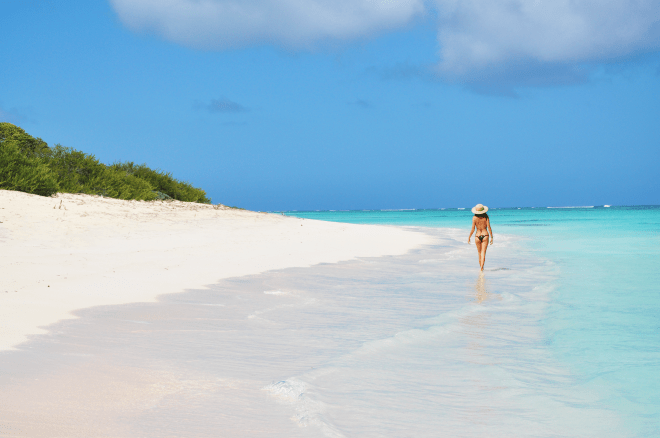
If the BVI is already off the beaten tropical track, then lonesome Anegada, the most remote of the Virgin islands, has fallen clear off and into the ditch. Being on Anegada feels like being on another planet. The landscape is eerie and desert-like, populated by cacti and swampy-sea shrubs. The island is so flat that you’d be forgiven for missing it on the way in on the ferry – the biggest giveaway that you’re arriving is the ocean going from a deep blue to a dreamy tropical turquoise.

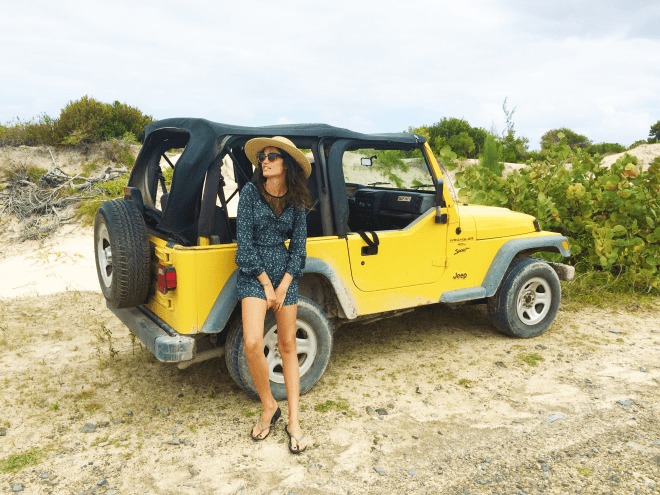
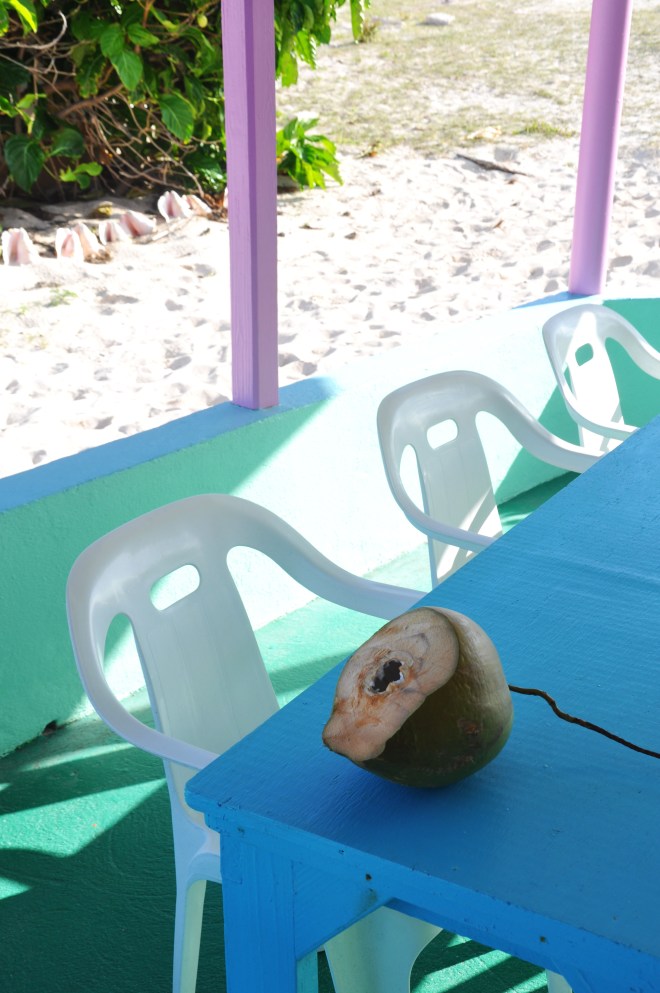
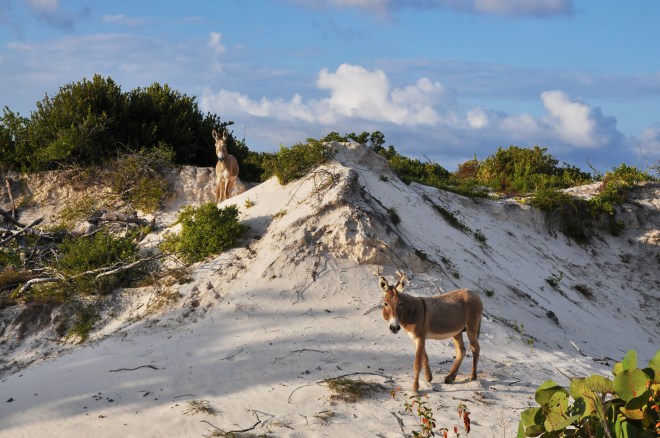
If you’re looking for an activity holiday then this probably won’t be it. They say that the donkeys and flamingoes outnumber the people (this is definitely not true), and there are only a handful of sun-bleached bars and restaurants. But if if you like the idea of feeling like you’ve been ship-wrecked on a desert island, and having nothing much more to do than listen to the sound of lapping waves, then this is the place for you. One of our favourite things to do was to walk along the endless deserted beaches to our favourite sleepy, pastel-coloured bar for a rum cocktail. If we were feeling lazy we’d go in our Wrangler rental with the local radio station on at full blast – having the radio on here feels strangely like a link to forgotten civilisation. It’s a cliche’ but my boyfriend and I decided that if paradise had beaches they couldn’t look much better than the idyllic beaches on Anegada. They’re even mysteriously strewn with hundreds of huge, beautiful pink Conch shells that you stumble upon everywhere. Maybe I’ve not travelled enough – is this the case anywhere else?!

The irony of travelling to such a remote place is that you end up getting to know the few tourists and locals you meet better than you probably would somewhere busier. It’s also the perfect place to go with a group of friends. The second time here we sailed over in a big group. We moored up to a bar with a pretty empty dance-floor but we soon changed that around and ended up having one of the best nights of our time out here.

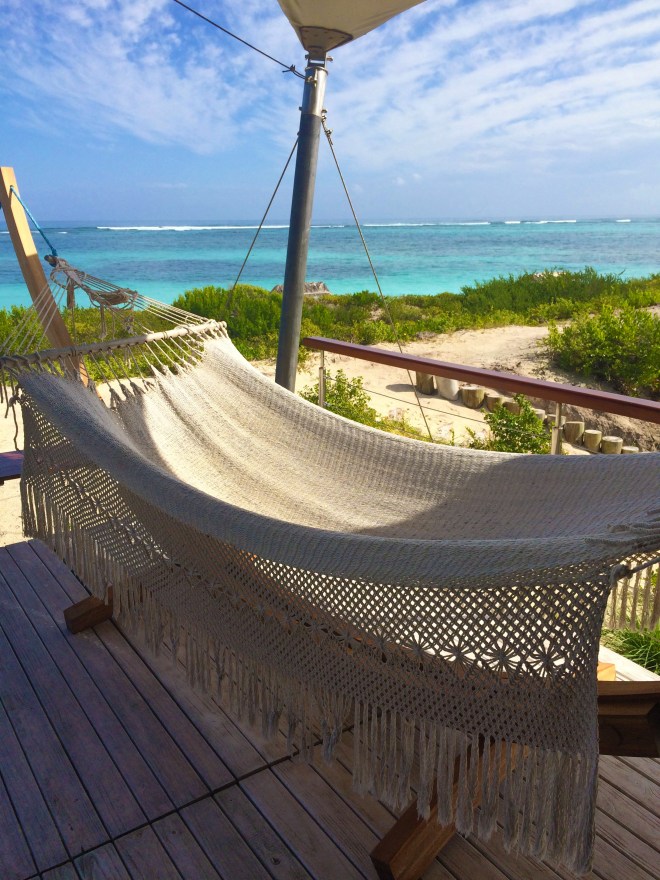
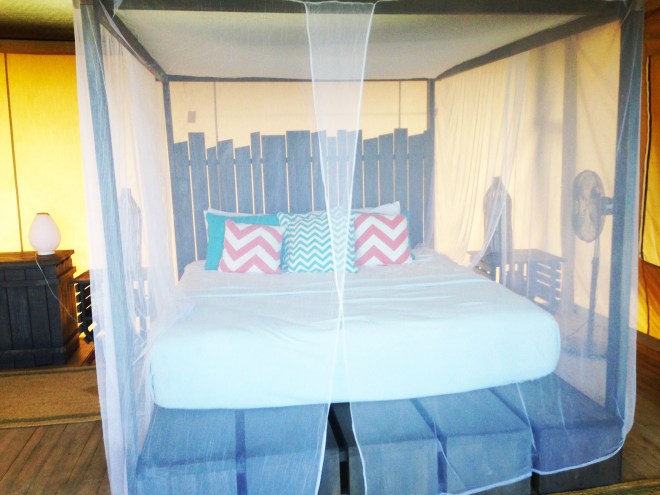
Sleeping: We stayed at the Anegada Beach Club sea-front tents, which we saw on our first visit and vowed to come back and stay in. It’s not really camping as you know it – think four-poster beds with mosquito nets blowing in the breeze, deck hammocks, solar-powered showers and views overlooking a milky-blue Atlantic Ocean. Each tent even has it’s own mini path to the beach. They have paddle-boarding and snorkelling gear for in- between tanning sessions.

Eating: Anegada is famous for its lobster. They have so much of it and in most places it’s plucked straight out of  lobster traps and cooked right in front of you in converted oil-drums. We went to the Lobster Trap for my birthday meal. It has tables on a jetty decked out with fairy lights right over the water. We were the only people in the whole restaurant! If you want to visit at a busier time of year then the lobster festival is held on varying dates in November. 

Neptune’s Treasure: Famous for it’s cinnamon buns and home-made bread.  Have breakfast while watching the boats moor up on the harbour.

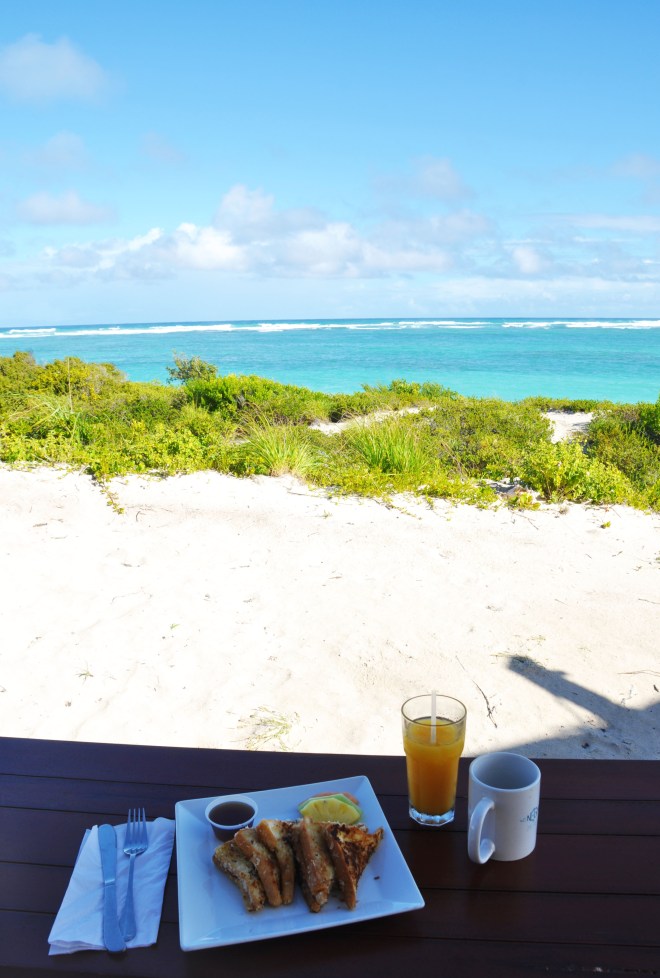
Anegada Beach Club: Get the coconut French toast!

passing ships

Girl in bikini on long beach tortolawatsitsGirl in bikini bvilbnbprofil1lbsnblkdmif3likecp4ff

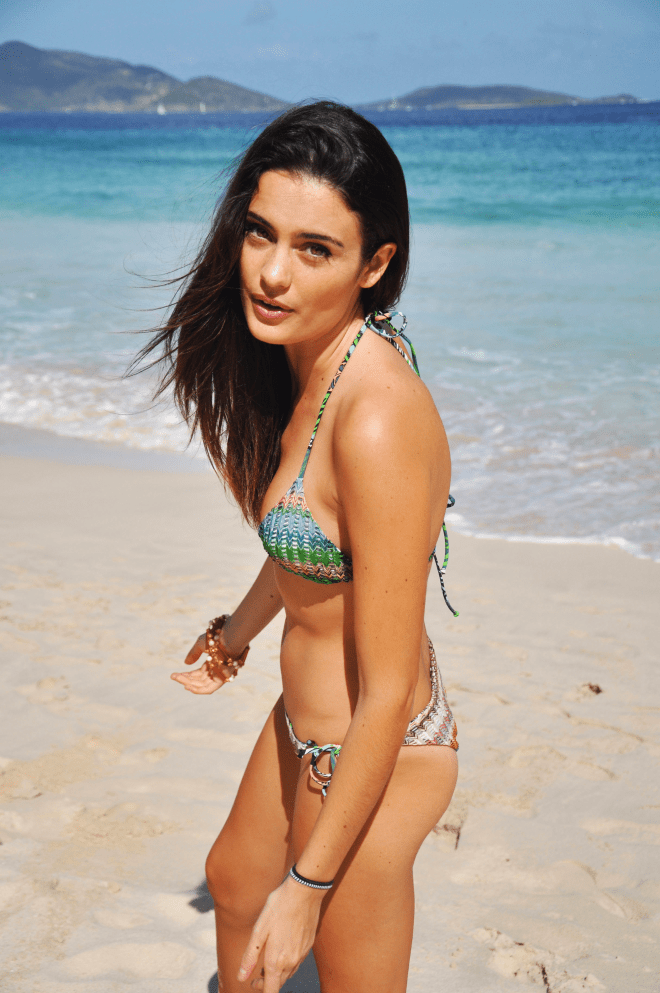
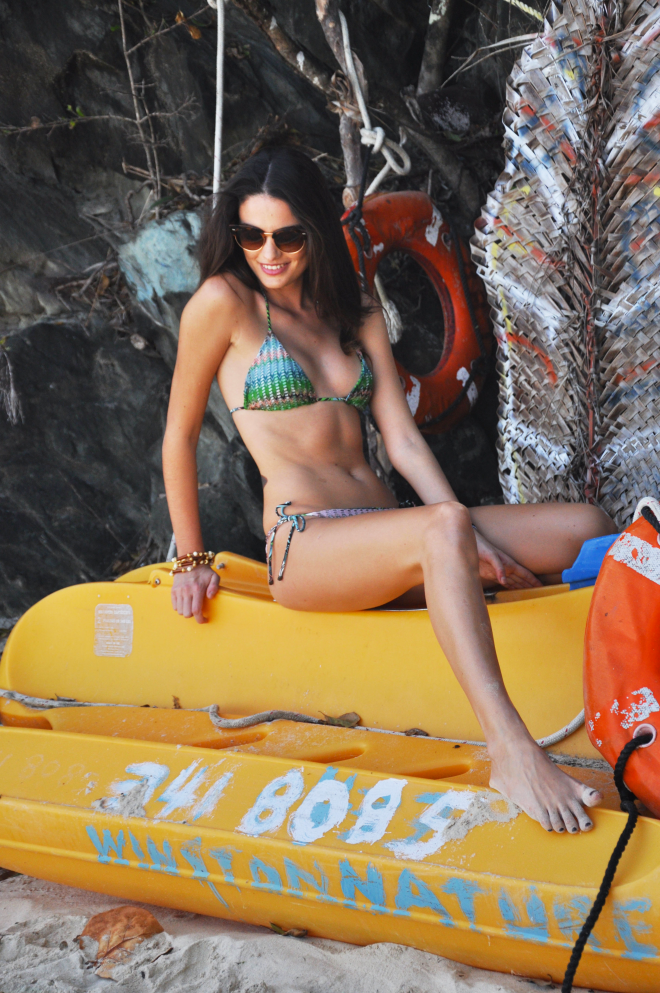
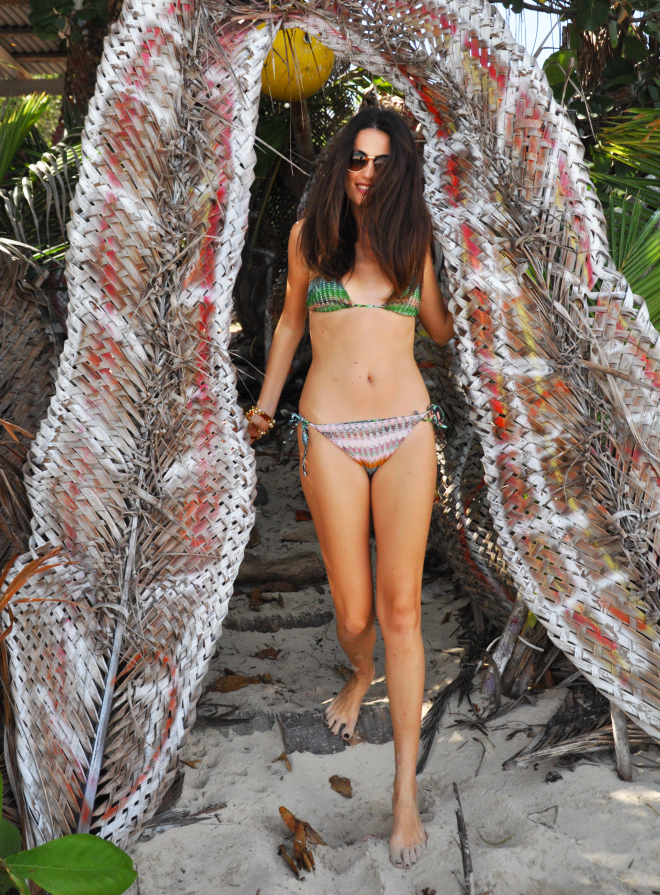
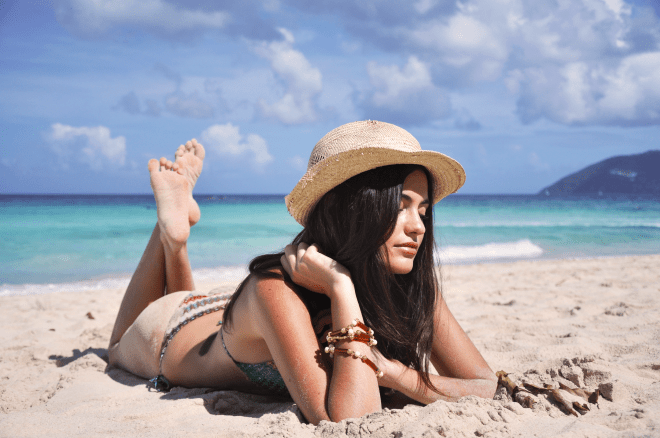
Bikini – Missoni very similar here. I also love this one-piece and this bikini on sale. Necklace worn as bracelet – Givenchy vintage; Hat – lying around the house; Sunglasses – Gucci. 

Location: Long Bay, Tortola

I hope this seventies revival never ends. I keep panicking that its inevitable demise is just around the corner. I’ve had this vintage Givenchy necklace forever and I feel like I can wear it with anything I buy at the moment. I thought it would go perfectly with this Missoni bikini that I managed to extort from my family as a Christmas gift. I won’t get started on Missoni or I’ll start gushing uncontrollably so suffice to say that I think their use of texture and and tactile design is the best in the industry.

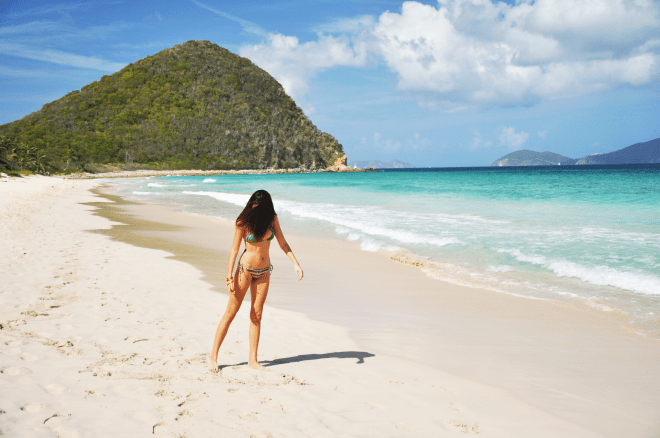
This is one of my ultimate beach-crushes in the BVI. I love the hill in the background, it reminds me of a teeny-tiny St. Lucia. Amazingly, the beach is never crowded – it always looks pretty much like it is here in the pics. When I’m there I always try to get a fresh coconut at “nature boy’s” tiny beach bar that you can just about see in a couple of the shots. It occasionally collapses with the breeze and is quickly repaired with some deft palm-leaf rearrangement. So much better than bars that don’t fall over.

Florence

pvpisigfshagdfarcheswalkfjacketfltryshadowfflyouyshowf

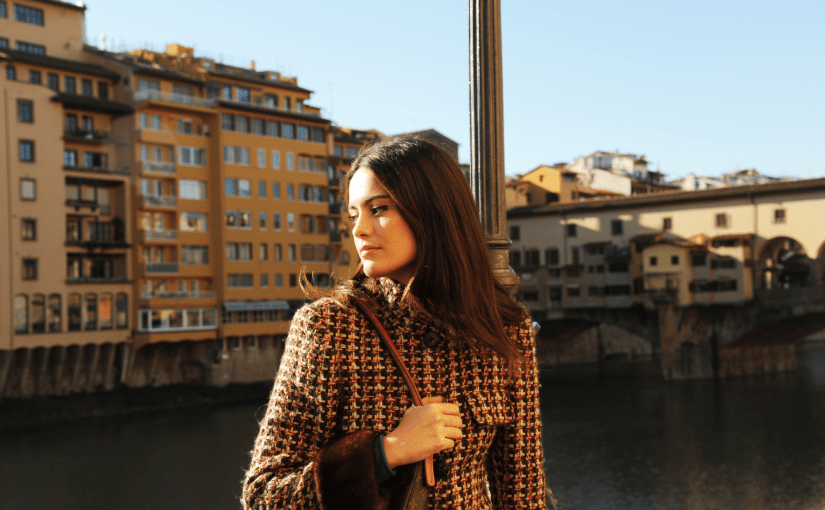
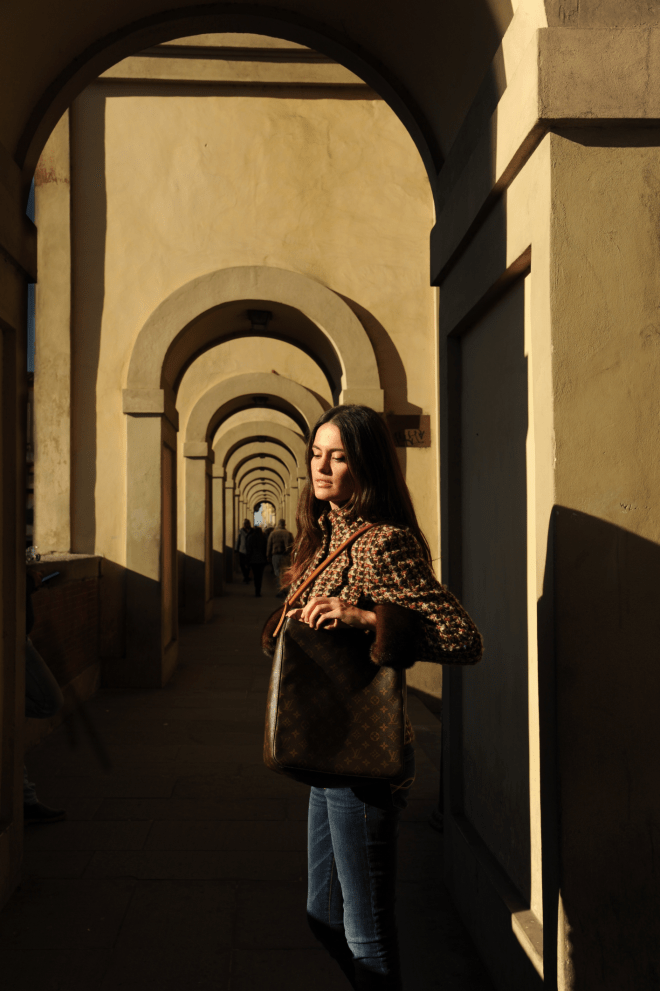
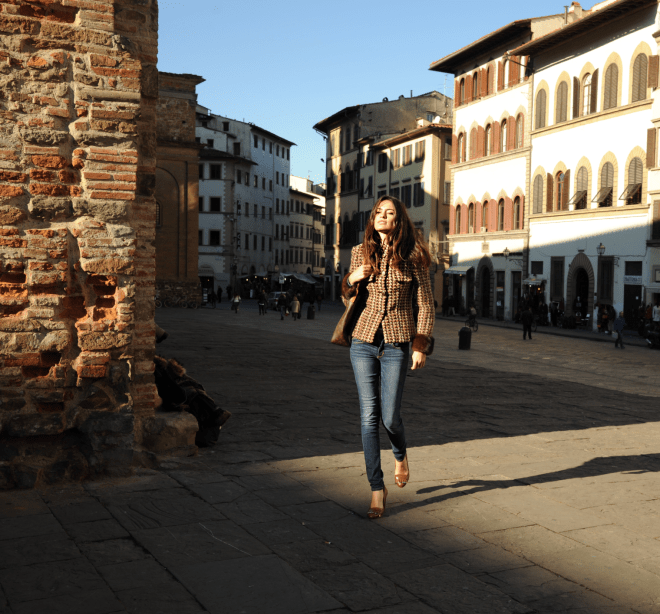
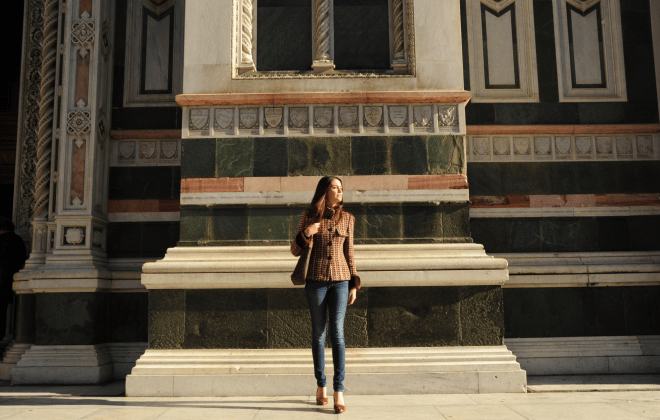
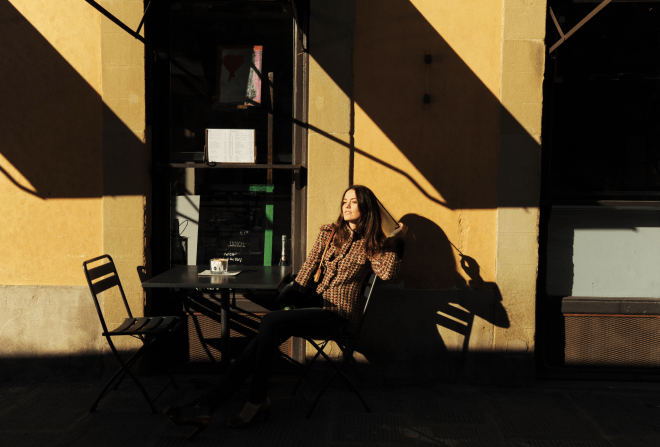
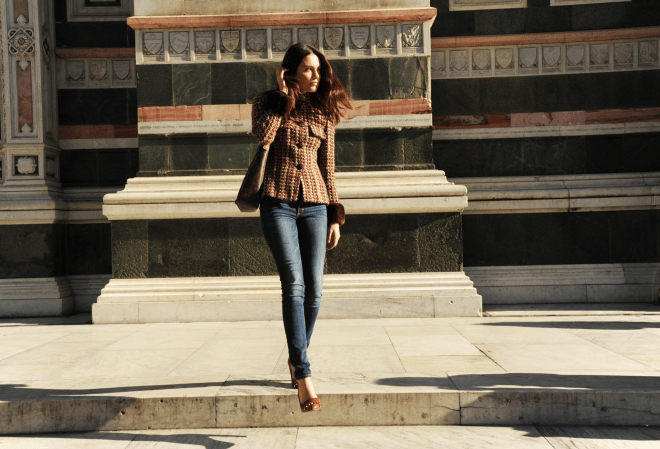
Chanel-style jacket customised with faux fur cuffs – Tailor-made; Jeans – Abercrombie & Fitch similar here; Shoes – Nine West; Bag – Louis Vuitton vintage

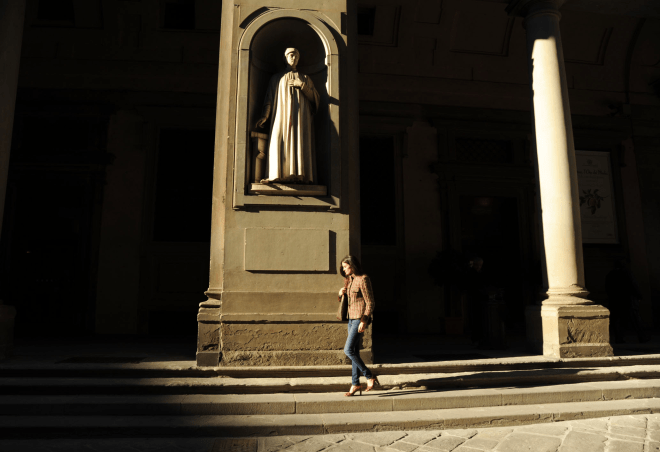
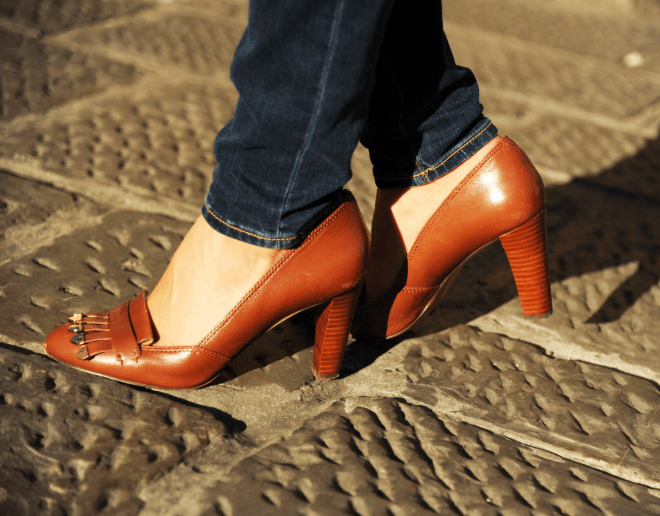
I’ve often wondered what it is about Florence that makes it so special for so many people. There are lots of beautiful cities in the world but I’ve yet to meet a person that thinks that Florence is just meh…Maybe it’s the fact that there are so many intact Renaissance buildings, and so few modern ones, which is rare for any city. Even the roads and pavements with their distinctive ‘stab marks’ (last pic) seem untouched by time. There’s also the fact that like the rest of Tuscany, what’s attractive is not just the beauty of the place, but the lifestyle that goes with it – amazing food, beautiful clothes, and of course, the best gelato in the world.

I also think that Florence is the probably the most romantic city I’ve been too. It seems a strange thing to say but I always seem to imagine Florence at sunset. There’s some sort of magical orange light about it at all hours of the day. I’m sure it’s just the colour of the buildings that makes it seem that way, but it’s certainly beautiful. My Italian family lives quite close to Florence, and it was always my favourite place to go for a date… Continue reading Florence