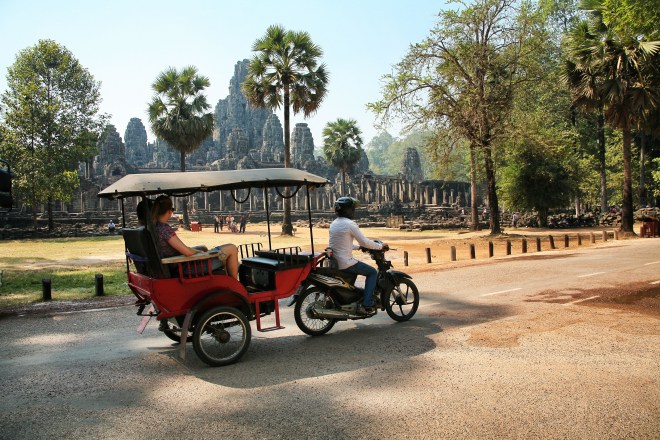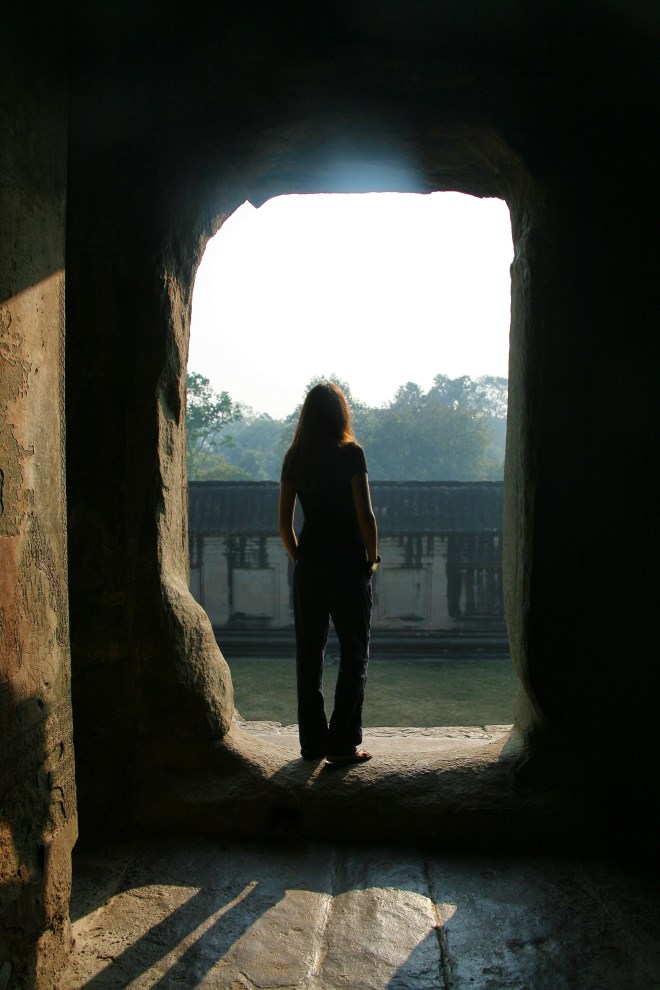
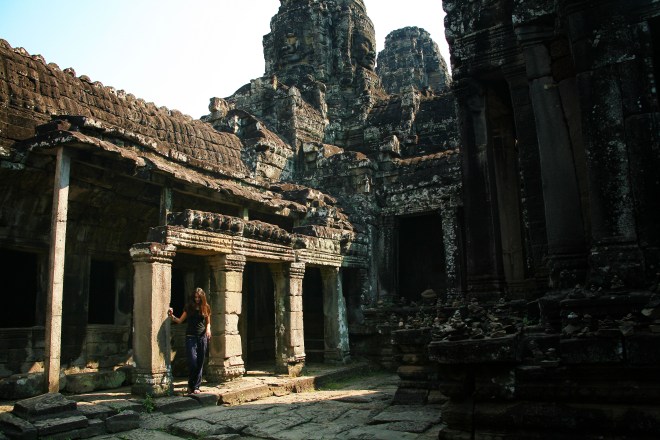
Ten ways to beat the crowds at Angkor Wat

Preah KhanBayon templeBayon TempleAngkor ThomAngkor Wat

GO IN THE OFF SEASON

In Cambodia, April to September is considered low/monsoon season and sees a huge drop in the number of tourists. Peak season is December to February. April and May are very hot and humid.

Just because it’s monsoon season doesn’t mean that it will rain every day, and when it does it’s usually heavy tropical rain, which can lend a different kind of romantic atmosphere to the temples. Visiting at this time means that the vegetation is at its lushest and greenest, which will look especially impressive at temples like Ta Prohm, Preah Khan, Beng Mealea and Koh Ker. Also, the lichens and mosses that cling to the temples come to life when damp, adding a characterful vibrancy to the stones. Of course if you’re in Cambodia not just to see the temples but also to hit the beaches at Koh Rong, it might not be the best time to go. Bear in mind also that it will be more humid in the wet season.

BUY YOUR TICKETS THE DAY BEFORE

This way you can be one of the first people in the complex while everyone else is in the long ticket queue. The office is open from 5 am to 5:30 pm and tickets can be valid for one, three or seven days.

ENTER ANGKOR WAT THROUGH THE EAST GATE

If you’re not particularly fussed about seeing the sunrise at Angkor Wat, or already have, then start the rest of your days by entering from the smaller east Gate instead of the main west gate. This side of the park sees markedly fewer tourists in the morning.

GET UP EARLY AND DO IT IN REVERSE


Getting up early won’t necessarily help you if you do the typical route, as everyone else has the same idea.

Where it will help is if you reverse the order of your route. The most heavily visited temples are, in this order, Angkor Wat, Angkor Thom (including Bayon), Ta Prohm, Ta Som and Banteay Srei. Most of the day tours visit these five temples only and this is where you’ll find the biggest crowds.

The logical order of visiting these areas is in the same order as above. You can outsmart the crowds by acting counter-intuitively and starting your tour from the bottom of the list.

You can combine other temples that are nearby when using this strategy. Ta Keo for example, is right by Ta Prohm and well worth a visit.

Another advantage of visiting the temples in reverse is that you get a build-up effect that ends with the most dramatic ones – Angkor Wat and Thom. This can help to avoid temple fatigue.

PICK YOUR TIMES

Even the most popular temples experience a lull in the crowds at certain times of the day.

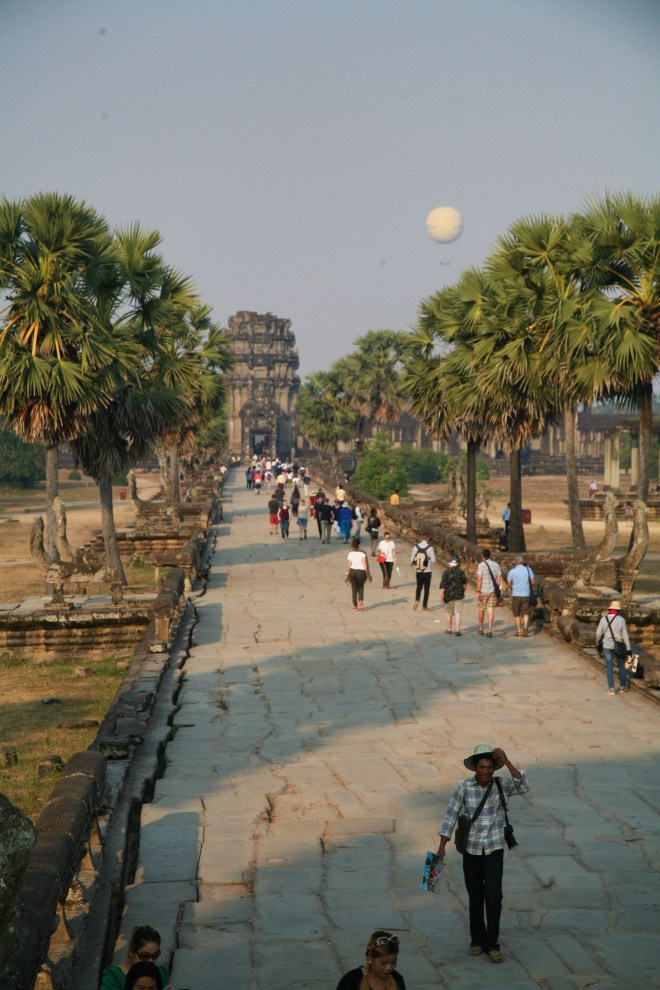
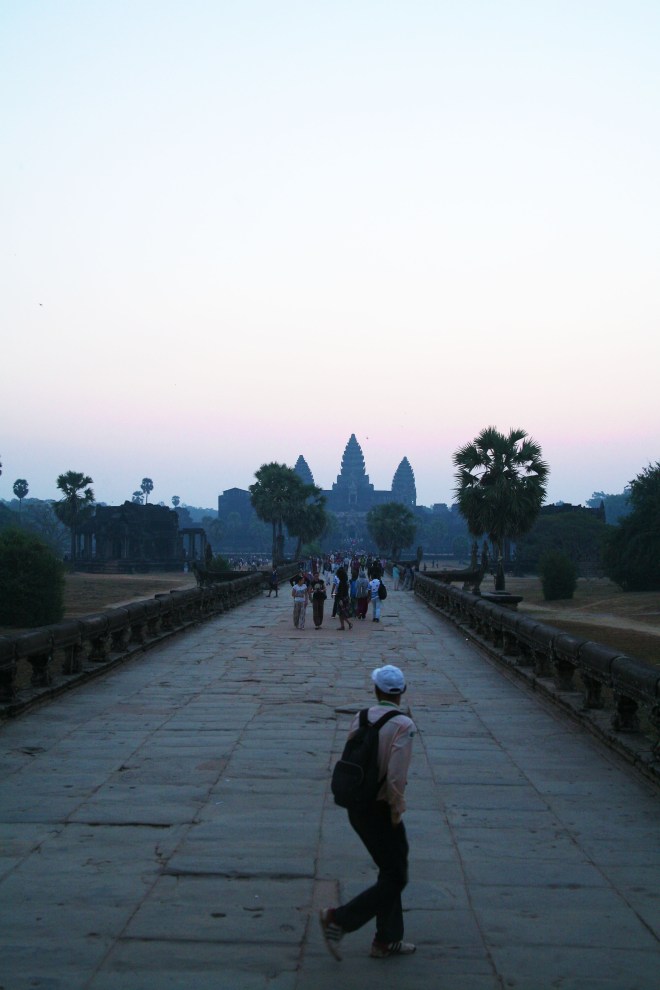
Sunrise at Angkor Wat is a sea of tourists, especially at the weekends. However once sunrise is over, the crowds thin out as people head back to their hotels for breakfast. Some start to return at around 9am but dissipate again for lunch. By this time a lot of people are exploring other temples so you should find plenty of quiet areas to explore in peace, especially at the rear of the temple.

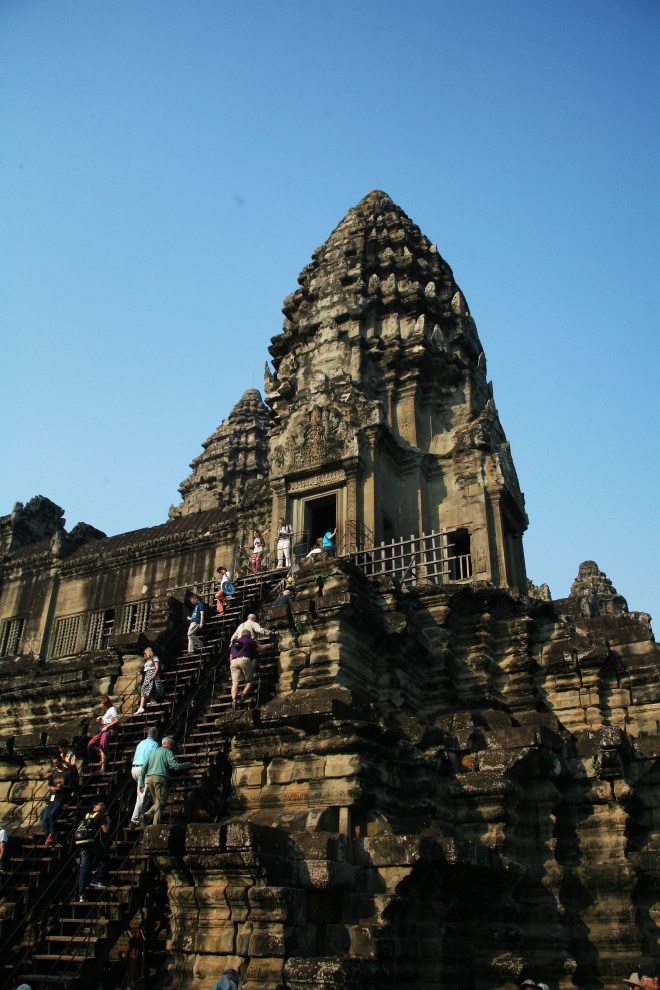
Conversely, going very early/at sunrise is a good rule for most of the other temples, as everyone is at Angkor Wat. The light at this time of day can be quite beautiful. If you’re intent on climbing up the central tower at Angkor Wat, it’s a good idea to get there early. Bear in mind that only 100 visitors are allowed each day, so make sure you’re in line while everyone is watching the sunrise, before 7.30. A lot of people using this strategy say they had the whole central tower to themselves.

Going to the temples at sunset or just before closing also generally works, as all the crowds flock to Phnom Bakheng to see the sunrise from the top of the hill.

So the general rule is – Go early (except for Angkor Wat and Ankor Thom) or late in the afternoon/sunset (except for Phnom Bakheng). Prioritize the temples you want to see and plan to see them in the earliest part of the day (6 am – 8 am) or the latest part of the day (4.30 – sunset) while combining your route with some of the lesser visited places in the middle.

FYI Banteay Srei seems to be an exception to this rule, as some of the tour buses start here, and being small and popular due to it’s pink sandstone colour, it never really seems to experience any significant lull.

Another tricky temple is Ta Som. Although it doesn’t have a particular time of day where it’s significantly less busy, it’s only a brief stop for the tour buses. This means that even if you show up and it’s crowded you can wait a short while and the crowds will thin between buses.

VISIT THE MORE MINOR TEMPLES

Trust me. While Angkor Thom and Wat are undoubtedly the most dramatic of the temples, the others all have their own unique beauty.

Angkor Thom outer walls: Right at the heart of the park are the the Angkor Thom walls, which generally remain pretty quiet. You can enter from any of the gates and simply walk along the wall to the next gate. From here you’ll have beautiful views over the area and be able to visit the small and generally empty Prasat Chrung temples at each corner. The North-West Prasat, overgrown with lush vegetation, is particularly beautiful at sunset.

Baksei Chamkrong: Again, this temple is just opposite the busy South gate, and yet they’re a world apart. Just opposite the major temples of Baphuon and the Terrace of the Elephants is perfectly preserved Baksei Chamkrong, which though quite important archeologically, is inexplicably devoid of people. From here you can walk along a forest path to blissfully quiet Prasat Bei.

Banteay Kdei: Another romantic temple of tumbling and overgrown courtyards and halls covered in pale green lichen. The rear of the site boasts one of the most stunning strangler figs in the park. You shouldn’t have trouble with any crowds here.

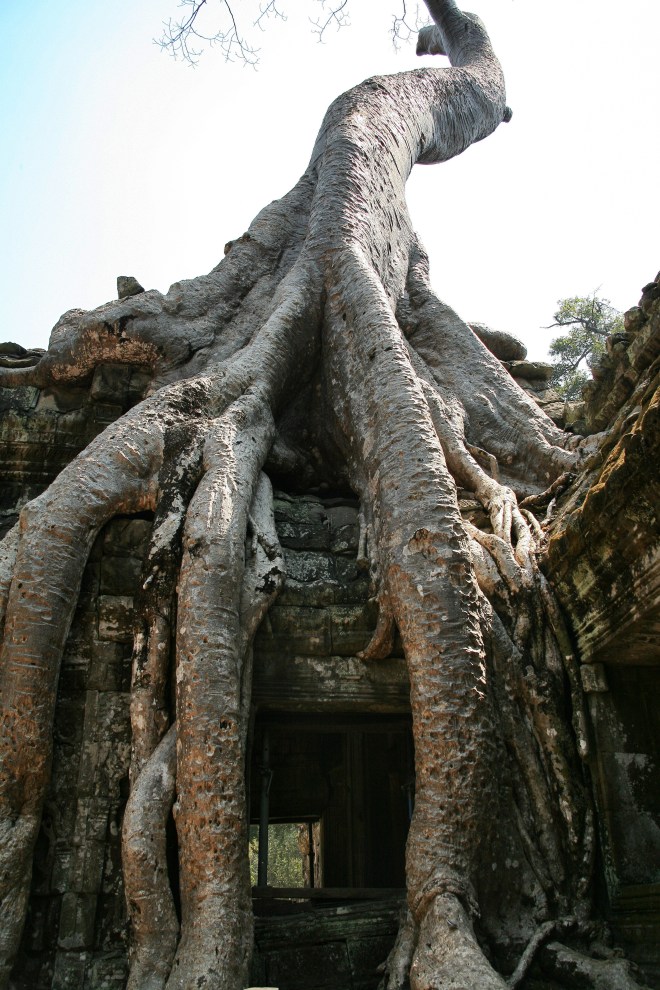
Preah Khan: If you want the romantic atmosphere and beautiful protruding tree roots of Ta Prohm but with fewer visitors, visit Preah Khan. To the north-east of Angkor Thom, Preah Khan is much larger than Ta Prohm and wasn’t used as a set in the Tomb Raider movie, so while it’s just as atmospheric, it suffers less from overcrowding.

Ta Keo: Just behind Ta Phrom is the unfinished but incredibly well preserved Ta Keo temple.

Ta nei: Right by Ta Keo temple is Ta Nei. If you’re absolutely adamant on avoiding the crowds then this is the temple for you – its location off a muddy dirt road ensures that no buses stop here at all. Enjoy the peace and the sound of cicadas.

GO LONG

Consider visiting some of the more remote temples in Cambodia.

Banteay Samre: Further out than the other temples but still within the Angkor complex is Banteay Samre temple. Restored in 1944, it’s in remarkably good condition. The sandsone is of a beautiful pinkish colour that is especially impressive at sunset.

Bakong: Bakong was one of the first mountain temples to be built at Angkor (9th century), and you can immediately see the difference in its unique architecture. One single tower protrudes from a pyramid of five tiered enclosures. It has not one but two moats.

Phnom Krom: Phnom Krom and Bok are the sister mountaintop temples to overcrowded Phnom Bakheng. Phnom Krom is the most southerly of the temples and has the unique feature of having sweeping views overlooking Tonle Sap lake. If you’re looking for tranquillity it’s a good alternative to Phnom Bakheng for sunset. It has the added bonus of being able to drive to the top.

Phnom Bok: Phnom Bok’s position on top of a mountain that requires a 20 minute climb ensures that it’s always pretty much deserted. While the temple is worth seeing, the real highlight is the view over Phnom Kulen to the north and the plains of Angkor to the south. If you want to watch the sunset from here rather than Bakheng to avoid the crowds, bear in mind that unless you leave straight after the sunset then you’ll be descending in the dark.

Koh Ker: An entirely separate temple complex in the jungles of Northern Cambodia, Koh Ker was the majestic capital of the Khmer empire before it was relocated to Angkor Wat and is absolutely worth visiting. Prasat Thom temple in particular is stunning. Much more reminiscent of a Mayan pyramid than a typical Angkorian temple, each of the seven tiers is now covered in dense, green vegetation, having long been claimed by the jungle. You can now climb to the top via a wooden staircase on the northwestern side. You’ll be rewarded with incredible sweeping views of the Dangrek Mountains bordering Thailand all the way down to Phnom Kulen.

You can combine Koh Ker with Beng Melea as it is relatively nearby (just less than an hour’s drive), but bear in mind that Beng Melea is on the tour bus route and is always quite crowded until about 4.30.

Banteay Chmar: Banteay Chmar is another huge temple complex to the northwest of Siem Reap. A three hour drive away, this is one of the most remote of all the accessible sites, and you will likely have this place almost entirely to yourselves. Left to the the elements and unfortunately suffering the effects of looting, these temples are also beautifully intertwined with jungle.

Preah Vihear: At the very border with Thailand, Preah Vihear is also very remote. Rather than foreigners, you’re more likely to encounter local tourists that visit Preah Vihear due to its political and cultural significance. This scenic mountaintop temple was recently won back by Cambodia after many years of fighting with Thailand. Before then visitors had to sign in at a nearby army base. Perched on a mountain 550m above ground, Preah Vihear has possibly the most dramatic positioning of any of the Angkorian temples, with 360 degree views over the Thai and Cambodian countrysides.

Kbal Spean: Kbal Spean is possibly the most unique of the sites mentioned so far. While there’s also a beautiful pink sandstone temple at the site, the highlight is its position on the river, and the intricate carvings etched into the riverbed almost 1000 years ago. The Hindu carvings are intended to bless the water as it splashes over them, and it’s incredible to think that they are still so clear and hardly eroded by the river at all. One of the largest carvings is directly under a clear, still pool, unbelievably still very visible after so many centuries of being underwater. You can cool off after the climb under a beautifully shady waterfall nearby.

Perhaps because of its uniqueness this site can occasionally get quite busy.  However it’s also a 2 km uphill jungle climb, so you may also find you have it entirely to yourself.

DON’T GO DURING CHINESE, VIETNAMESE OR THAI HOLIDAYS

Many of the bus tours that visit Angkor are weekend getaways for the growing Thai and Vietnamese middle classes. Usually, these trips leave Friday afternoon from Bangkok or Saigon/Hanoi and travel overnight to reach Angkor by Saturday. This means that the weekends see exponentially more crowds. If you can, try to avoid the major sites at the weekends or use that time to visit some of the more remote temples.

Similarly, Chinese holidays can see markedly bigger crowds. The main Chinese holidays are Chinese New year; which in 2018 is from February 16 – 21 (People normally take about 16 days off), Labour day; April 30th and May 1st and National day; October 1 – 5.


SWITCH IT UP – GO TO PHNOM BAKHENG AT SUNRISE AND ANGKOR WAT AT SUNSET

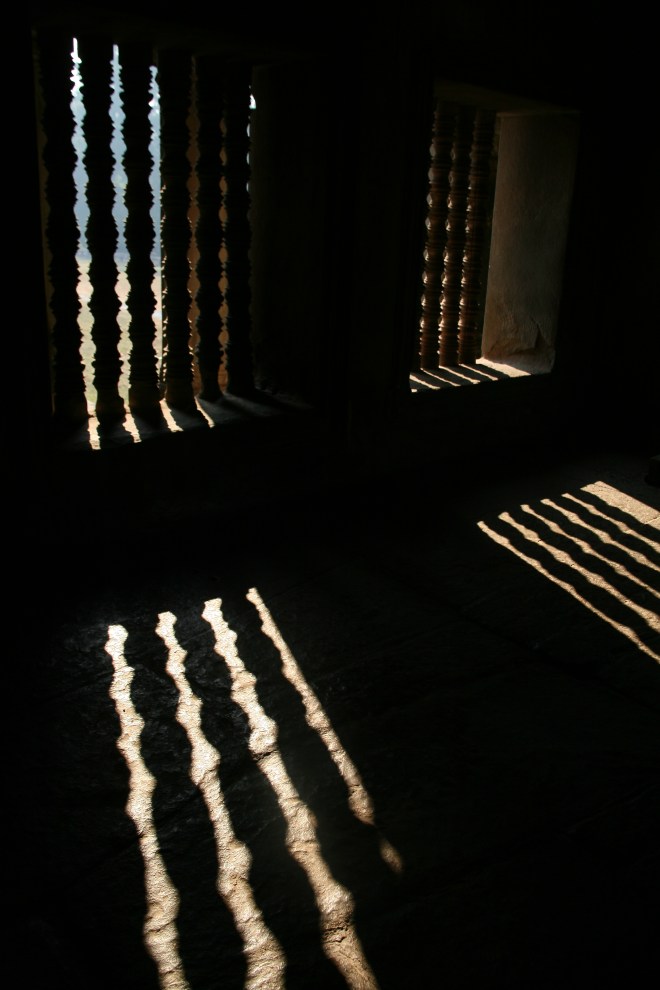
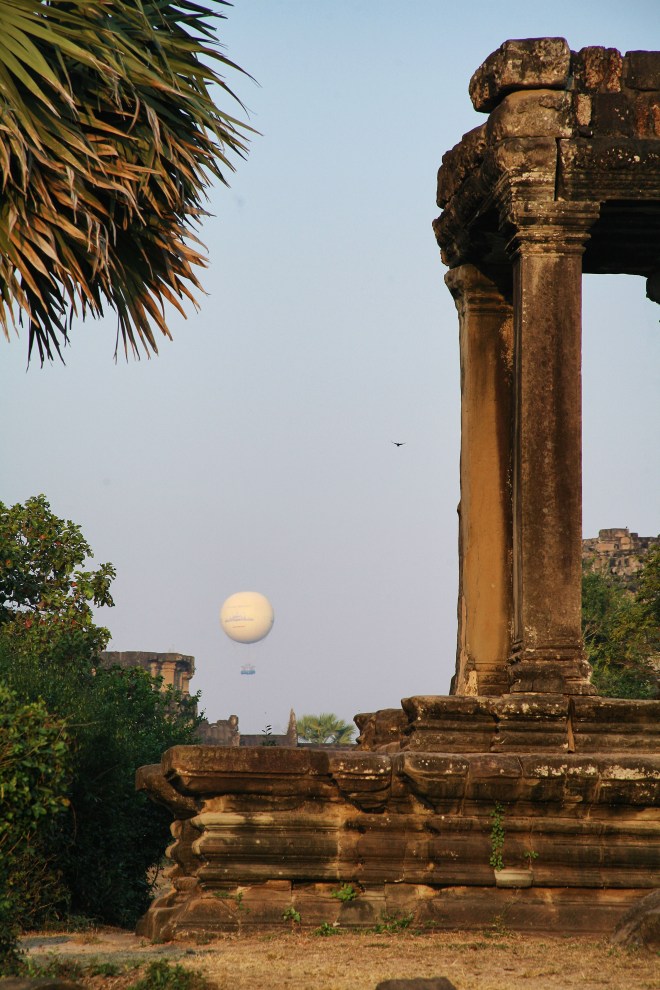
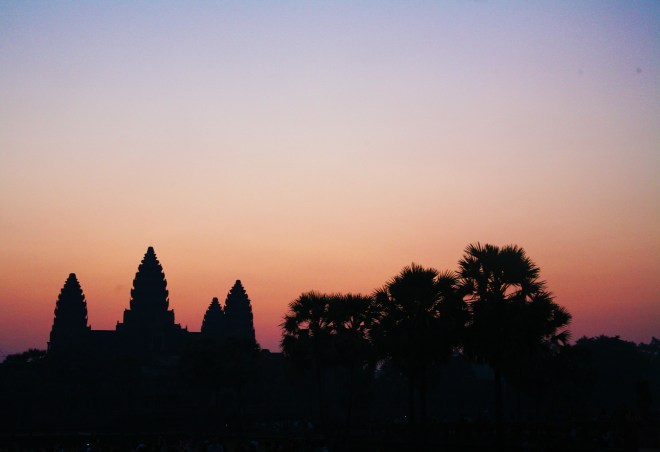
Though it’s famous for it’s sunrise, Angkor Wat is actually set in a westerly facing direction, so the best time to visit according to a lot of people is at sunset, when the burnt orange light streams moodily through the elaborate window columns and reflects off the lotus-covered lake.

With sweeping views of the whole area Phnom Bakheng is mistily beautiful at sunrise, and has none of the crowds you’ll find at sunset. Bring a torch for the short hike.

This Angkor Sunset Finder has suggestions of alternative places to enjoy the sunset.

CONSIDER GETTING A KNOWLEDGEABLE GUIDE

If you have the budget, consider getting yourself a tour guide that knows the area like the back of their hand. They’ll know which temples are busy at which time. Mr. Tong Hann is one veteran tour guide that’s often highly recommended.

Again, if money is no issue, Anantara has a Discovery Tour Package that includes an English speaking guide and organises a private breakfast, high tea or ‘Dining by Design’ at the lesser-visited Banteay Thom temple.
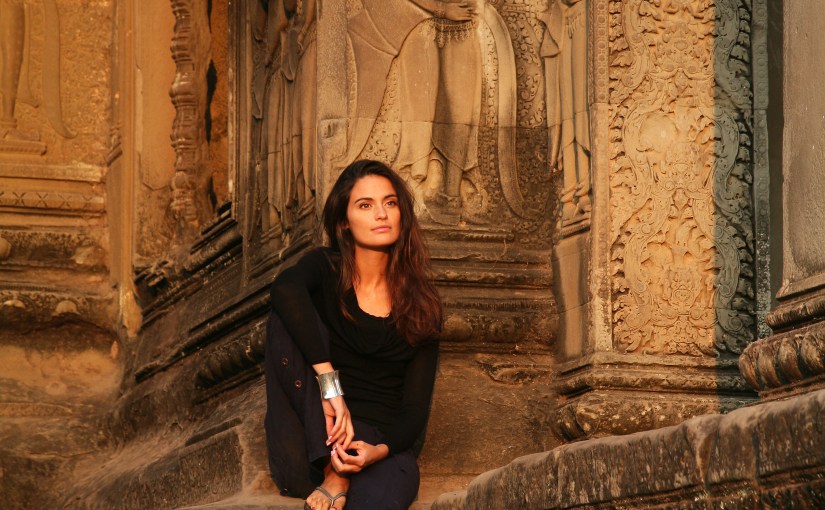
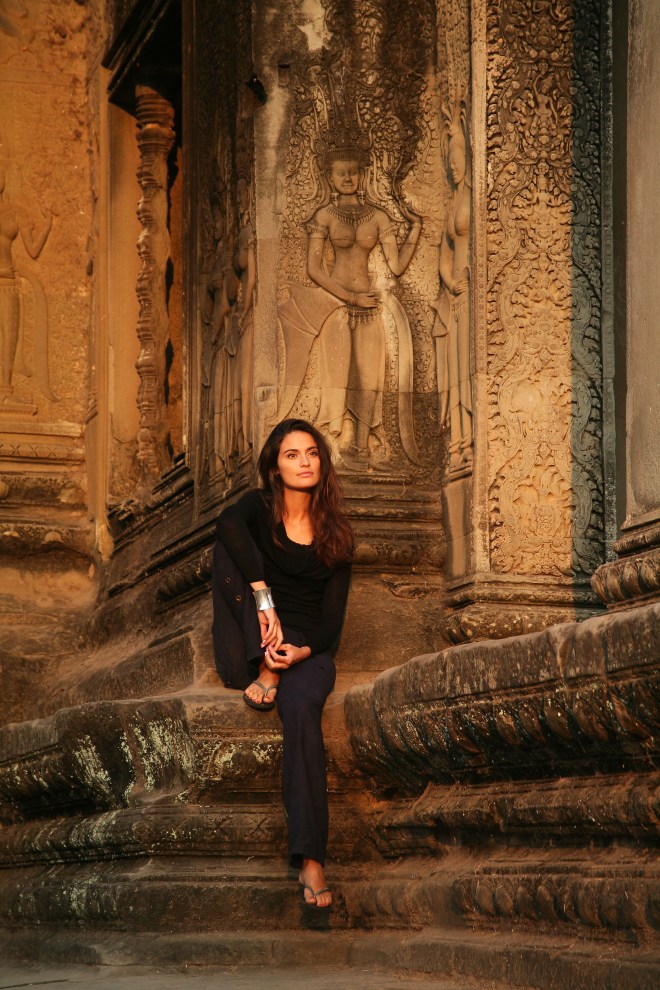


A guide to the temples at angkor wat

girl at Angkor WatTuk tuk in front of templePreah KhanAngkor Wat windowgirl at Angkor WatTa Prohmmonk at Bayon templeAngkor WatAngkor Wat windowsawg3girl at angkor watmonkey at angkor watBayon TempleTa Prohm TempleIMG_9770_Snapseedaw4Angkor Wat bas-reliefsAngkor Wat central towergirl at ta prohmAngkor Wat sunriseAngkor Wat sunrise

Angkor Wat and Angkor Thom

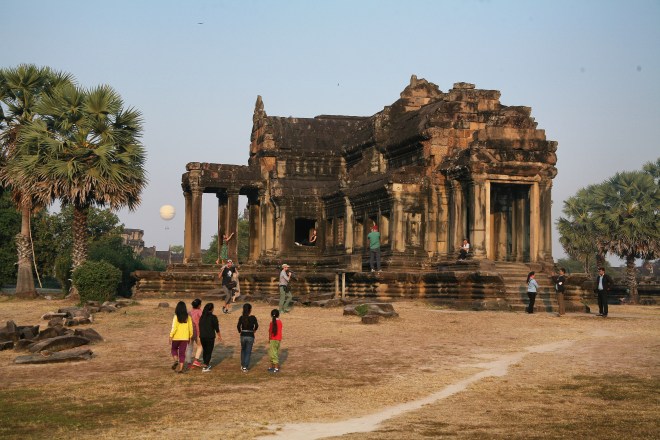
Angkor Wat is not only the largest religious complex in the world, but also one of the largest archeological sites in existence. The main temple is so sprawling that notwithstanding the crowds, you’ll often find yourself wandering alone down a long, empty corridor, or admiring the intricate carvings in a low-lit, echoing corner. The perfect symmetry of the structures creates a play of light and shadows that is mathematically perfect, purposefully designed to evoke a mystical, awe-inspiring atmosphere. Each architectural element is studied; the bas-reliefs of the temple were designed to be viewed in an anticlockwise direction, a practice that has precedents in ancient Hindu funerary rites. This, along with Angkor Wat’s westerly facing direction (most of the other temples face East), led many scholars to believe that Angkor Wat must have existed primarily as a tomb, since the western direction is a traditional symbol of death. Accordingly, the best time to admire Angkor Wat is at sunset, when the burnt orange light streams moodily through the elaborate window columns and reflects off the lotus-covered lake.

The main monument was originally built in the 12th century by the Khmer Empire as a dedication to the Hindu God Vishnu. The layout is intended as an earthly representation of Mt Meru – the five-peaked sacred mountain of Hindu and Buddhist cosmic mythology. The central, lotus-shaped tower is Mt Meru, with its surrounding smaller peaks, bounded in turn by continents (the lower courtyards) and the oceans (the moat). When you wander through the temple to the main tower, you’re essentially travelling back to the first age of the creation of the universe.

Angkor was once home to approximately 750,000 people, making it the largest urban complex of the pre-modern world. But by the time the Portuguese came across the site in the 1500’s, it was essentially deserted. Why this is is still uncertain. Angkor remains a magnificent enigma shrouded in mystery. Just in 2015 new underground towers were discovered along with a huge, mysterious underground spiral. Massive cities between 900 and 1,400 years old have been found beneath the tropical forest floor, some of which rival the size of Cambodia’s capital, Phnom Penh. Every year it seems, Angkor Wat throws up more cryptic questions than it answers.

Ta Prohm

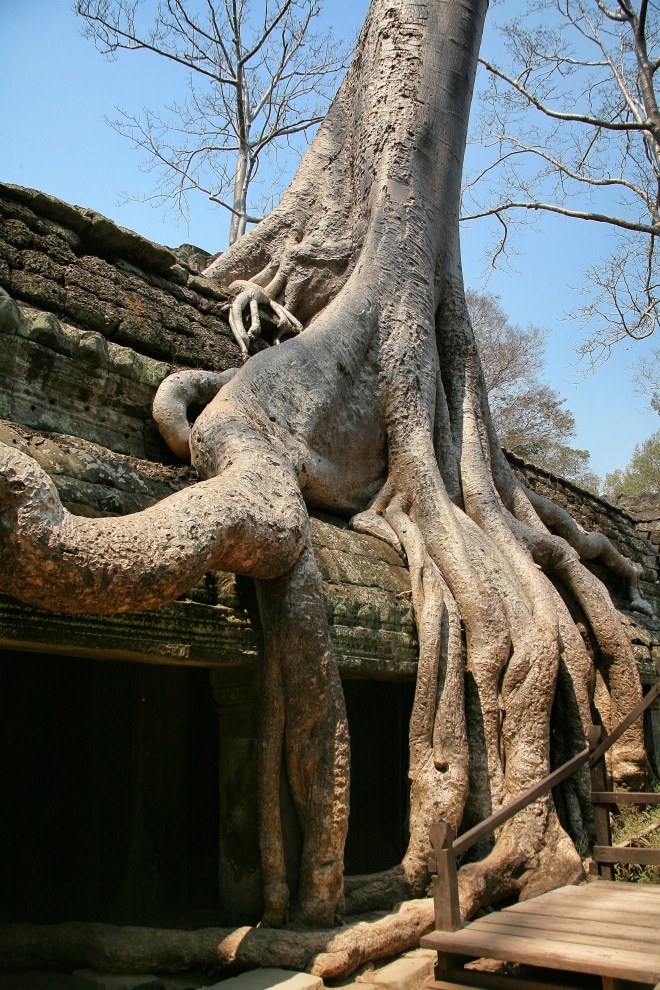
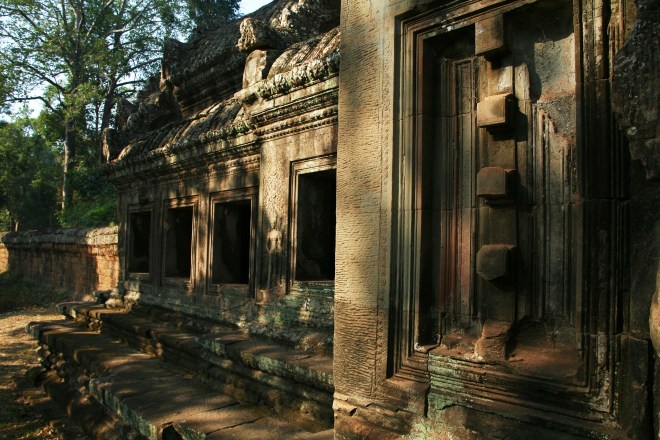
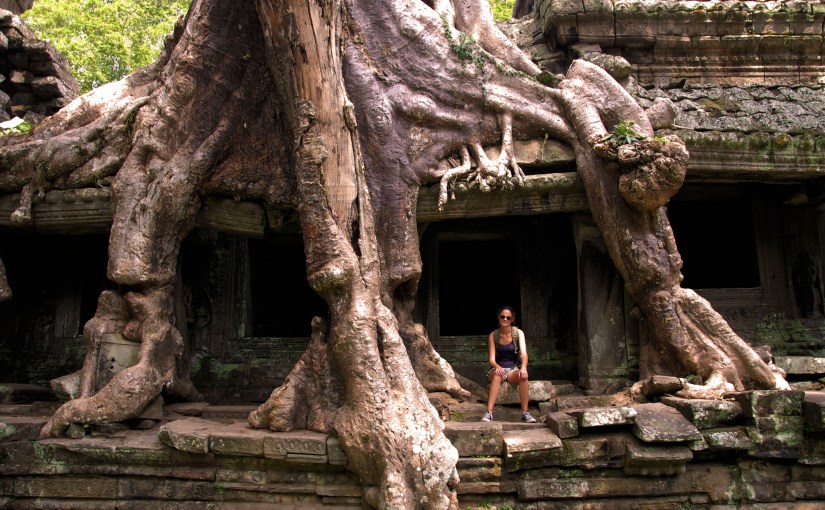
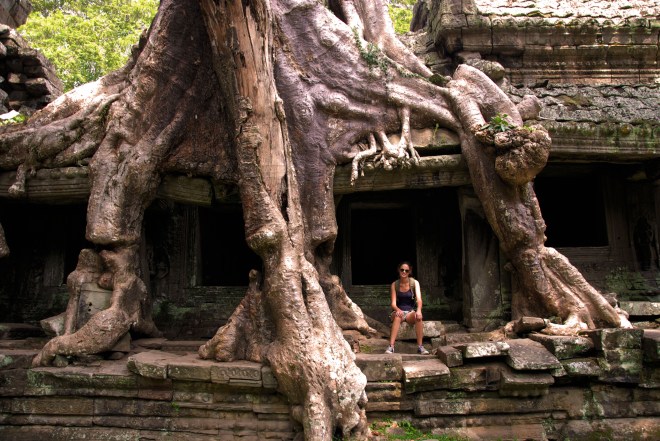
Ta Prohm is a tropical fairytale. Claimed long ago by the jungle, the sprawling, sinewed roots of the aptly-named strangler fig continue to slowly choke the temple walls. It’s one of the few temples to have been left largely as it was when it was found, and it’s easy to imagine yourself as an explorer (or tomb raider) discovering it for the first time. While Angkor Wat is awe-inspiring in it’s symmetrical perfection, Ta Prohm is a dappled, crumbling daydream. Dislodged, delicately carved rocks pour into forgotten courtyards, blocking off obscure corridors and diverting visitors into an unintentional labyrinth. The dappled light filters through the leaves of the silk-cotton trees onto the ancient, lichen-covered rocks, cloaking the entire temple in a surreal, greenish shadow.

Visit first thing in the morning when everyone is watching the sunrise at Angkor Wat. Since this is one of the smaller temples, it gets crowded much faster. I may be biased because it’s my favourite but as the most romantic temple I think benefits most from being viewed when it’s quiet.

Preah Khan

If you want the romantic atmosphere and beautiful protruding tree roots of Ta Prohm but with fewer visitors, visit Preah Khan. To the north-east of Angkor Thom, Preah Khan is much larger than Ta Prohm and wasn’t used as a set in the Tomb Raider movie, so it suffers less from overcrowding.

Bayon

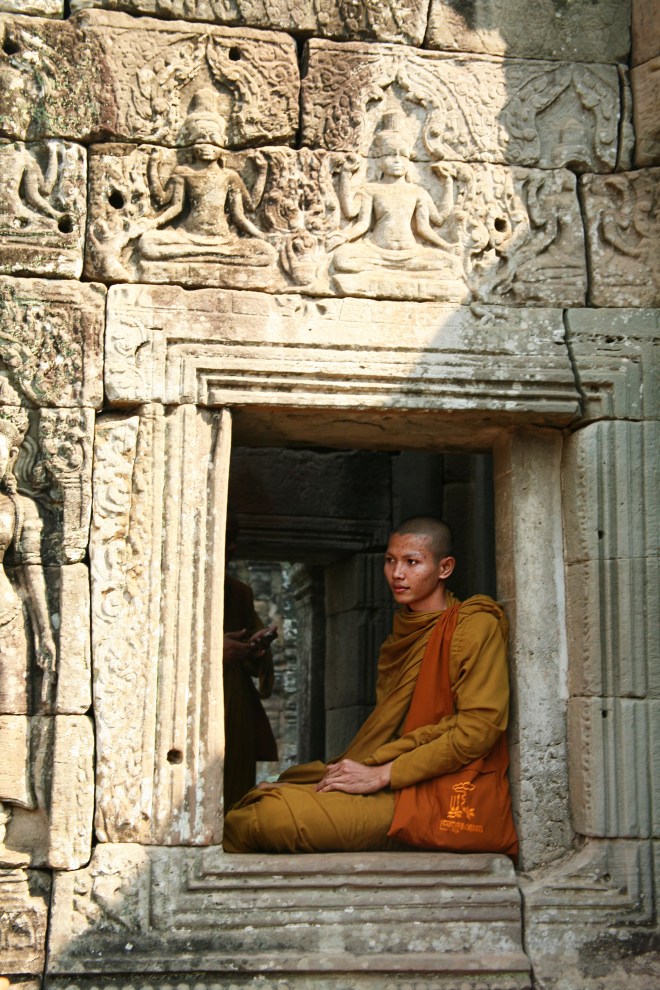
Just north of Angkor Wat is the Angkor Thom temple complex, with Bayon at it’s exact centre. The Buddhist temple is built over three levels and originally boasted 54 towers (now 49) carved with the 13-foot faces of Lokiteshvara – the Bodhissattva of compassion. The columns are carved on all four sides and are staggered on different levels, so that the faces, all 216 of them, loom down on you from all angles. More than imposing, the serene smiles and closed eyes of Lokiteshvara feel comforting, and lend the whole temple a uniquely peaceful, and slightly mysterious, atmosphere.

Bayon looks best just after sunrise or at sunset.

Baphuon

Also in Angkor Thom is the Hindu temple Baphuon, dedicated to Shiva. Built over three tiers that gradually narrow towards the top, it looks the most like a traditional pyramid, if a very intricate one. Climb to the top for wonderful views of the forest that surround it. It’s somewhat camouflaged so be sure not to miss the enormous reclining Buddha painstakingly pieced back together by archeologists.

Baphuon is quite large and not as crowded as some of the other temples, so any time of day is good to visit.

Banteay Srei

Distinctive for it’s unique pink-hued sandstone, Beanteay Srei, once again dedicated to the Hindu God Shiva, is most noteworthy for the amazing condition of its extroardinarily intricate carvings and bas-reliefs.

For a much more in-depth guide to all the more minor and remote temples in Angkor Wat and around Cambodia, check out my post Ten Ways To Beat The Crowds At Angkor Wat.


Chiang Mai elephant sanctuary

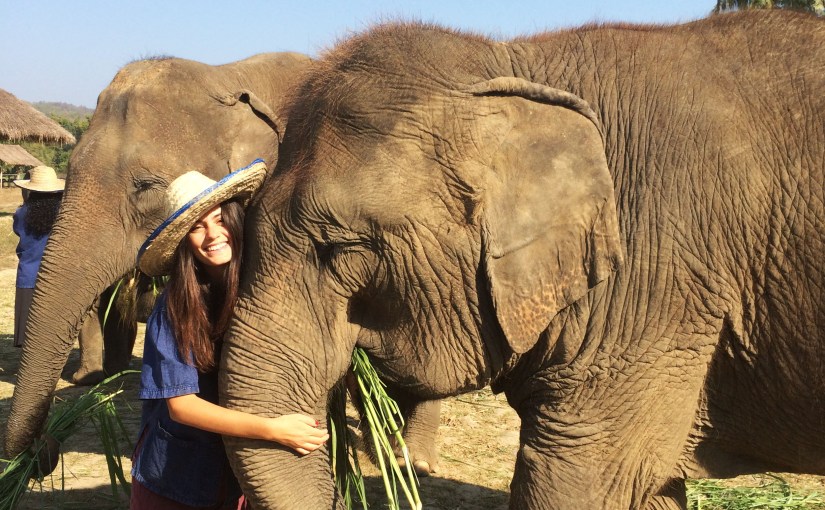
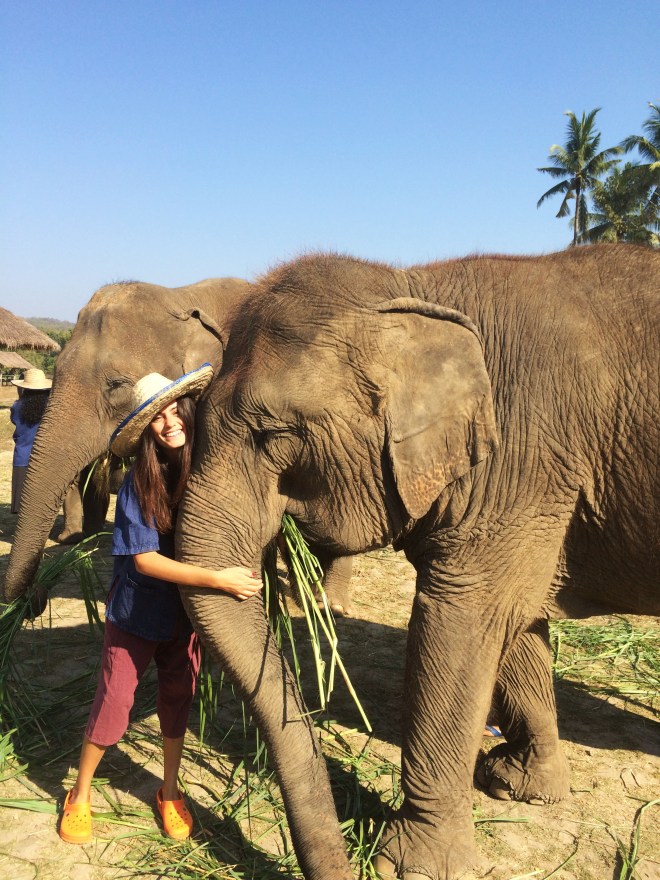
Aside from the obligatory temple-viewing, our main reason for stopping in Chiang Mai was to tick off one of the things at the very top of my bucket list – visiting an elephant sanctuary. We spent ages doing our research on the most ethical ones, making sure there was no riding or tying up, and we eventually went with Lanna Kingdom sanctuary.   We were so glad we did as it was amazing – the elephants seemed so happy. As you can see from the video it’s not hard to see why – they’re fed, bathed and cuddled all day! The best thing about the Lanna sanctuary was that the camp mahouts seemed to genuinely love their elephants.

Watch the video and meet baby Lanna, King Keaw and Ojai! If you want to read more about the elephants at Lanna check out my last blog post A diary of Northern Thailand.

A diary of Northern Thailand

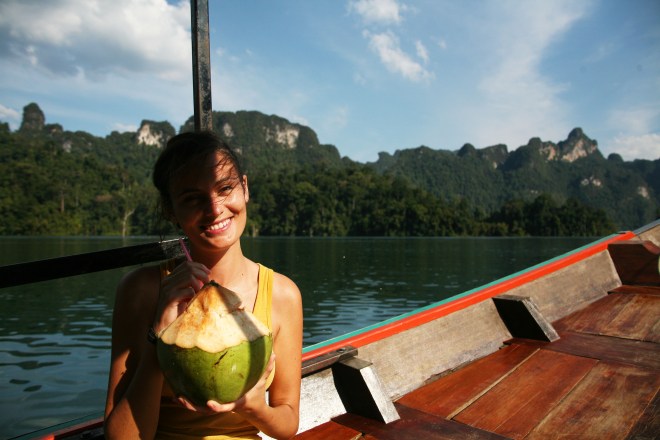
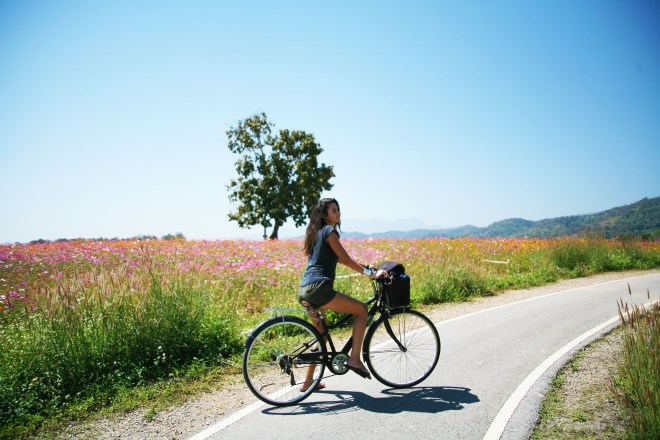
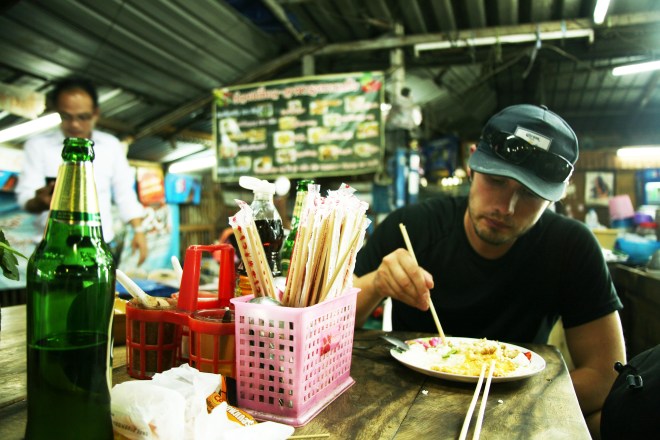
Thailand longtail boatGirl with elephantThai foodwhite templeBangkok buildingThai jazz musicianChiang Rai barJosh on RickshawDim SumKhao Sok CaveKhao Sok floating hutsWat Pho TempleGirl kayaking in ThailandGirl with coconut on longtailKhao Sok LakeKhao Sok lakeThai foodgirl on bike in thailandthai40man eating noodles in thailandgirl with baby elephantWat Phogirl with elephantChiang Mai temple

Khao Sok National Park

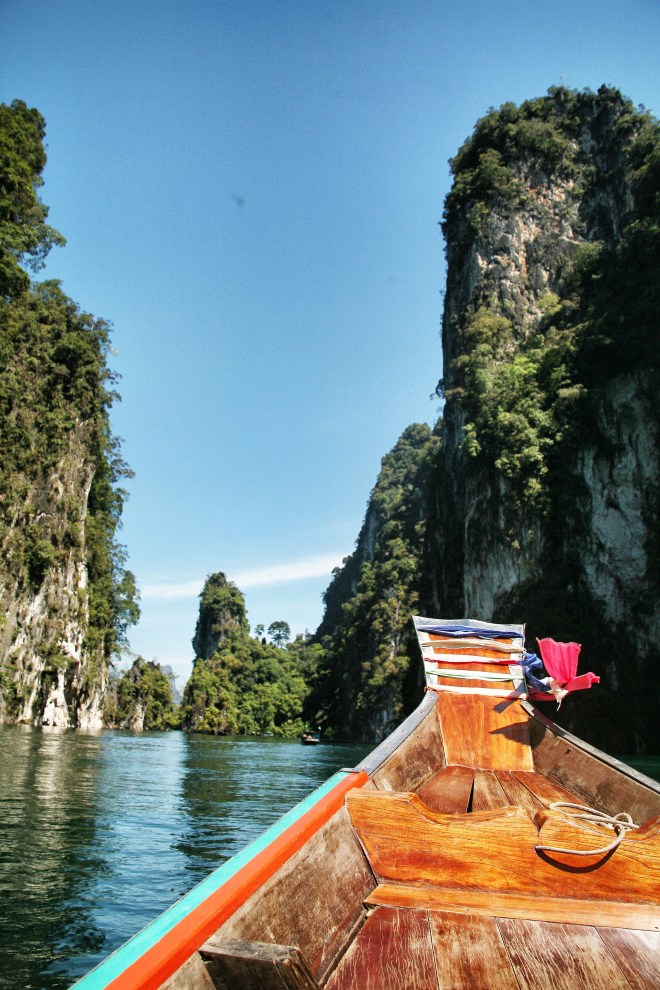
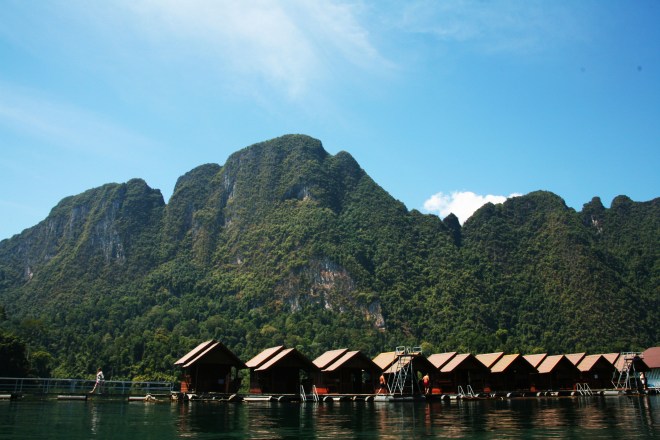
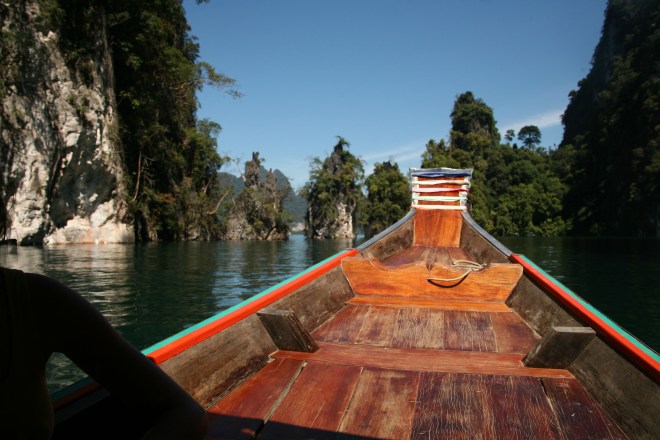
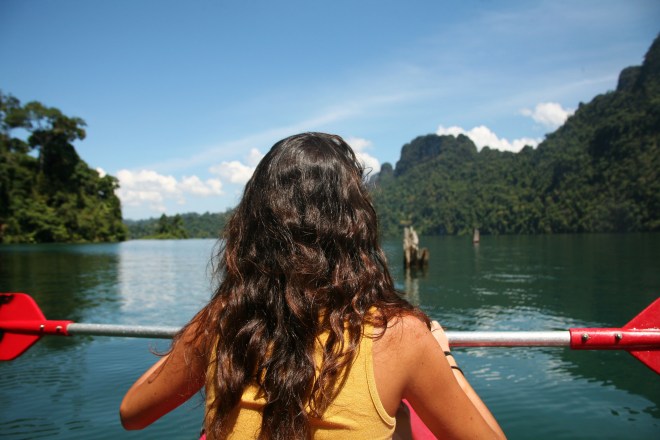
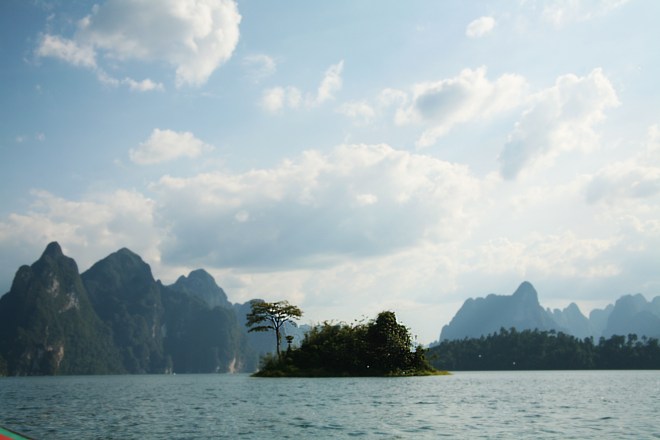
The intention was originally to stay in Ao Nang for a few days to explore Railey beach and the nearby islands, but when we saw the teeming crowds and bloated souvenir shops and tourist traps, we wasted no time and high-tailed it out of there. As a result our trip to nearby national park Khao Sok was totally impromptu, and, as it so often happens, ended up being one of the highlights of our Thailand trip. The parks’ main attraction is the Cheow Lan Lake, which features more of the beautiful limestone karsts synonymous with Thailand. The lake itself is actually man-made, having been filled up slowly over three years to create the Ratchaprapha dam. The fact that it’s artificial gives the lake a surreal feel; the water is unbelievably still when gliding through on a long-tail, and the absence of erosion on the rocks from lack of time and waves gives the sense that the rocks are simply the tips of a jungly iceberg leading to some hidden underwater rainforest – which essentially they are!

We took one of the 2 day, one night Khao Sok tours that we booked at our hotel – Morning Mist. It began with a longtail trip through the karsts and tips of ancient rainforest that create islands on the surface of the deep, emerald water. Some of the limestone cliffs and their vertical jungles are so massive that they have their own weather patterns with low, misty clouds that cling to the top. Our first pit-stop was on one of these islands, where we took a short hike through scenic forest to meet our traditional bamboo raft for the trip to Coral cave. I’m not normally one for caves, preferring to be outside than in a dingy, insect-ridden rocky dungeon. But this was nothing like that. The stalactites and dripstones were incredible in their weird and beautiful detailing and the 10,000 year-old rock formations glittered brightly under the torchlights.

Our next stop was lunch at the floating restaurant. I’ve no idea how they do it in such a remote place miles away from anything, but the food was some of the best we had in Thailand. A whole fried fish and vegetable Thai green curry were two of about ten courses served. After lunch we took out a kayak and explored the nearby karsts and islands, some of which are so big they have their own native monkey populations. We swam about in the lake and after another amazing meal headed back with some beers to the balcony of our little floating bungalow. Spending the night under the stars on the lapping water and waking up to the view of the misty cliffs on the lake was indescribable.

Bangkok

Our journey from Khao Sok to Bangkok involved a rickshaw ride to a bus stop, a three-hour, hair-raising bus journey to Surat Thani with no seats, and then an overnight train into the capital. Being used to UK trains with inevitable delays, narrow seats, and non-existent storage, I was somewhat dreading the 12-hour journey, but it ended up being the best train I’ve ever been on. The carriages are immaculately clean and air-conditioned, and the comfy seats turn into bunk beds when it hits evening. The attendant comes by with clean sheets and pillows, adeptly throws the seats up and after about 30 seconds of dexterous jostling the seats promptly turn into beds. You even get a curtain for privacy.  Me and J shared a bunk and listened to music and watched the moon until we fell asleep.

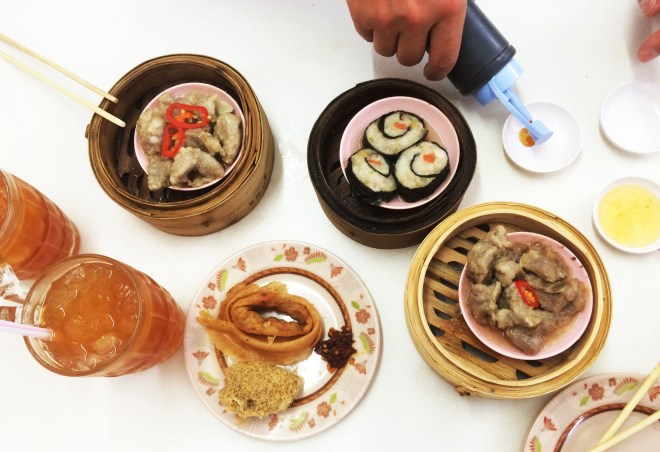
After breakfast and coffee on the train we pulled into the manic, deafening chaos that is Bangkok. We stayed at Kama bed and breakfast, a hipster hotel with beautiful rooms and a roof terrace with views of the Bangkok skyline. It doubles as a hostel and has some of the fanciest looking dorms I’ve ever seen. It’s not the most central hotel in the city, but it has the definitive competitive advantage of being right by ‘the food street’ (Soi Charoen Krung 85). This is exactly what the name suggests – a kilometre long, heavenly smelling street lined on each side with a dizzying variety of street food stalls – you’ll find anything from kaphrao mu (spicy minced pork fried with basil), and pladuk phat phet (catfish fried with red curry paste), and my favourite, Sai oua, a pork sausage flavoured with a variety of herbs and spices, including lemongrass, galangal, and kaffir lime leaves. We went to nearby Tuang Dim Sum which specialises, unsurprisingly, in dumplings. The owner and former chef, Mr Yip, previously worked for a series of five star hotels in Bangkok including the Shangri-La, and it shows in the deliciousness of the food in this unassuming little eatery.

After a couple of drinks on the roof terrace, me and J had a miscellaneous dinner of shameful amounts of different street foods, bought some Chang beers at the 7eleven and hailed a rickshaw to see the view of Bangkok from the Hangover bar before heading to Patpong. If you’re having a night out in Bangkok, the ladyboy bars are a must. The girls/guys/?? are so beautiful and convincing that they have to be seen to be believed. In fact they’re so convincing that the entire night I was sure I was being duped. It’s a weird, confusing and really fun night out.

Chiang Mai

From Bangkok we took the 9-hour train to Chiang Mai, where I woke up on the morning of my birthday to the sun rising over the paddy fields. We watched the view while the train chugged along and we were brought breakfast and coffee we’d ordered the night before. Since it was my birthday we broke the budget a bit and stayed at the beautiful Thannatee hotel, with it’s all-over dark wood panelling and ridiculously over-sized jacuzzi.

Aside from the obligatory temple-viewing, our main reason for stopping in Chiang Mai was to tick off one of the things at the very top of my bucket list – visiting an elephant sanctuary. We went with the Lanna Kingdom elephant sanctuary and it was amazing. After being picked up at our hotel, we were driven over to meet rescue elephants King Keaw, Ojai and the naughtiest of the group, baby Lanna. They’re incredibly beautiful, strange-looking creatures and upon meeting them you get an immediate sense of how smart they are. There’s also something weirdly calming about being in their giant presence. Well, maybe not so much around baby Lanna, who loved to run around and cause mischief.

We spent the day feeding the elephants (a lot), making their daily treat and vitamin ball (made of crushed tamarind, banana and sugar cane), and later bathing them. The highlight had to be the latter, if only because you could see how much they loved it. When I say bathe I don’t mean petting them with a damp brush at arms-length, I mean getting into the slimy mud pool up to your shoulders and getting sprayed with trunk-loads of murky water. Ya Ya was enjoying rolling around in the cool mud so much that she refused to leave the pool, and the camp Mahouts let her keep playing until she got bored and scampered back to us. After our vegetarian Pad Thai lunch it was time to hug and say goodbye to our new friends. Be warned that if you do go to an elephant sanctuary in Thailand, leaving them at the end of the day will break your heart!

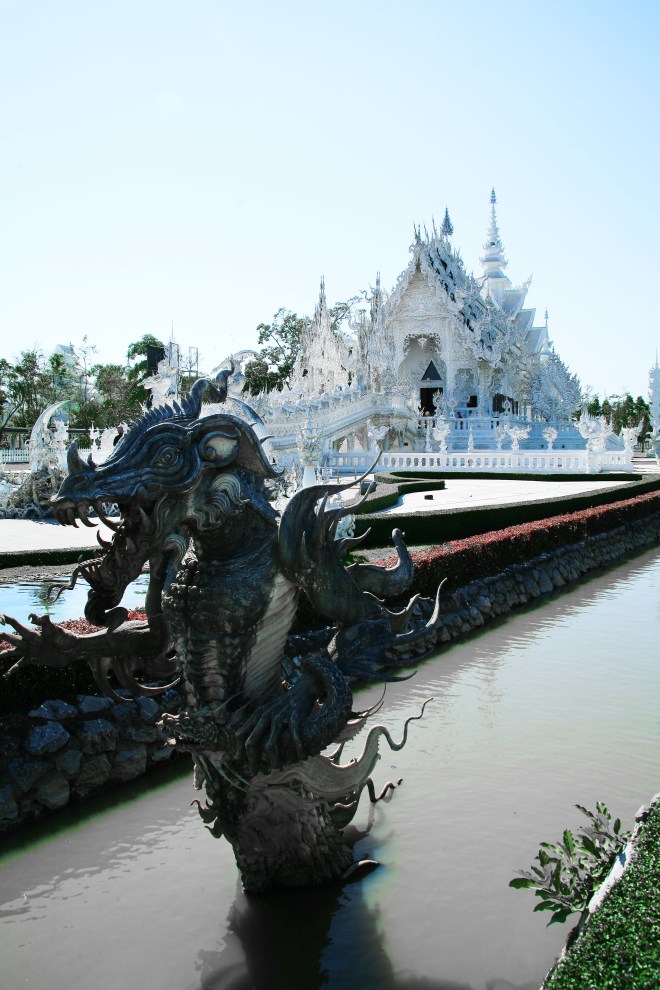
Our last pit-stop in Thailand before slow-boating into Laos was Chiang Rai. Here we explored the endless beautiful temples and rented bikes out to the countryside to visit the famous White Temple. One of my favourite moments was pulling our bikes up to a remote countryside grocery store and farm which doubled up as a mini restaurant. The owner didn’t speak a word of English but we somehow managed to order some fish noodles which we ate with a view of the endless green paddy fields. The family evidently spent their lives on this remote and peaceful farm, waiting for the occasional customer to stop by and chat. I still remember how quiet it was.

ITINERARY

Bangkok

Where to Eat:

  • On the street – anywhere. The street food is all amazing. Our favourite Street was Soi Chareung as it just had so many options but it was delicious all over Bangkok.
  • Tuang Dim Sum – Specialises in dumplings. The owner and former chef, Mr Yip, previously worked for a series of five star hotels in Bangkok including the Shangri-La, and it shows in the deliciousness of the food in this unassuming little eatery. We also went to Chinatown for Chinese food in Bangkok but we didn’t really rate it. It was overpriced and the Thai food was generally much better. Worth going to for sightseeing though.

What to do:

  • Visit Wat Pho and the other temples.
  • Ride the cheap and scenic river boats to explore the city from the water.
  • Roam around and eat.
  • Go to the Hangover bar for a view of the Bangkok skyline and share a drink as it’s ridiculously expensive. Having said that we were in backpacker mode and while it’s pricy for Bangkok the drinks are probably standard for Western prices.
  • Go to Patpong and check out the ladyboy/ping pong bars.
  • Visit Chinatown at night. It’s like a Bangkok version of Times Square.
  • If you have time, go to the nearby floating markets.

Chiang Mai

Where to stay:

  • Thannatee Boutique Hotel. Beautiful, all-over dark wood panelling and decorated and furnished in the ‘Lanna’ style. It sort of felt like being in a luxurious old ship cabin. The bathrooms have the most ridiculous sized jacuzzis you’ve ever seen.

Where to eat:

  • Lert Ros. Lert Ros all the way.  I’m not ashamed to say that we came here four times in the space of three days. Of our entire Asia trip this was probably our favourite restaurant – which is saying a lot! Their specialty is grilled Tilapia, which may not sound overly exciting but it was the best I’ve ever tasted. The freshly caught fish is stuffed with lemongrass and cooked traditionally over hot coals on a low heat; the owner stands proudly over them until he decides that they’re cooked perfectly and then serves it with a spicy, citrusy dipping sauce.  The pork options are also amazing.
  • The Service 1921 Restaurant: We came here for my birthday and so it was our ‘treat’ restaurant of the trip. The restaurant was originally opened in 1921 as the British Consulate of Chiang Mai, and they’ve kept the British secret service theme with the colonial decor and quirky touches – there’s a spy peep-hole at the entrance, the waiters wear 40’s-style outfits and the menus come in a Top Secret brown envelope. The main attraction here was the atmosphere – think dim lighting, dark wood, and a beautiful open air veranda. The food was very good too and had some quite unique options yet I wouldn’t say it was any better than your standard Thai restaurants or street food.

Things to do:

  • Visit an elephant sanctuary – the elephants seemed very happy at Lanna Kingdom Elephant Sanctuary and of course there’s no riding.
  • Explore the temples
  • Go to the Night Bazaar to shop for anything you can think of. I you’re a good haggler (I hate it) you’ll get some amazing deals.
  • Eat everything in sight
  • Listen to jazz at the Boy Blues bar at the Kalare night bazaar. Boy is incredible and has the friendliest smile you’ve ever seen.

Chiang Rai

Where to stay:

  • We stayed in a very functional, nondescript hotel – so much so that I can’t even find it on the internet.

Where to eat:

  • ร้านนครปฐม (I can’t find an English name): A lot of locals came here – always a good sign – and it seemed especially popular with workers on their lunch break. You get a little form where you tick off the options you want and then your food is served on plastic, pastel-coloured plates. Fresh and totally delicious. The duck was served with a whole bowl of fresh spring onions on ice and it was amazing.
  • Cat ‘n’ a Cup Cafe: Good Thai milk tea and very cute cats.

What to do:

  • Again, visit the temples. You might be getting temple fatigue at this point so if you are go on Tripadvisor and pick out the ones you might prefer. My favourites were the wooden temples, namely Wat Phan Tao. Wat Srisuphan  was also very beautiful but I was annoyed that women weren’t allowed in the main temple. I wasn’t so much for the faux-gold, plastic-gemstoned dragon temples.
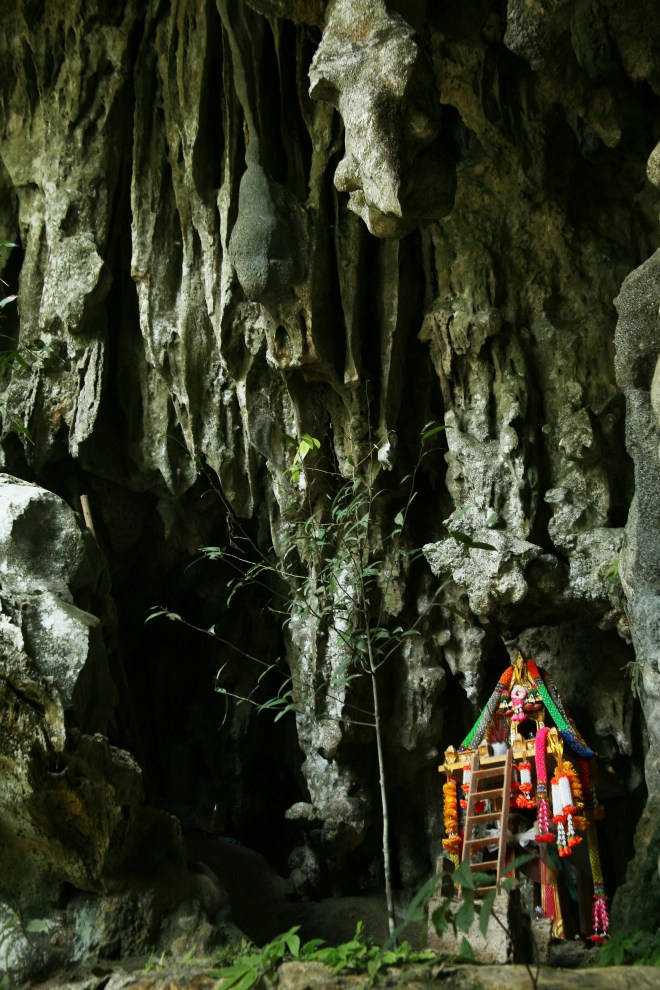
  • Hire bikes/scooters and take a trip out to the White Temple. By modern Thai artist Chalermchai Kositpipat, this temple is new (in fact it’s not finished yet) and very unique. Be prepared for crowds.
  • Visit the Singha Park on the way to the White Temple. This one’s more for the randomness factor. It was on the way to the White Temple so we thought we’d check it out. There were some very pretty parts such as the lavender fields and then out of nowhere there’d be a faux Western-style ‘town’ and a roaming giraffe. There were also a lot of strange rules. You can’t take your bike up this hill, and you can’t park it there, and you can’t take this route. All for seemingly no reason whatsoever as the park was totally empty.
  • Go to the Cat ‘n’ a cup Cafe. This was my first cat cafe and the first time I tried Thai milk tea. The tea was delicious and the cats seemed happy.
  • Go to the Night Bazaar


East Coast Australia

Ocean view Whitsunday Islands Whitehaven beachTree with ocean view and beachByron Bay lighthouseOcean and cliff view on Australia's most Easterly pointGirl with ocean viewKangaroos in backyardClassic carDingo in front of Fraser Island Tour busGirl sailing boat Whitsunday islands sunsetpeople sailing in the Whitsunday IslandsAustralian man in old Australian townGirl in lake mckenziehbFraser Island sand blowFraser Island Land RoverView over Whitehaven beachDingo on Fraser IslandGirl in front of Maheno ShipwreckView of Lake MckenzieLake MckenzieGirl in front of tent on Fraser IslandGirl with Australian manView of ocean and rocksGirl in front of Australian shopFraser Island pierFraser Island Lgirl cooking on Fraser IslandGirl under tree in Fraser IslandGirl jogging at sunrise in Byron BayAustralian girl with hat

HOW’S THE SERENITY?

We spent two weeks living with my step-dad’s family near Coff’s Harbour up the coast. Corindi – the tiny suburban town where they live, hasn’t changed in the slightest since I visited when I was ten. There’s still only one shop, duly called ‘The Shop’, which sells the same meat pies and potato scallops with chicken salt, one post office and of course the nerve centre of the town – the local pub. No doubt one of the highlights of our trip was winning the ‘Amble Inn’ (for ten years I thought it was the Ann Boleyn) breakfast meat raffle.

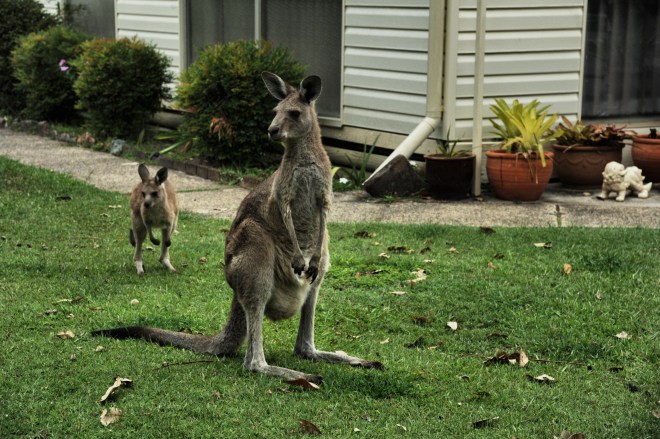
Our days took on a standard routine pretty quickly – wake early to the most chaotic and deafening dawn chorus I’ve ever heard, drive up the headland to check the surf, back to the house for breakfast, and then amble down the wide streets with their low wooden houses and immaculate lawns (hosting frequent Kangaroo visitors) to the beach – our home until lunch. Contrary to some misleading pictures, going to the beach in Northern Australia is not a sexy affair – it feels like going into battle. Walking down in our pasty factor 60+, comedy-size hats, long-sleeved shirts and multiple sun-blocking accessories felt more Mr. Bean than Baywatch.
The beach here is interactive – nobody just lays back and tans – it’s a way of life. Everyone born here is expected to learn to surf or at least try, and for most, the thrill of riding along the limits of the ocean is one they seek forever. In few other sports is the goal so dependent on and shared with nature – a brief tussle for control to secure that hard-won victory of total weightlessness. And here I’m told – the waves are perfect…The official shark copter keeps an eye out overhead, and if there’s anything suspicious it will fly in a circle as a warning. One day as we were floating in the shallows the helicopter did exactly that, and of course not a single surfer left the water. Ahh it’s only a shark mate, no worries.

When we weren’t hiding under the beach umbrella from the relentless sun we played in the rock pools with the girls, overturning rocks to discover strange, slithering life-forms and squishing the ‘Gungy Boy’ anemones. We made wigs with spotty seaweed that looked like it belonged in an aboriginal painting.

Afternoons were hot and lazy – a sleepy, anxious interim between lunch and the first cold beer of the day before the mandatory BBQ prep. Even the unbelievably coloured lorikeets joined in, becoming increasingly raucous as they got drunk on fermenting fruit. We nursed our hangovers together.

BYRON BAY (CAVVANBAH)

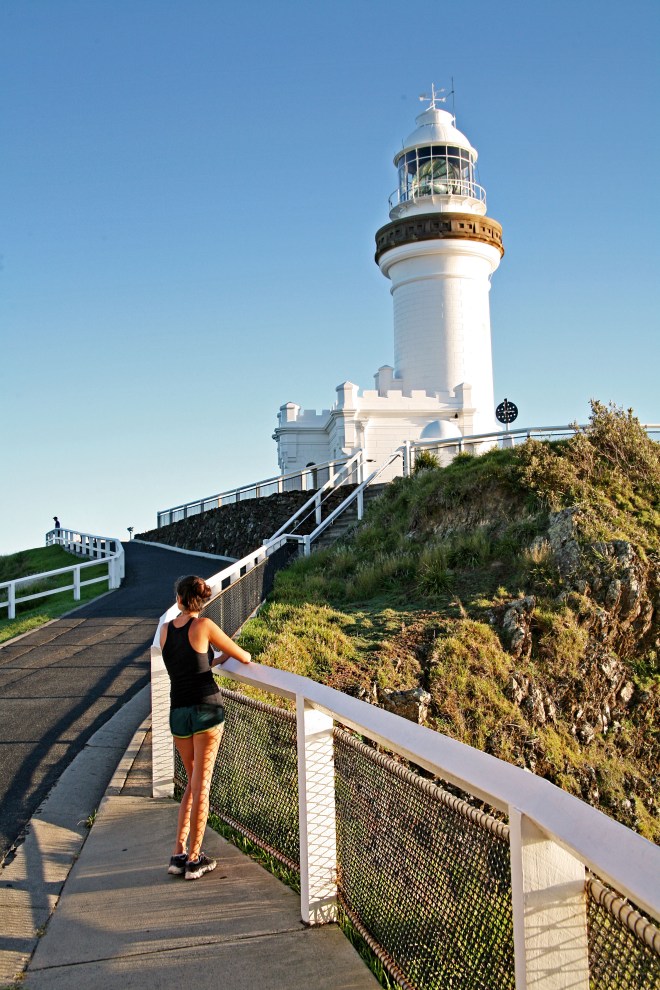
We reluctantly left Corindi on the Greyhound from Coff’s Harbour and started making our way up the coast. First stop – the inevitable Byron Bay and shining beacon of (formerly hippy) hipster heaven. The vibe is creative professional, which to us suggested that we must start chilling out first thing in the morning, with a jog and a coffee at one of the many, many coffee-shops. We did the famed lighthouse loop – starting along the beach at dawn, as the sand and clouds turned varying shades of pinky lilac, and then the Lighthouse Road up to the pristine and still functional Cape Byron Lighthouse. From here, the Easternmost point of Australia, the view of the surf-battered cliffs and unbroken ocean is spectacular. Walking back down via the coastal route (Cape Byron walking track) we saw two dolphins playing in the distance and at Wategos beach we spotted a White-breasted Sea Eagle. Watch out for trees full of sleeping flying foxes – we thought that it was some sort of gigantic fruit before we noticed furry squirming! We finished at the Pass, a perfect white-sand beach and watched the surfers enjoy the famed right-hand point-break.

WHERE TO EAT: 


Cheeky Monkeys – We were on a budget and had a discount with our YHA stay so we went here for dinner. It’s got mostly terribles on Tripadvisor and is apparently for ‘immature travellers’ according to one review. I’m not sure what that means but we had cheap drinks, fun with the table Jenga and an average meal. It has lots of party events.

Bay Leaf Cafe – We  had a much more typical Byron Bay brunch the next day at the Bay Leaf Cafe.  Poached eggs, avocado and sourdough toast. The food and coffee was delicious. We didn’t get the banana bread but I got a waft of some freshly baked stuff and my God it smelled good. The juices and smoothies looked good too.
WHERE TO STAY:


Byron Bay YHA – We stayed pretty much only at YHA’s for our Australia trip and they were great. The rooms are predictably basic but the facilities are good. This one’s pretty chilled out and has a pool and snooker table. The only bummer is that they charge for luggage storage and don’t have wifi in the rooms.


FRASER ISLAND (K’GARI)

Before hopping onto the 12h Greyhound to our next stop Hervey Bay we stocked up on some supermarket liquor – because 12 hours, and because nobody should ever have to drink Goon. “Produced with the aid of milk, egg, nut, and fish products and traces may remain. Sugar added.” We walked past a girl who remarked of her Goon cocktail; ‘but why does it smell like feet?’. Yes alcohol is stupid expensive in Australia, but it’s worth the extra 2 dollars for almost the same alcohol content in a bottle of rum.

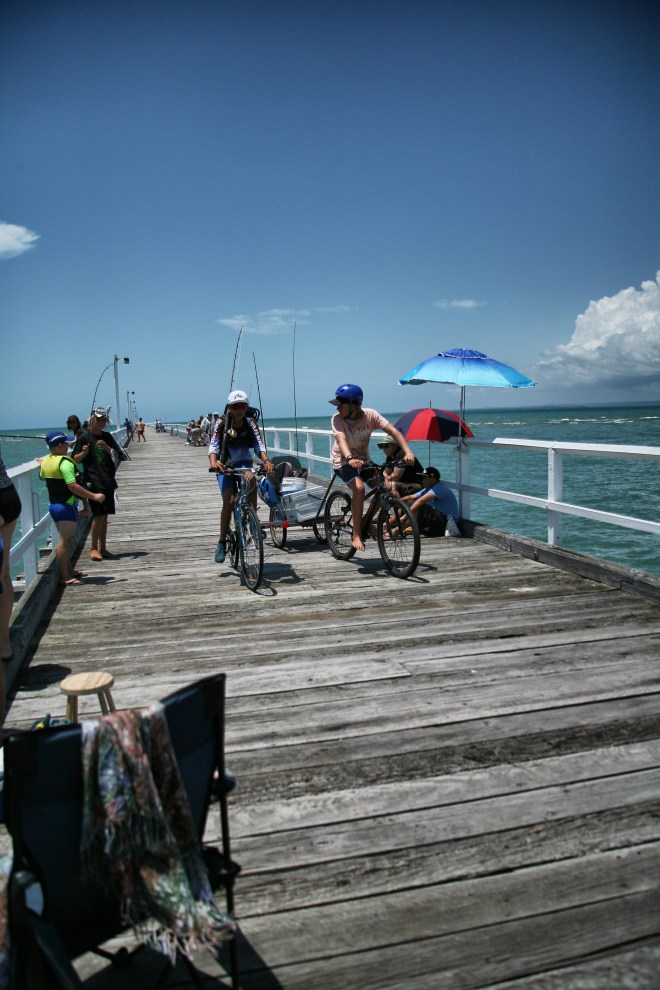
12 hours and a crazy bus driver later, we were in Hervey Bay – main launchpad for Fraser Island. There’s not much going on in Hervey Bay, but we did have a nice walk to the pier in searing middle-of-the-day heat where we saw two enormous Manta Rays, and at our YHA we spotted a beautiful, shy possum and had resident, not-so-shy peacocks.

Our main reason for staying here was to rent our Land Rover and have our safety briefing for Fraser Island – the main message of this being ‘please for the love of God put the hand-brake on when you park on the barge’ and ‘don’t drive onto the beach when the sand is wet, you will get stuck, and the car will be destroyed’. Apparently two different groups ignored the handy tips, and the rest you can imagine.

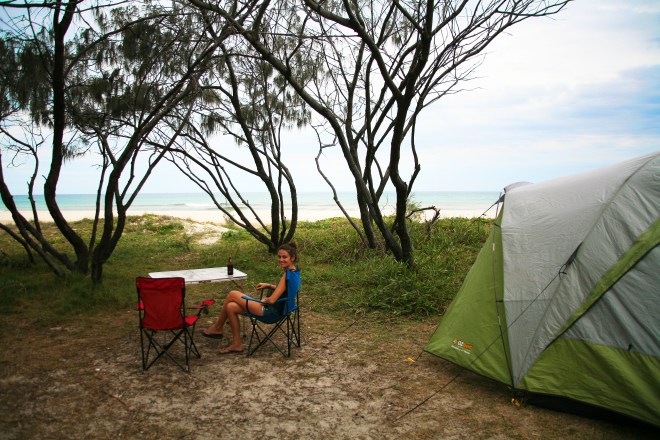
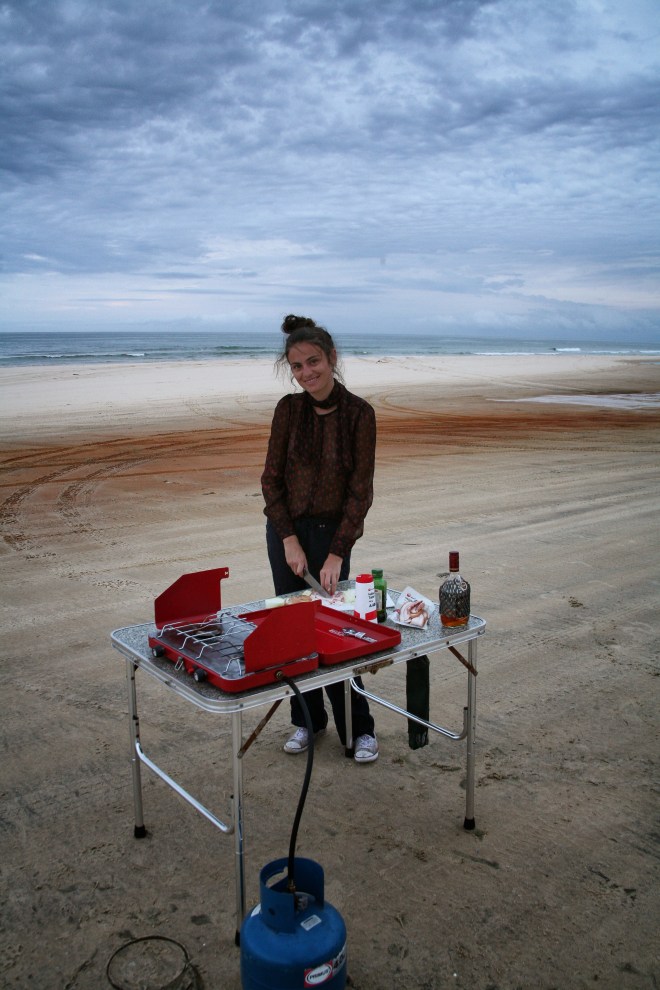
Fraser island is the largest sand island in the world. There are no paved roads. When the tide is out, there is a window of time in which you can drive on the beach and it’s smoother than concrete. Fraser island is the wildest, most unspoilt place I have ever seen on my travels, and was without doubt the highlight of our Australia trip. With a crackling radio struggling to pick up any signal, the massive 4×4 skipped over tree-trunks as if they were toothpicks while we drove past bizarre, Jurassic Park-style scenery. Our biggest threat was succumbing to soft sand. After seeing barely a person all day, we pitched up our tent at one of the wild-camping spots along the 75-mile beach. We must have inadvertently set up our tent on a horsefly nest as 5 minutes later we were attacked by a manic swarm, forcing us to cook dinner on the beach as we watched an oncoming storm.

THINGS TO DO IN FRASER ISLAND:

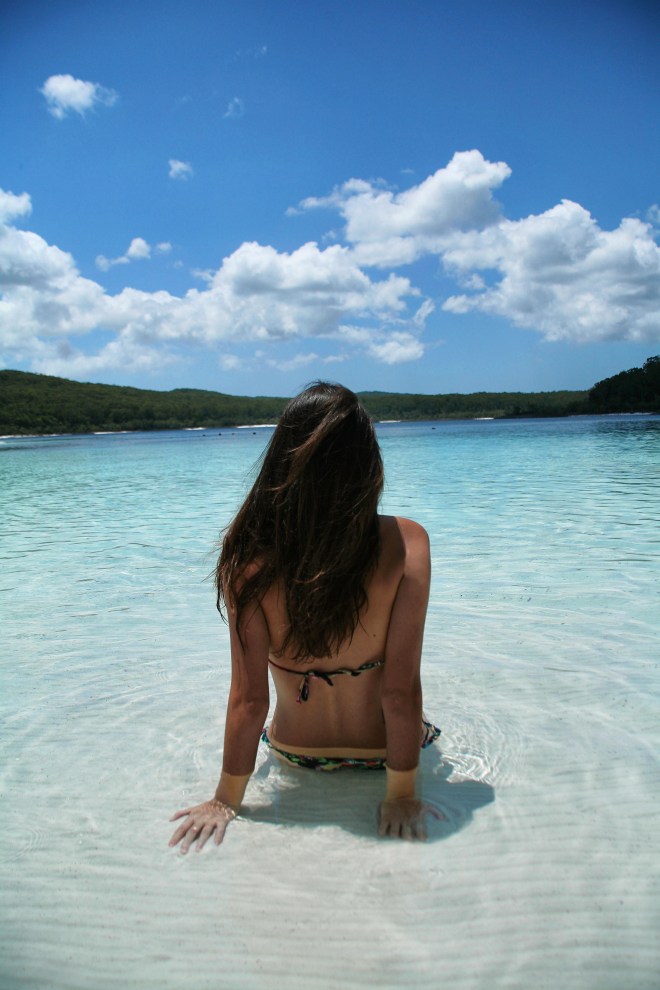
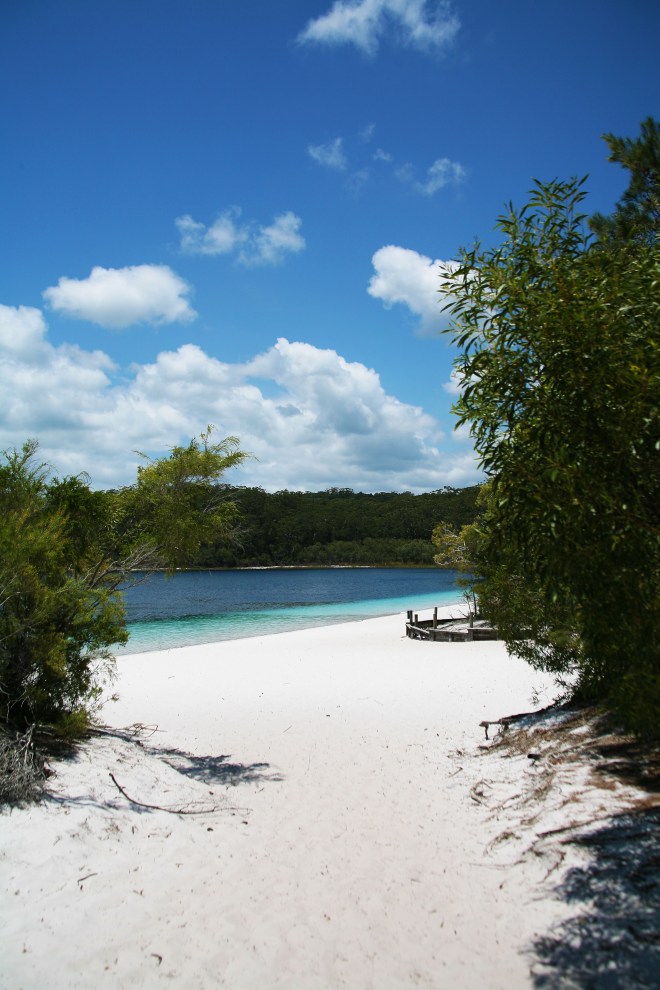
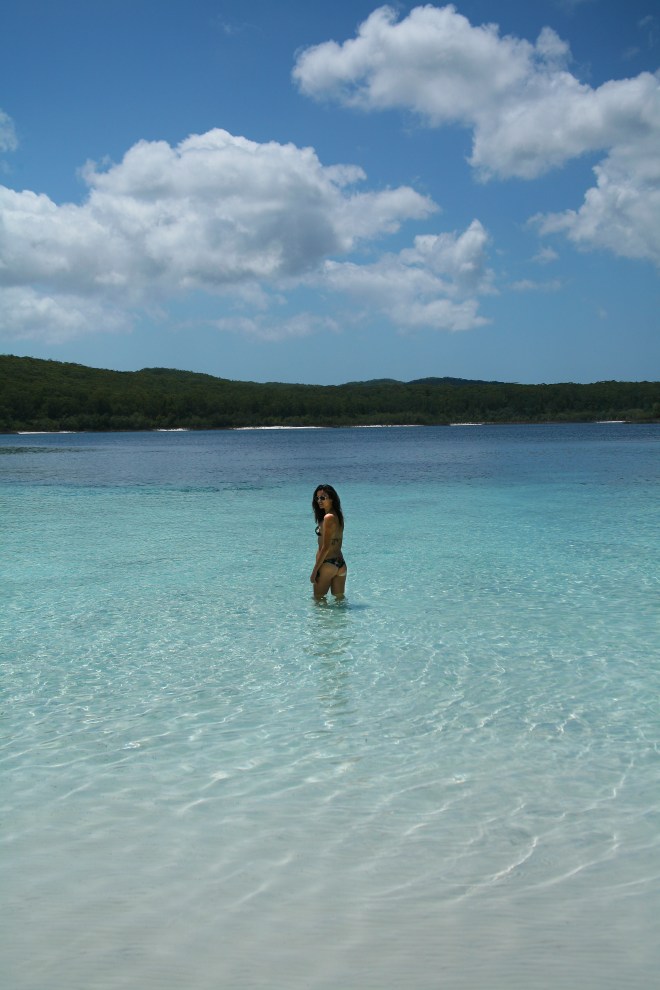
Lake Mckenzie (Boorangoora) – Lake Mckenzie is made up solely of crystal-clean rainwater, tinged Caribbean turquoise around the edges. The sand is entirely white silica and the water is so pure it’s said that only a few species of fish can survive in it. It’s too clean for life. Allow at least a few hours for all manner of selfies.


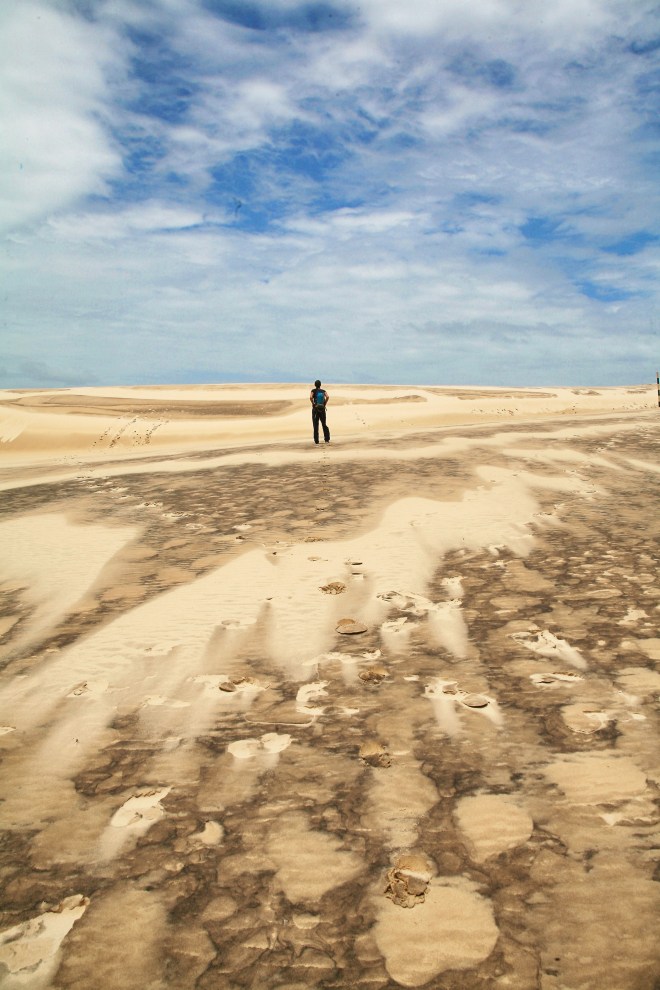
Sandblows – Sandblows are enormous sand dunes that blow across the island according to the wind and the tides. Burying forests as they move, the dateless tree-tops emerge post-apocalyptically from the wind-blasted sands. The lack of wildlife and eerie quiet makes these mobile deserts even more otherworldly. Lake Wabby off Hammberblow is slowly being engulfed, which is bad news for its little catfish inhabitants.


Eli creek – Each day, Eli creek spills out 80 million litres of beautifully clear rainwater into the Pacific ocean. You can float along the stream amongst the tangled vegetation down onto the beach, where you’ll see small aircraft land on the sand by the shore.

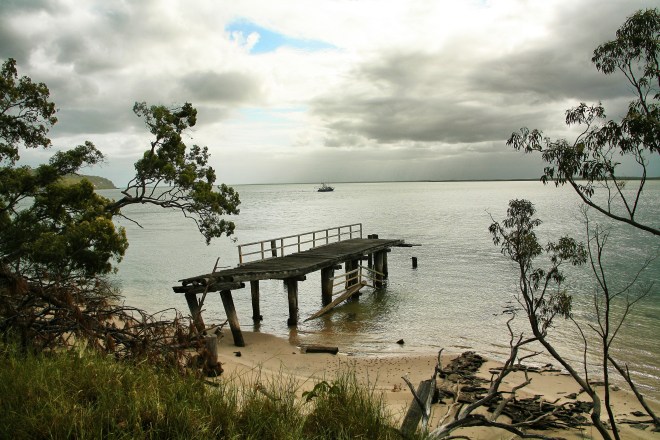
Maheno Shipwreck – Maheno was a New Zealand Naval ship that was washed ashore by a cyclone in 1935. 82 years later, its rusty skeleton remains, battered daily by the surf along 75-mile beach.

WHERE TO EAT:

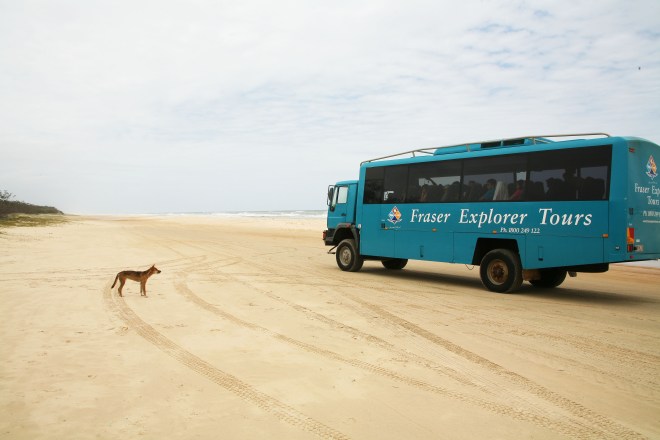
Tent/beach/forest/car. Watch out for dingoes. We had one coyly come up to us on the beach – understandably tempted by our lunch of canned fish and beans.

WHERE TO SLEEP:

Tent/beach/forest/car. There is a main campground with showers in the middle of the island.


WHITSUNDAY ISLANDS:

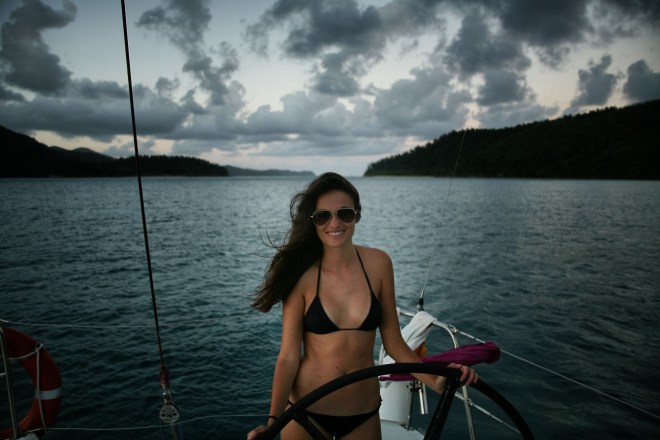
Another long Greyhound night bus and we were at Airlie beach to set off on our 2-day boat tour of the Whitsundays with Silent Night. J hurt his back badly on the morning of our trip, and since it was too late to cancel or go to the doctor’s, we headed to the booze shop instead. We stocked up on a bottle of whiskey and two bottles of rum. Note: This is definitely not recommended self-medication for slipped discs under normal circumstances. When I saw the sleeping arrangements – a minuscule corner berth by the engine – I was grateful for our choice of impromptu meds.

We met the group and then started our sail towards our first snorkelling trip and mooring spot for the evening. This is where I have an embarrassing admission to make. Having heard so many nightmarish stories about lethal jellyfish in Northern Australia, I never actually went in the water on this trip, not even with the tempting offer of the full-length wetsuits. This made me the ONLY wimp in our boat group to not go underwater. I charged J with the Gopro and sipped my cocktail on the gently rocking sailboat with a strange mix of regret and utter peace. My excuse is that I’d already been snorkelling in the Whitsundays when I was ten and fearless. I’m sticking to it.

In any case I was told that the snorkelling was good – but not great. The best spots are widely regarded as being further up the coast towards Cairns. The ultimate way to see the reef if you’ve got the cash is by airplane, watching the the ancient coral below curl like tendrils around myriad hues of brilliant cyan.

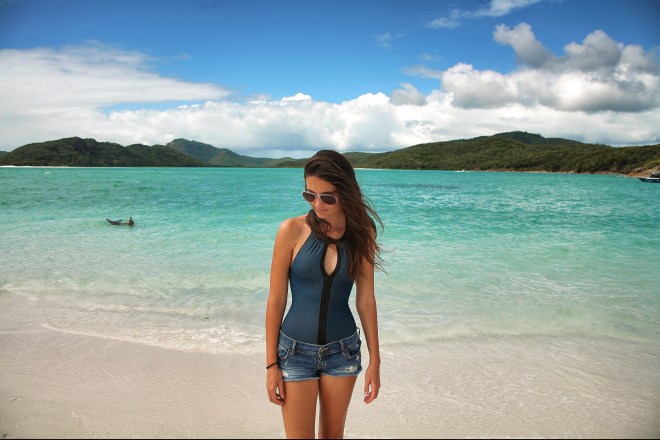
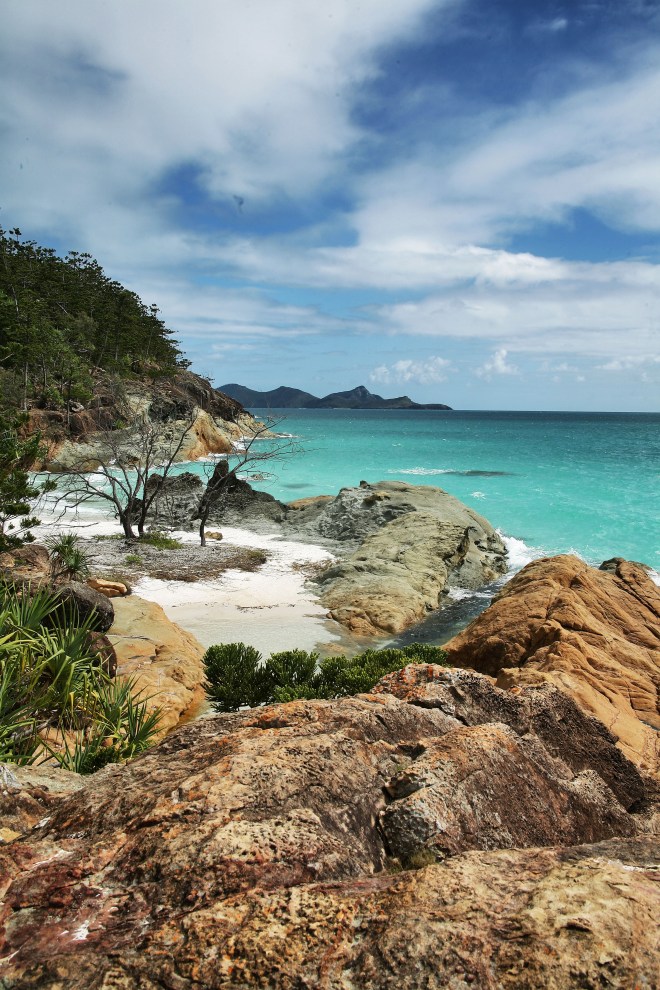
The next morning after breakfast on board we started our sail to inimitable Whitehaven beach. A short walk through forest brings you to Hill Inlet viewing point, where you’ll see the famously white Silica sands bleed into the turquoise waters of the inlet. From here we walked onto the beach where we spent a few hours walking through the glittering, squeaky sand (walking on it has somewhat of a nails down a blackboard effect) and admiring the sheer blue of the ocean blues. Round a hidden bay behind some rocks we found two lemon sharks exploring the shallows. The rest of the day I spent not snorkelling in another beautiful location.

While the crew was really attentive and great fun, it was all things considered quite an expensive trip for scenery and activities that you can get elsewhere for cheaper. I don’t mean this boat tour in particular but rather the Whitsundays in general. If I were to revisit the Whitsundays again however I’d do a bigger, cheaper party boat.  If what you want is a more relaxed trip with with great crew and fewer people however, then Silent Night is the tour for you.

The Anti-Backpacking wishlist

I’ve just returned from the most incredible travel experience of my life. After backpacking across Asia for eight months, I’ve seen two of the seven wonders, played in the mud with rescue elephants, driven a car almost twice my height along a twenty mile beach and woken up on a night train to the sunrise over Chiang Mai. I feel elated, enlightened… exhausted.

After all the amazing things I’ve seen and already can’t wait to visit again, there are some things on my travels that I’ll be happy to see the back of forever: my back/soul-destroying rucksack; my crusty, mud-caked trainers; and my monster-sized thermal fleece that sexy forgot — aka my 24-hour uniform for 8 months straight. I feel a certain uneasy guilt just admitting this – all these items have served me faithfully through months of physical abuse. But for the meantime, I’m done with functional. I don’t want to see any more neon polyester straps/zips/locks and ultra-breathable materials with intelligent-sounding names that keep you perfectly cool while trekking the surface of the sun. I just want something pretty, to wear somewhere nice.

It’s not that I want to relax at home for a while – it’ll never come to that – but right now I’m fantasising about vacations rather than travels. I love the sound of a city break to Seville, or a country outing to the Cotswolds, where perhaps I can wear a dress with a discernible shape, or a handbag the contents of which don’t primarily consist of stolen toilet paper and sporks. Obviously, I’m totally broke after eight months of backpacking, so I’ve drawn up a wishlist of beautiful things I can’t currently afford and booked a low-cost flight to Lisbon, where luckily my Dad is living right now.

My Anti-Backpacking Wishlist:

1. Fleur du Mal lacing bullet one-piece.

I can’t get enough of their swim collection this year. Delicate lace is mixed with edgy designs and they seem to be continuing the ‘swimtimates’ trend with their corset one-pieces. I honestly wouldn’t know which swimsuit I’d choose.

Screen Shot 2017-04-23 at 5.59.28 AM


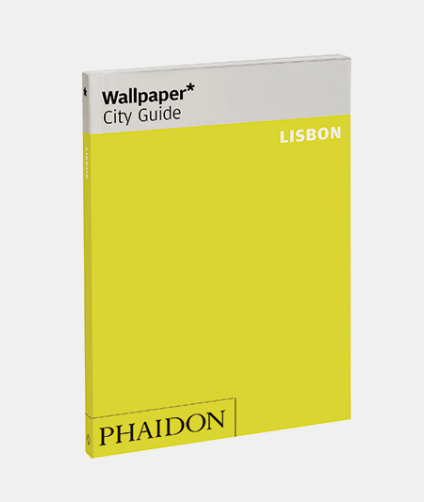
2. Lisbon Wallpaper city-guide.

I love the Wallpaper guide’s urban vibe. They primarily focus on a city’s contemporary design and architecture and include stylish, minimalist pictures. Plus I love how the colourful collection looks on the bookshelf!

Screen Shot 2017-04-23 at 4.33.10 AM

3. MAHI Leather Bag.

I’ve had my eye on this one for a while, and it may be one that I can actually afford. MAHI’s beautiful made-to-order travel bags are made from 100% soft full-grain brown leather and brass. Their classic duffle – my favourite although I also love their Armada duffle – is only £96.50 and looks stunning. To truly satisfy any luxury-on-a-budget cravings, they can also imprint your initials for just £10 extra. With every purchase, MAHI also donate $1.50 to Frank Water Charity in recognition of their name-sake: the Mahi river in India.

Screen Shot 2017-04-23 at 4.24.40 AM

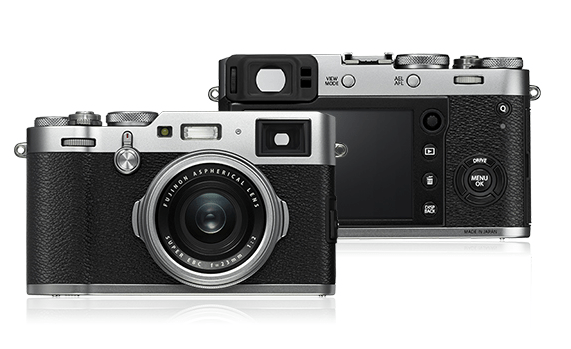
4. Fujifilm xf-100.

My mum has this camera and it’s amazing for street photography. It’s really user-friendly and has lots of features which makes it great for front-end editing and taking quick snaps on the move. I still haven’t figured out most of the features but I love that you can add filters before taking a shot. And, of course, its retro design means that it’s photo-worthy itself.

Screen Shot 2017-04-23 at 5.03.47 AM

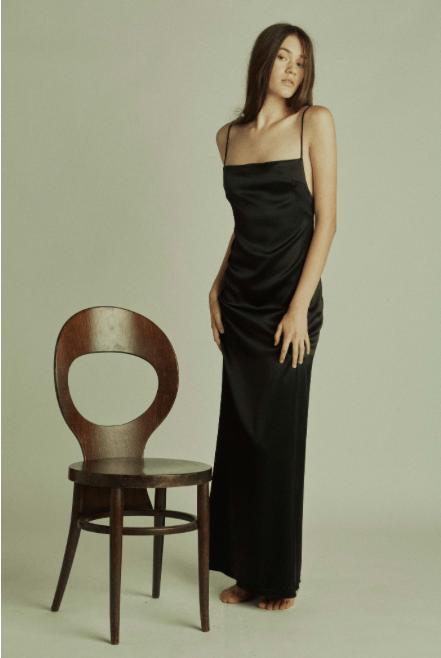
5. Phoebe slip by Paris Georgia Basics.

I’d absolutely love this simple black slip-dress for Lisbon but this one is a definite “wish” on the wishlist. Off to find something similar on ASOS…

Screen Shot 2017-04-23 at 5.09.09 AM

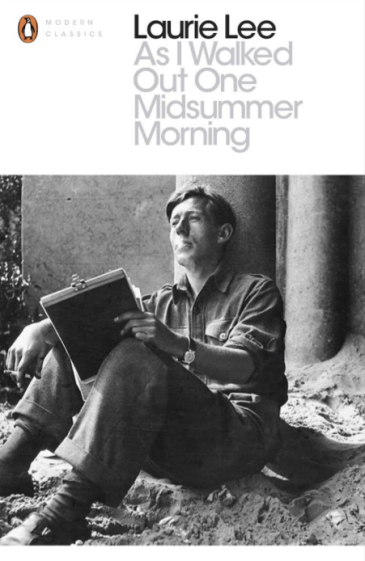
6. ‘As I walked out one midsummer morning’ by Laurie Lee.

Strangely, I’m not usually one for travel books but I flicked through a friend’s copy of this once and Lee’s descriptions of Spain are so sensuous yet simple that I fell in love. Not set in Portugal I know, but it’s close -perhaps a road-trip to Seville wouldn’t be out of the question…

Screen Shot 2017-04-23 at 5.19.02 AM

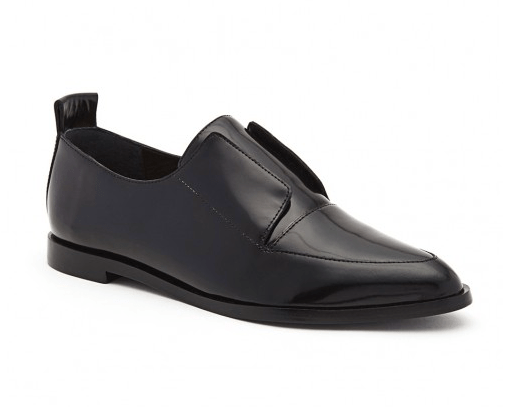
7. Loeffler Randall Jasper loafers.

Their Agnes Laceless Oxfords are gorgeous patent black loafers that go with everything and can look smart as well as casual. They’d be perfect for travelling light on a short city-break.

Screen Shot 2017-04-23 at 5.29.24 AM.png

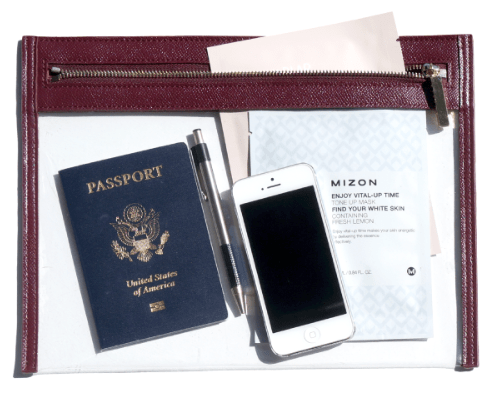
8. Truffle Clarity Clutch.

These clarity clutches seem to be doing the rounds on social media lately. Being TSA-approved they’re great for travelling but they’re also quite sleek for makeup and accessories in general.

Screen Shot 2017-04-23 at 5.50.38 AM.png

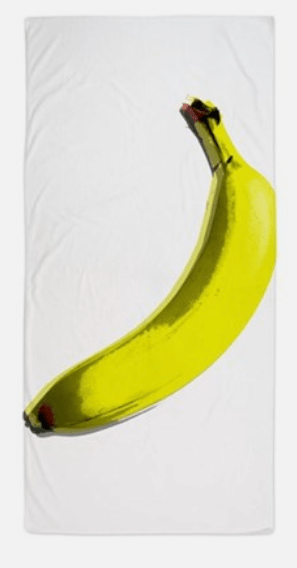
9. Cafe-press towel.

I love this fun, Andy Warhol-inspired beach towel from online store Cafe-Press.

Screen Shot 2017-04-23 at 6.19.13 AM.png

10.BOSE headphones.

The kings of sound quality. I’ve never tried BOSE headphones but if they’re anything like their speakers then they’re pretty damn good. The reviews are great anyway. The Custom QuietComfort 35 wireless set are customisable in a variety of different colours and finishes.

Screen Shot 2017-04-23 at 6.25.31 AM

Sicily

View of Ragusa IblaOld building in Ragusa IblaGirl in front of Ragusa IblaSpices in Syracuse food marketGirl in front of Noto CathedralNoto at sunsetChurch in NotoItalian ice creamGirl in front of Noto CathedralView of beach at Syracuse, ItalyGirl in piazza duomo Italy, SyracuseIsola Bella in SicilyGirl in front of Isola BellaFish at Syracuse food marketTaormina

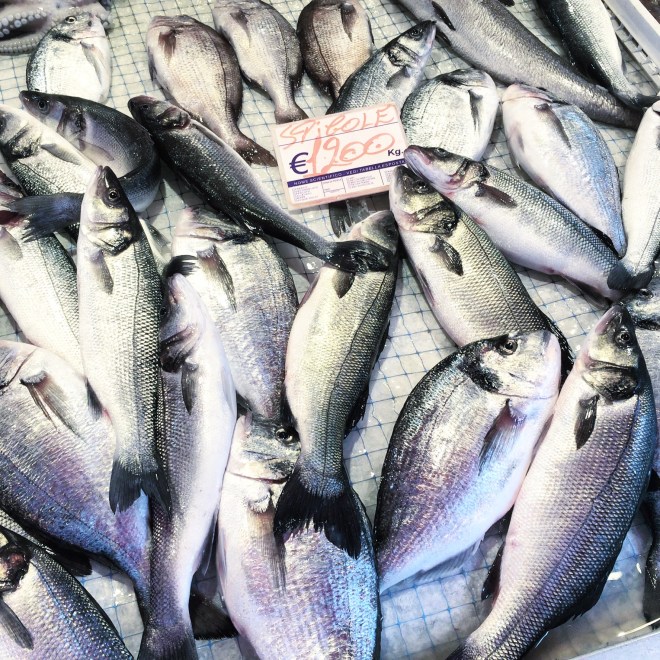
It’s hard to describe Sicily with just words. Sicily is scents – lemons and cigarette smoke – and sounds – church bells and bellowing fishermen at the market; it’s tastes – chilli and salty sea-spray, and of course sights – almost impossible to describe, but usually bathed in various hues of dripping, golden-yellow sunshine.

SIRACUSE

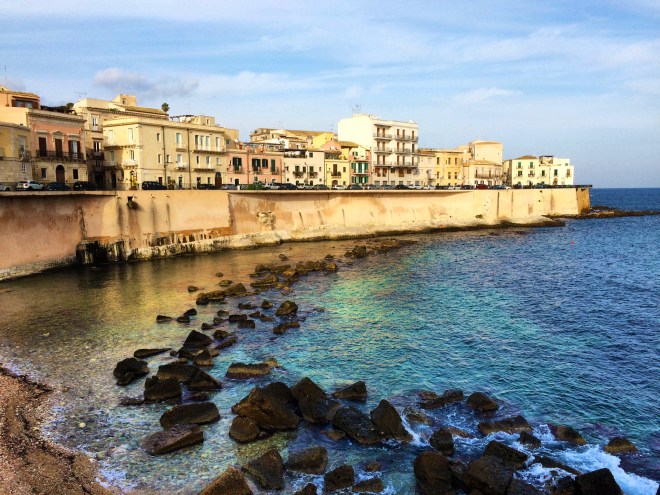
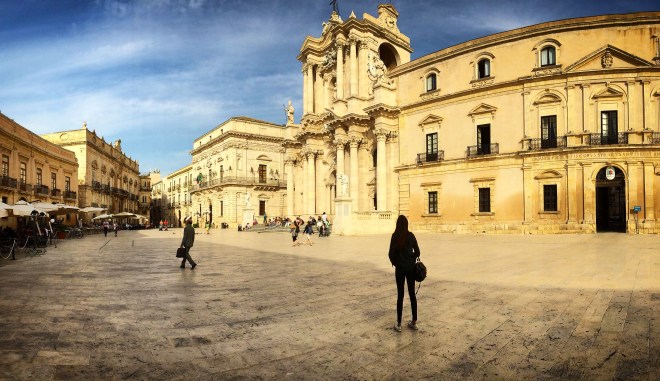
Our trip through the South-East started in Siracuse, briefly the capital of that most eclectic of Empires – the Byzantine Empire. Ortigia, the oldest and most beautiful part of the city, is actually an island that has to be reached by a small bridge. Here we strolled through narrow cafe’-strewn lanes that all seem to lead directly to piazza Duomo, a strangely oblong-shaped and dazzlingly bright piazza flanked by OTT aristocratic palaces and baroque churches. The Cathedral sits in the middle, and is a perfect microcosm of Sicilian history and architecture. With ancient Doric columns, a Norman roof in the nave, at one time a Mosque, and finally, (coming neatly full-circle) Corinthian columns on the facade,  it is a perfect example of the dizzyingly complicated history and culture of Sicily. You wouldn’t know it just to look at it though, the end result of the whole piazza is a stunning and very aesthetically uniform example of high Sicilian Baroque.

As if to reinforce its identity crisis, Siracuse sits prettily by the sea, at the intersection of the Ionic and Mediterranean. We bought a seafood fry at the unassumingly-named but delicious Sicily Fish and Chips and ate by the water.

Things to do in Siracuse:

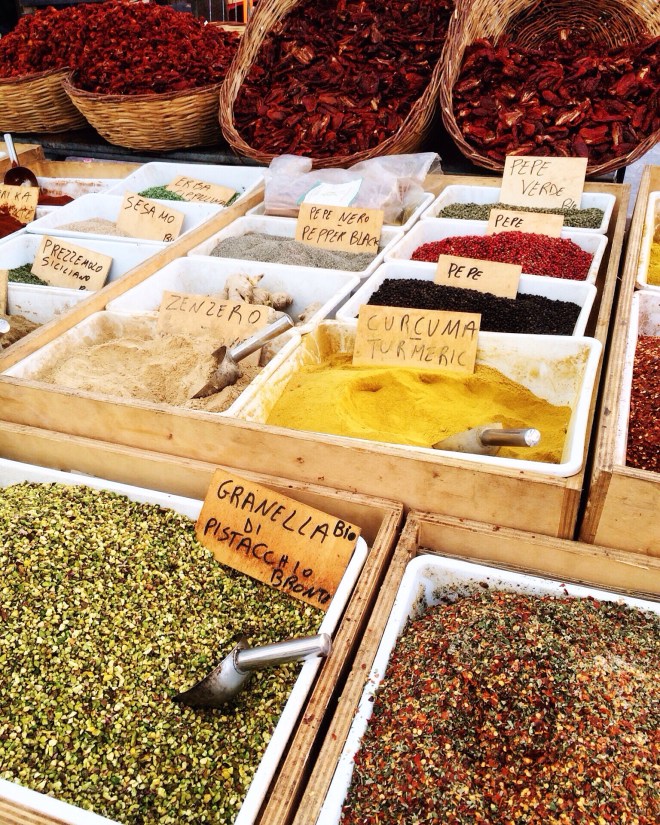
  • Ortigia Food market – Blood-red oranges, dried chilli peppers, glistening black olives and giant, silver swordfish heads; all accompanied by a lot of shouting and gesturing. Every morning except Sunday.
  • Piazza Duomo at Sunset – Watch the entire piazza transition from a bright, pearly white to deep orange.
  • Go to the beach – There are two swimmable spots with small pebbly slips right in Ortigia itself. We went in November so we didn’t really fancy it but the water was a beautifully clear blue-green.

NOTO

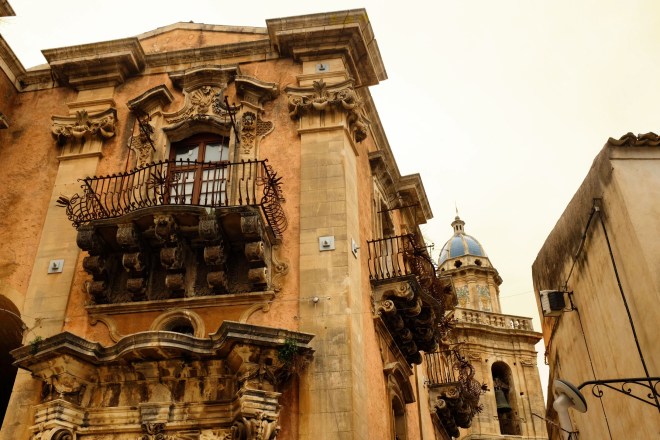
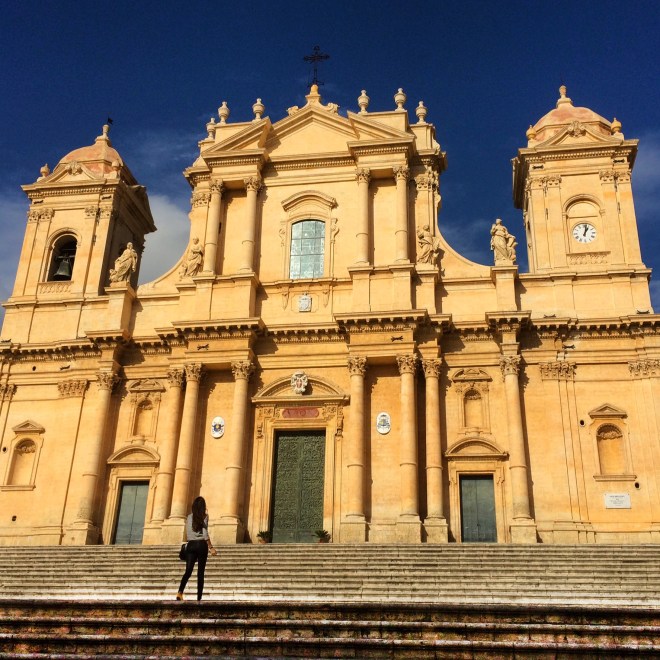
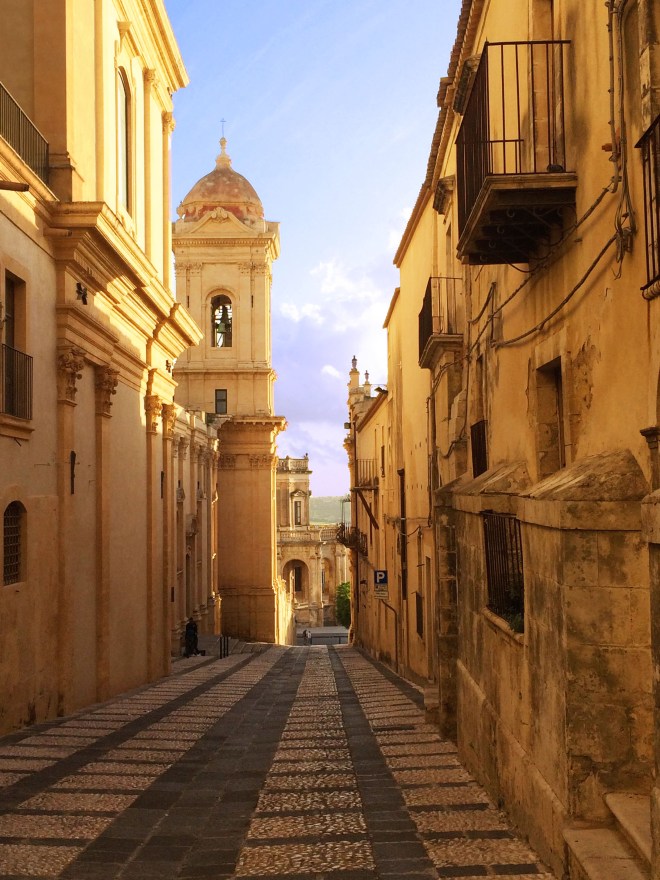
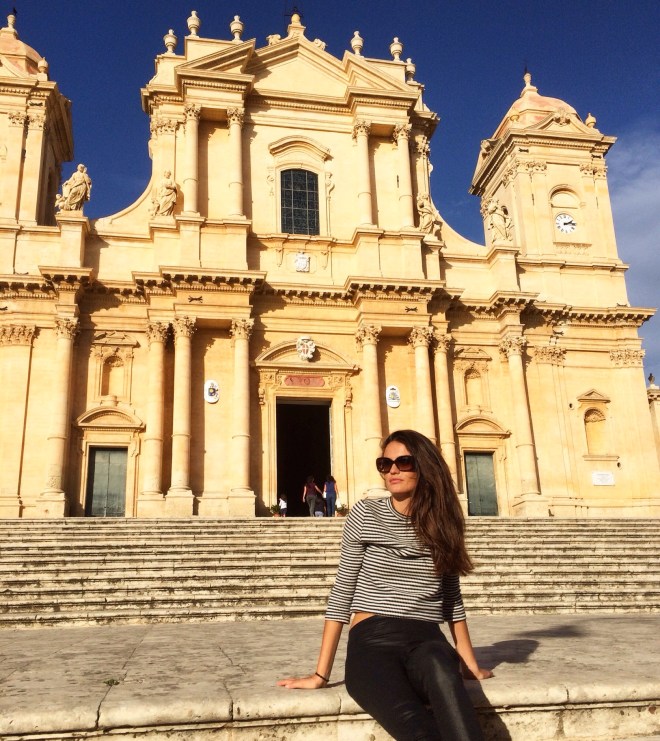
We weren’t meant to go Noto. Our actual destination was Modica, near Ragusa, but our naive assumption that we could make the short 2 hour journey to our intended destination in Sicily on a SUNDAY ended us up in the much nearer Noto. I am so unbelievably glad that I underestimated southern Italian Catholic fervour as Noto ended up being, as it so often happens, my favourite stop on the trip. Once a town of varying architectural cultures and styles, a massive earthquake in 1693 shook the town into a dazzling and unique uniformity of Sicilian baroque. Churches, Piazzas and Palazzos were reconstructed; streets were widened – a practical anticipation of future disaster with beautiful, airy and ironically calming results. Noto is small and quiet, and there isn’t a whole lot to do in the town itself apart from eat almond granitas or explore flamboyant palazzos, but just walking through the streets of Noto, when all the ubiquitous churches are lit up golden-orange at sunset, is an incredible experience.

Things to do in Noto:

  • Visit the Palazzos, especially Nicolaci Palace – possibly the most striking example of typical Baroque style. Elaborate, iron-wrought balconies and mermaids, hippogryphs, and sphinxes decorate the outside, while the interior is a no-less elaborate display of Empire-style chandeliers and frescoed walls and ceilings.
  • Walk the centro storico at sunset
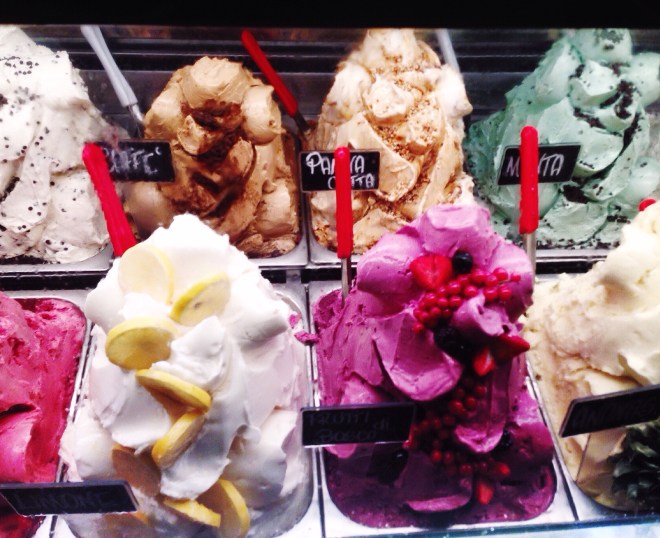
  • Get a granita and brioche at Caffe’ Sicilia – the granita’s are made with fresh, seasonal ingredients like Sicilian blood-orange, but the most traditional is almond flavour.

RAGUSA

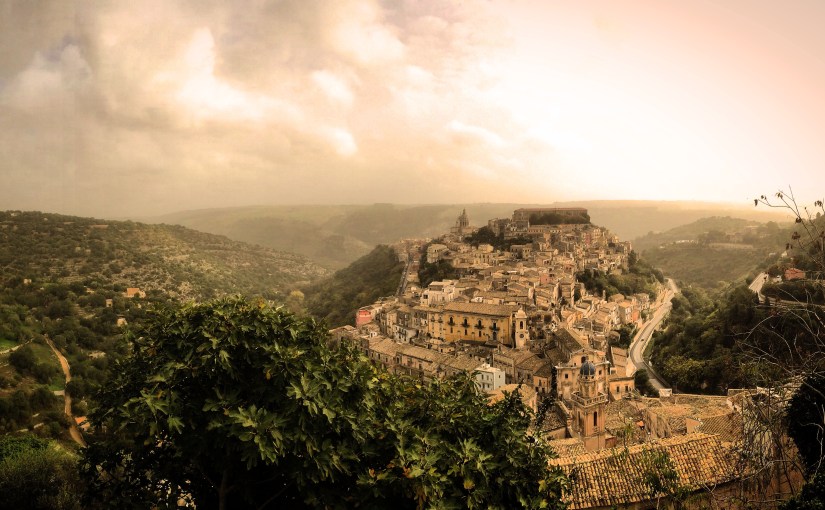
As beautiful as historic Ragusa is, with it’s tiny, private lemon orchards, stunning palm-fringed piazza and tangled alleys leading ever-up to the peak of Duomo S. Giorgio, the city is at its most breathtaking from afar, especially at night. From Ragusa superiore, the historic centre (Ibla) rises magnificently from the surrounding hills like an ambitious nativity scene. When it’s misty, Ibla becomes quite literally a city in the clouds. We had our best meal of our trip (and one of the best meals full stop) by far in Ragusa superiore at Trattoria da Luigi. It’s not what you’d normally expect from a trattoria – tiny, quiet and modern, options included pistachio carbonara and chilli and caper Sicilian pesto, all at pretty ridiculously cheap prices.

Things to do in Ragusa:

  • Relatively unassuming from the outside, this neo-classical palazzo stuns from the moment you walk into the courtyard and on into the beautiful interior with hand-tiled floors and frescoed ceilings. The view of the Cathedral from the balconies is stunning, and it’s all topped off with with a Sicilian aperitif at the end. Book an appointment for a tour through their FB page.
  • Get a wine-flavoured ice cream at Gelati divini, or another unusual flavour like prickly pear or chocolate and chilli.

TAORMINA

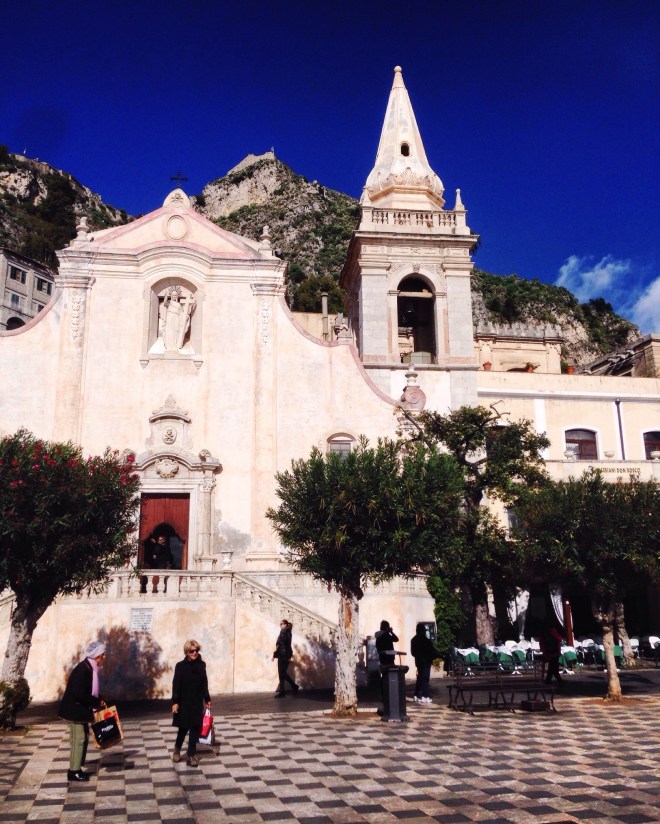
If Ragusa is beautifully situated on a hilltop, Taormina on the North coast gives it some serious competition. Perched strikingly on the side of a cliff, it also has spectacular sea and Mount Etna views to boot. Having not suffered from the serious earthquakes in the south, the architecture is more varied, and there are some amazingly restored medieval buildings. Corvaja palace, from the 10th century, is Arabic with Gothic and Norman additions. It’s unique beauty also means that Taormina is very touristy, so I wouldn’t recommend it if what you’re after is the genuine Sicilian experience, or if you’re simply not in the mood for being ripped off.

If you want to escape the crowds and being 200 metres above sea level isn’t enough, then you can hike (or get a bus) like we did to Castelmola, a tiny medieval town above Taormina with magnificent views of Etna and the Tyrrhenian from its ruined castle. If you’re here visit Bar Turrisi – a cafe’/bar with beautiful views and some interesting decor. By interesting I mean that it is covered by pictures and sculptures of penises..everywhere..over four whole floors. It’s very random, especially for a bar in the middle of nowhere! It’s also apparently the birthplace of red almond wine, which you can of course buy in a penis-shaped bottle as a souvenir.

Things to do in Taormina:

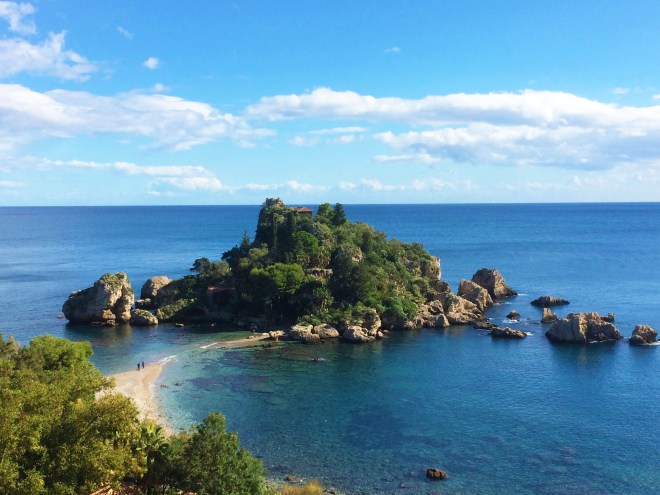
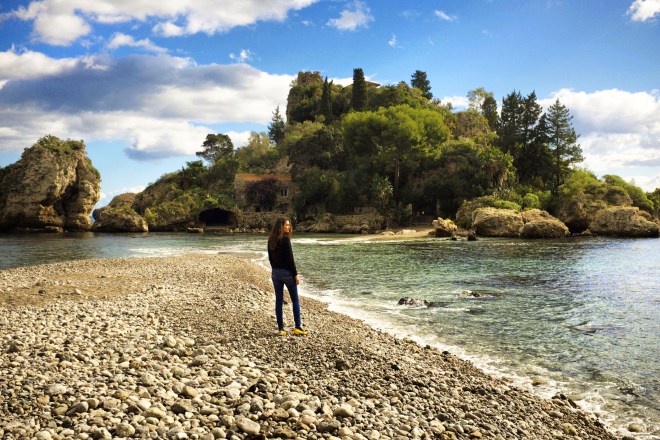
Visit Isola Bella – We first glimpsed it on our train-ride to Siracuse, and thought it was some sort of mirage – too pretty to actually be real. Only a short bus drive from town, Isola Bella is like something out of a fairytale. A tiny, castle-topped island that juts out of the crystal-blue water and is separated from the main beach by a narrow sandbar.

Hike Etna – We’d looked into doing a tour with Viator but sadly didn’t have time. There are plenty of tours to choose from though, especially in the summer months, though I wouldn’t recommend the intense temperatures in July and August!

Hike to Castelmola  – If you want a breather from the crowds this hike offers beautiful scenery of the coast and Mount Etna. It took us about an hour and a half. I’ve heard from some that the views from here are actually more impressive than hiking Etna.


Lipari, Sicily

Sunset in LipariGirl in front of Prickly pearsSunset in LipariRed kitten on a rockGirl in red dress in front of volcanoHome-made pumpkin gnocchi with lemon and sage on blue tableGirl in red dress in LipariTraditional Lipari houseView from a hike in LipariLipariGirl on a hammockLight and Shadow on the patio with chair Girl on the balcony in lipariMarina corta with boatsLipari Cathedral with stepsGirl in front of Italian bakery eating cannoliSunset at Quattropani churchQuattropani sunset with dogView of ocean, cliffs and trees at quattrocchi in Lipari

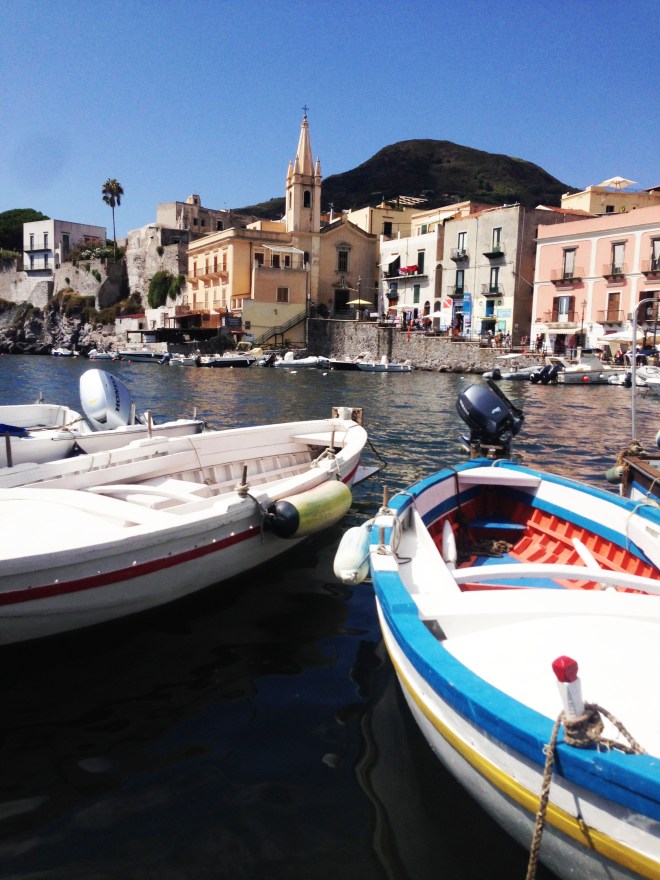
Visiting Lipari at the end of October meant that we saw a very different island to the busy, tourist-touting transport hub that people generally see in the summer. While most days still consisted of brilliant sunshine, calm seas and omnipresent bougainvillaea plants gently swaying in the breeze, others revealed the origin of the islands’ eponymous name-sake Aeolus – God of the winds. Indeed everyday life on the Aeolian islands is dictated by the whims of the wind (not least for the sailors and fishermen).  Scirocco from North Africa would mean hot and humid days and clouds so low they passed beside us, whereas the fierce Ponente from the West, transformed into a wind tunnel as it passes through the Gibraltar Strait, meant battening down the hatches and holing up in bed listening to the gail-force winds and its eery howls, while watching sea-water spray the house from almost 300m below.

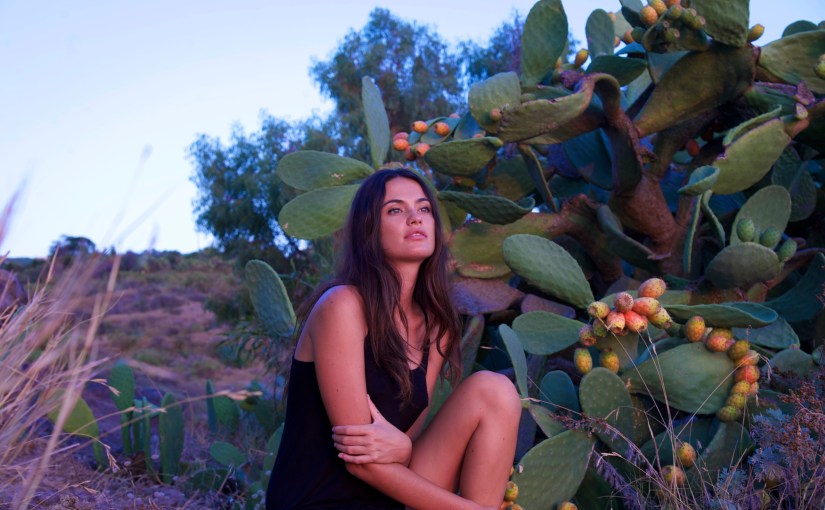
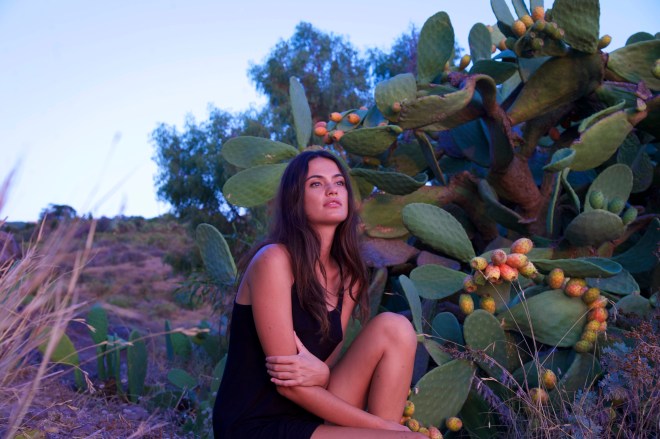
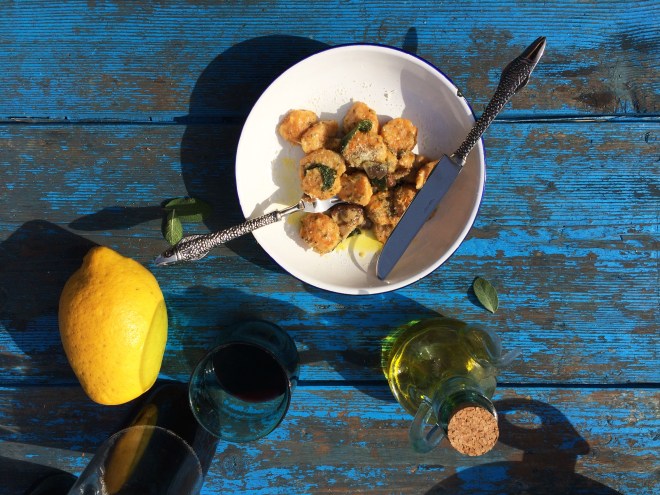
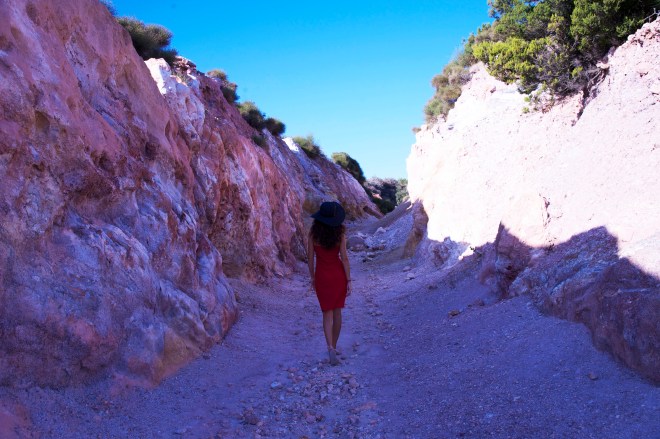
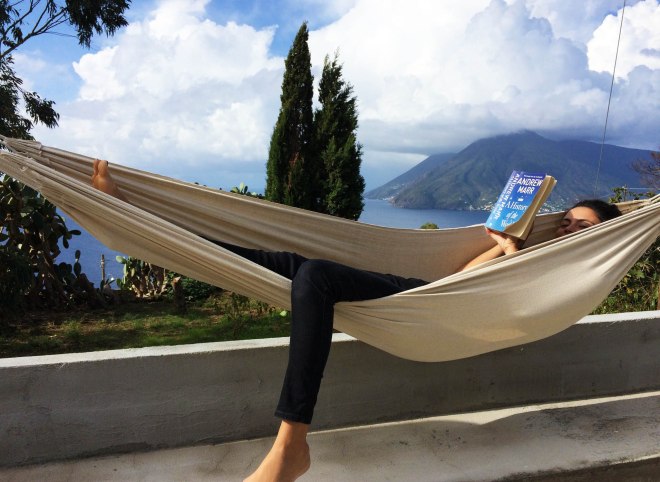
We stayed in Quattropani, the highest spot on the island and the furthest away from the colourful and historical port-town of Lipari. Too high-up to hear the waves, we woke up to the sound of church bells and the industrious humming of ferries instead. We spent the days hiking volcanic trails and visiting churches with spectacular sea-views, hanging out with super-friendly neighbours or just chilling out in the garden overlooking neighbouring island Salina, making prickly pear jam and grilling fresh fish from town with lemons from the garden.

Things to do in Lipari:

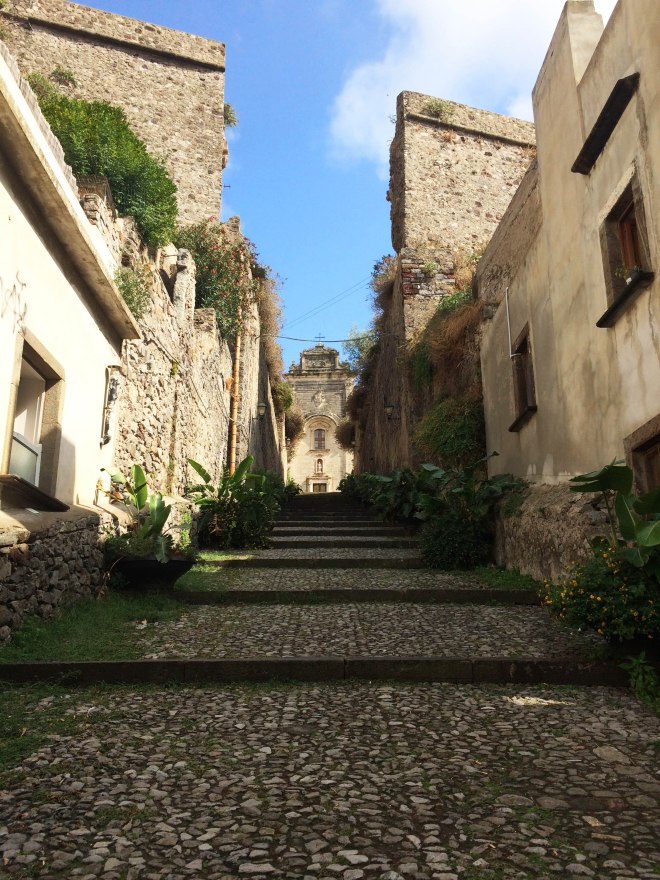
Visit the Acropolis: Most people would expect to see a temple in an ancient Acropolis, but Lipari’s was actually destroyed by Arabs in 838. What remains is a fortified citadel with a beautiful Cathedral and archaeological museum. One of my favourite views in Lipari is of the Citadel from up high (when driving into town from the Pianoconte direction) with the shimmering Tyrrhenian sea in the background.

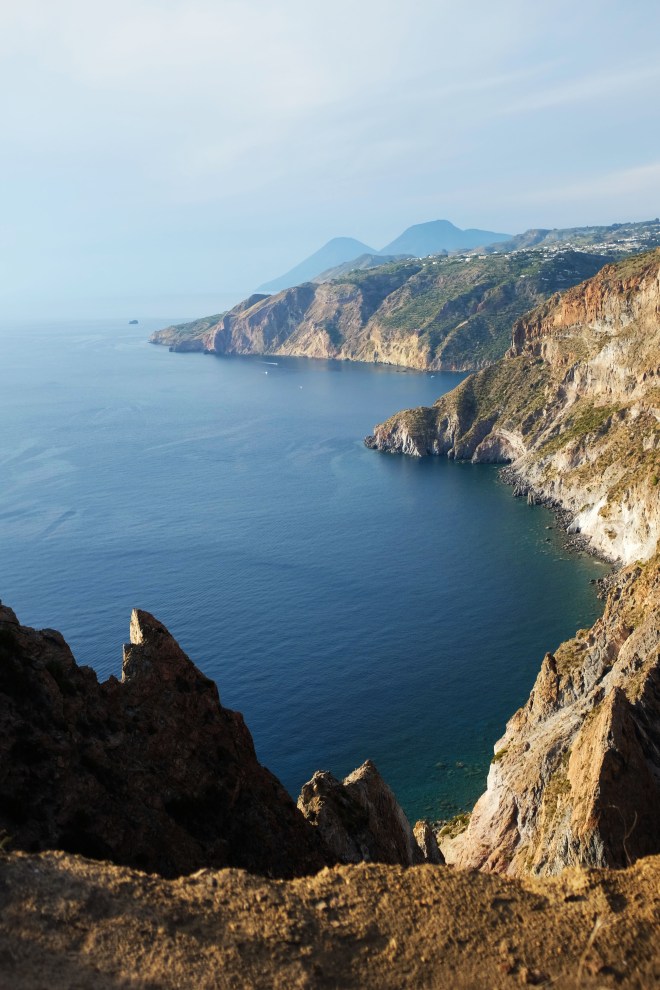
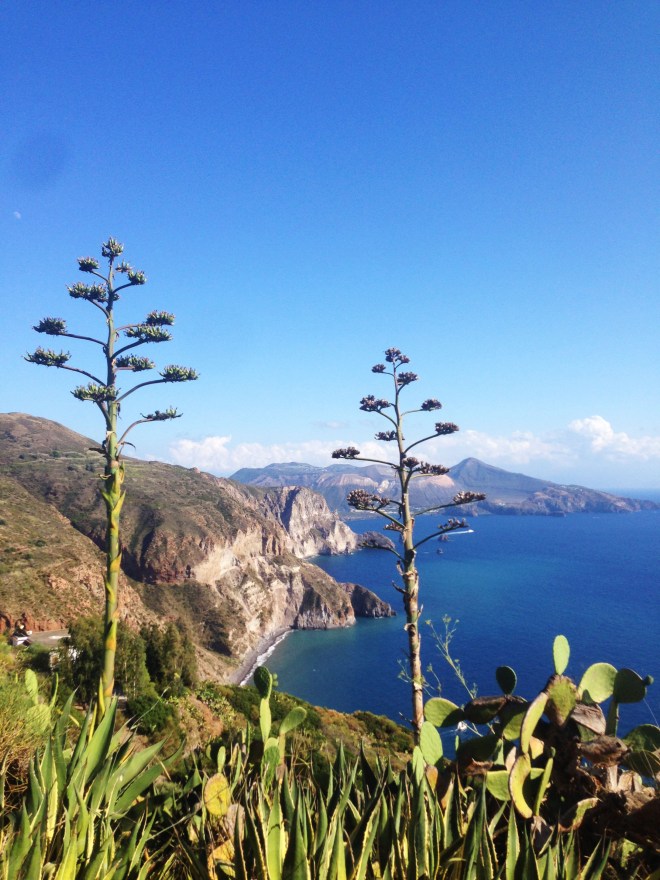
Visit Quattrocchi: One of the best views on island. From here you can see the Faraglioni of Lipari (giant cliffs jutting out of the sea) and views of Vulcano island. If you’re here in the summer try some of Maria-Grazia’s spicy Aeolian Crostini (Capers, sun-dried tomatoes and lots of olive oil on crusty bread.)

Visit Canneto: Lipari’s largest stretch of coast where locals and tourists alike come to the seaside to hang out on the pebbly beach and swim in pristine water. If you’re here go to bar Tano to have

Granita with brioche: A classic Aeolian breakfast (or afternoon snack ). Flavoured shaved ice (the most typical is mulberry) with whipped cream and a side of fresh brioche. It is amazing!

Visit the Observatory: More amazing views – this time of Vulcano and Vulcanello. If you have a hire car this place is also beautiful for star-gazing on a clear night.

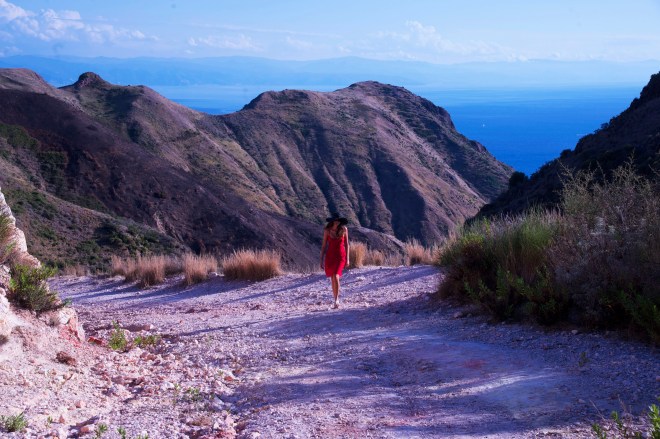
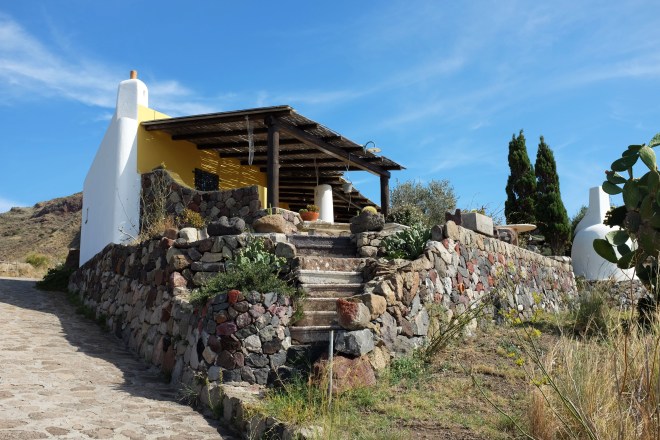
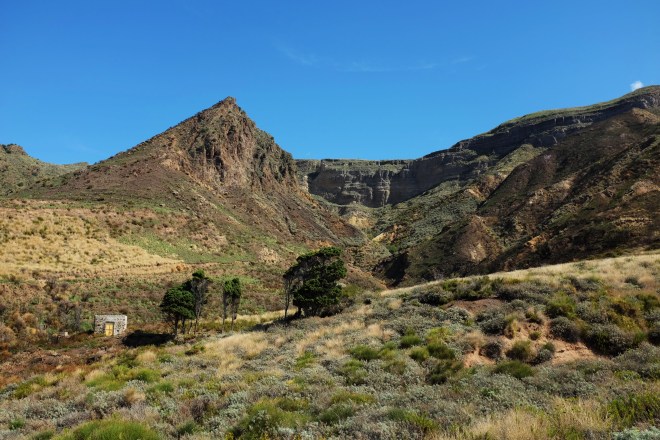
Hike from Quattropani to the Fumaroles or Pianoconte: The trail starts at Quattropani and goes along the coast boasting beautiful views of Salina and the Faraglioni. At about half-way you can either turn into the ‘Fumaroles’ trail which takes you past dramatic Canyons and sulphurous rock up to the fumaroles – volcanic steam chambers; or continue onto Pianoconte past beautiful, remote Aeolian houses and Olive Groves with amazing sea views.

Visit/hike to Acquacalda from Quattropani: A very sleepy town with quaint Aeolian houses that are so close to the sea that the crashing waves pay regular visits. Listen to the echoing sound of the waves in the church.

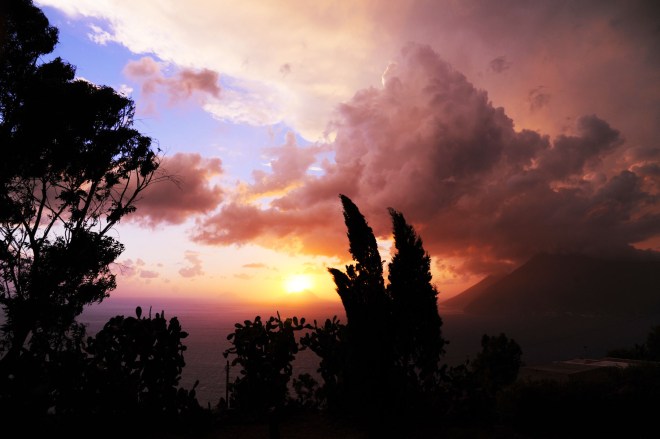
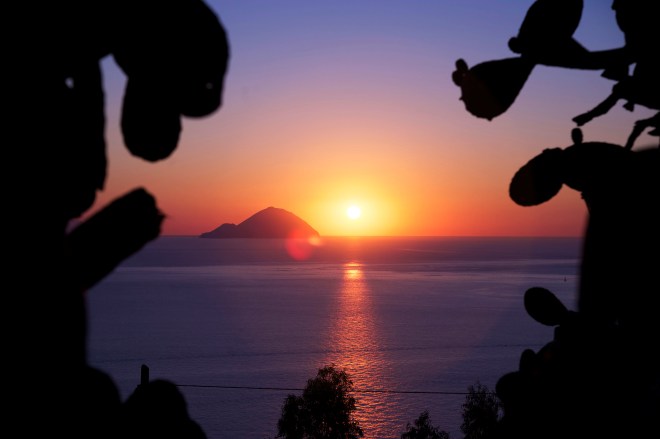
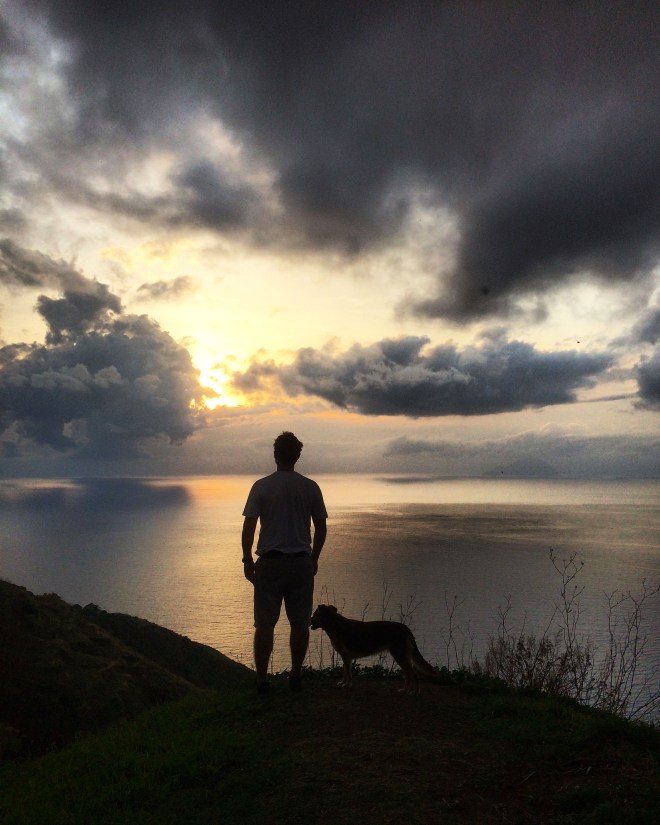
Sunset at Chiesa Vecchia: My favourite. The church is small but the location is more than grand. It’s definitely the most amazing spot for a church I’ve ever come across. 400m above the sea with spectacular views of all the islands from the gardens at the back. Come with an aperitif and sit on the rocks while watching the sun go down.

Chamonix & the dolomites budget road-trip

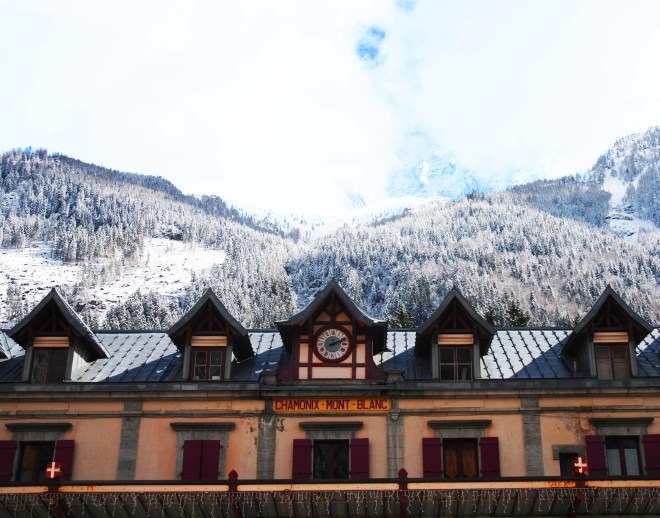
The DolomitesIcicles on a wood cabinGirl in Chamonix snowboardingTraditional restaurant in the DolomitesGirl Husky sledding in ChamonixChamonix StationCervinodol5dol16dol21clockchHuskies in snow

Crashing chalets and not skiing –

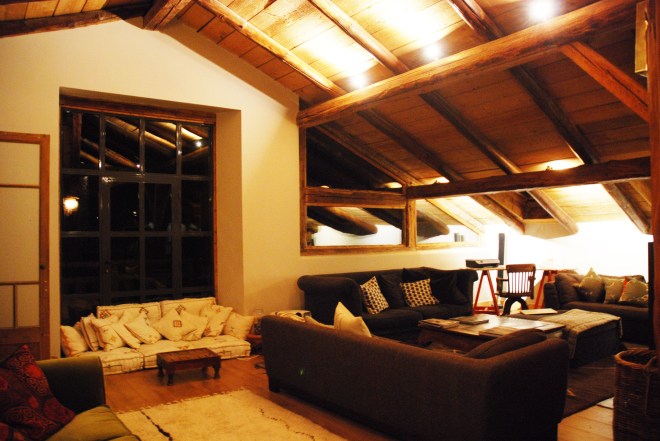
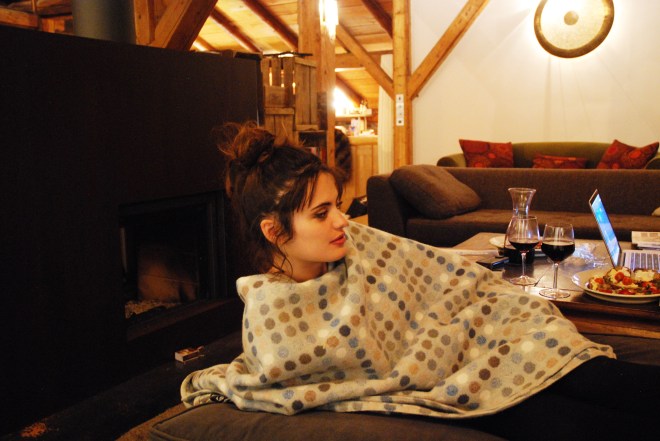
If you’re not there solely for the skiing or snowboarding, Chamonix can, believe it or not, be done on a budget. All you have to do is be bit cheeky about it. Our friend was in Chamonix for work and overheard some people talking about renovating their chalet and asked if they wanted him to overlook the work while they were away. They agreed and he got to stay in their spectacular two-storey chalet with mountain views (and hot tub) for free for a month. Naturally, we jumped at the chance to visit for a few days. It sounds purely like a stroke of good luck, but a lot of chalet owners who don’t rent are busy people who are only too happy to have somebody responsible to look after their holiday homes or pets while they’re away. This is one website that helps you find those people . Otherwise, the Hotel Cretes Blanche and Labrador have some pretty good rates.

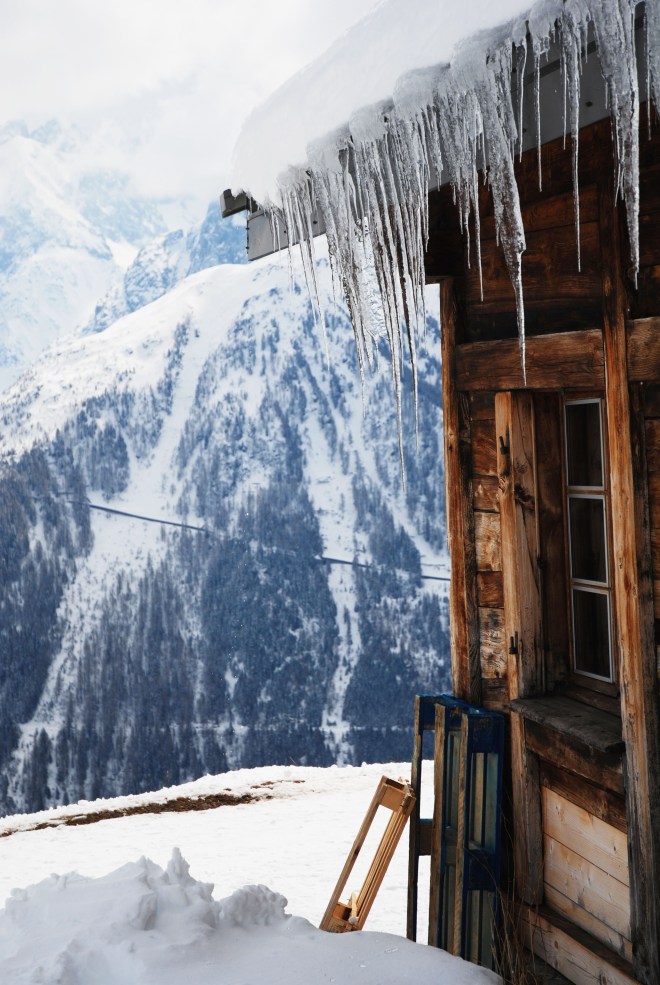
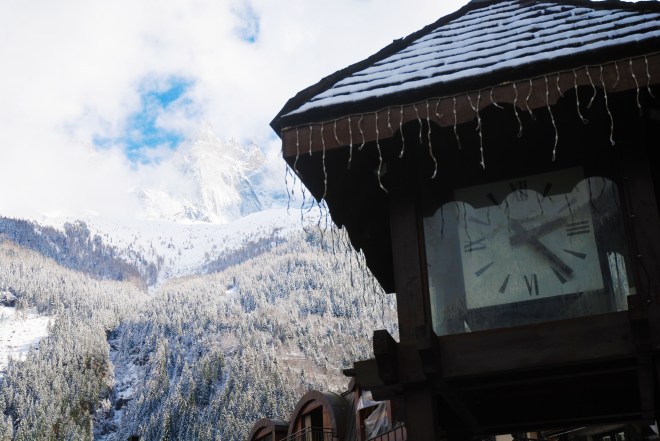
As well as not having a massive budget, me and J are also devoid of any snow-sport skills whatsoever. Chamonix was a bad choice, you say? I’ll admit that trying to learn to snowboard without an instructor was difficult, and we spent more time on our butts than we did standing up, but it was most definitely fun, and we did get very slightly better by the end of the day. The good thing about renting gear and a pass for the day is that even of you have absolutely no idea what you’re doing, you get the breathtaking views of the Mont Blanc massif and Chamonix Valley from the slopes and ski-lifts as pretty compensation. The next day, slightly defeated from the snow-boarding, we rented some snow-shoes (much cheaper than most other snow activities) and did the Les Houches trail past snowy mountains, icicle-adorned wood-huts and pine-tree forests.

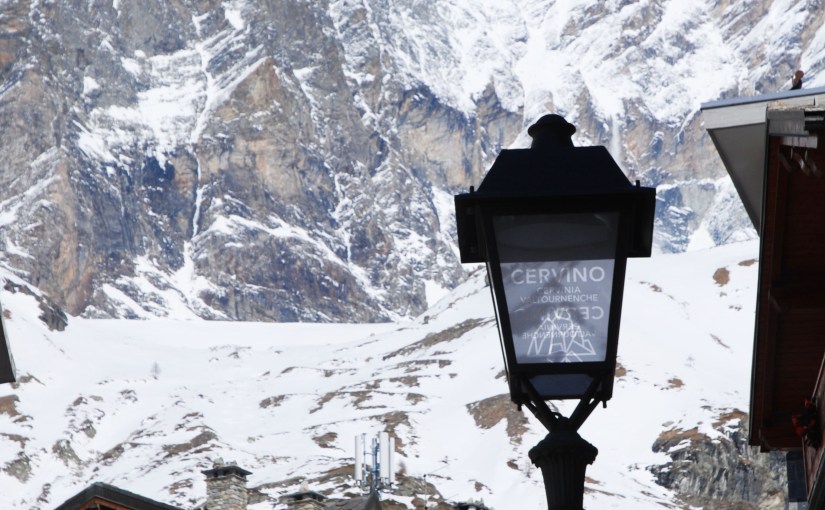
The next day we got on the scenic bus towards Valtournenche/Breuil-Cervinia where we stayed with an Italian relative. Having loved our leisurely walk through the pine-forest in Chamonix, we rented out snow-shoes again and started the walk from Breuil-Cervinia base to Plan Maison. As it happened, this turned out to be anything but leisurely. Since snow-shoes necessarily have a massive surface area and pick up snow as you walk, going up-hill can be incredibly strenuous. Going straight up the steep, fresh ski-slopes of the Matterhorn with the sound of distant avalanches crashing in the background was one of the hardest, most exhilarating experiences of my life. By the time we got to the top we were in t-shirts and singing into the eerily echo-less snow to keep us going. One of the things I remember most clearly were the fresh snow crystals at the summit of our walk reflecting a stunning carpet of tiny rainbows which I determined to (totally unsuccessfully) take hundreds of pictures of.  We finally reached Plan Maison where, whether because of all-consuming hunger or just good cooking, I had one of the best pastas of my whole life. We ended the day by taking the spectacular Cable Car to Plateau Rosa, home of Il Bar del Rifugio guide del Cervino, a cosy  Alpine Bar at 3480m altitude.

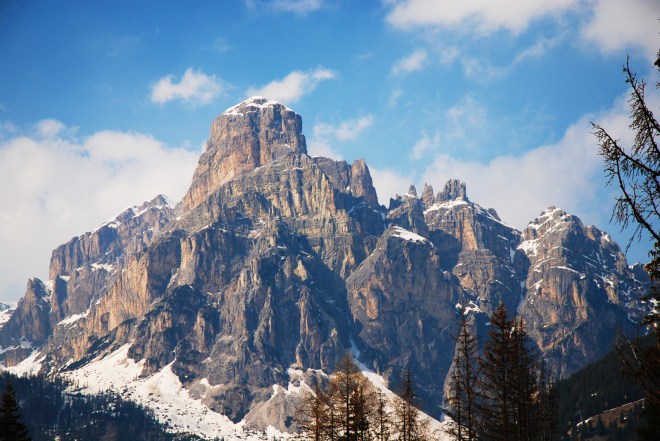
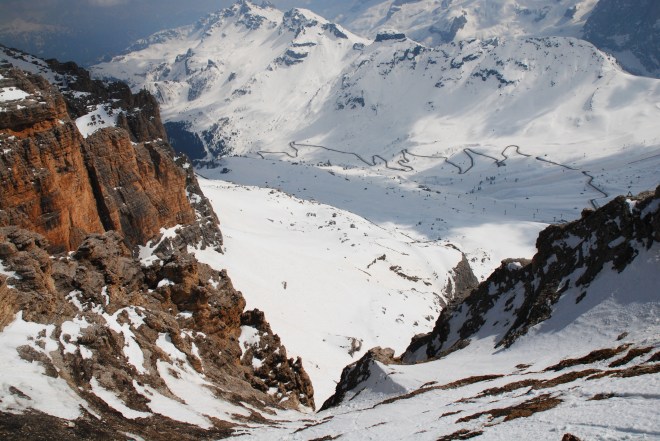
From Valtournenche we took the long train/bus journey to the Dolomites (I’d recommend staying in Milan or Verona for a couple of days if you’re going to do this). We went in the off-season (early April to be exact, the tail-end of Ski season) when everything is cheaper – accommodation, car rental, ski-passes, husky-sledding etc. While many of the hotels and restaurants are closed, and some of the trails are closed off due to snow, you can enjoy the dramatic views of the towering rocky peaks on the trails that are open without the crowds. If you’re travelling as a couple, it can be cosy to visit at this very quiet and snowy time of year.

Things to do in Chamonix/Dolomites other than skiing/snowboarding:

  • Snow shoeing
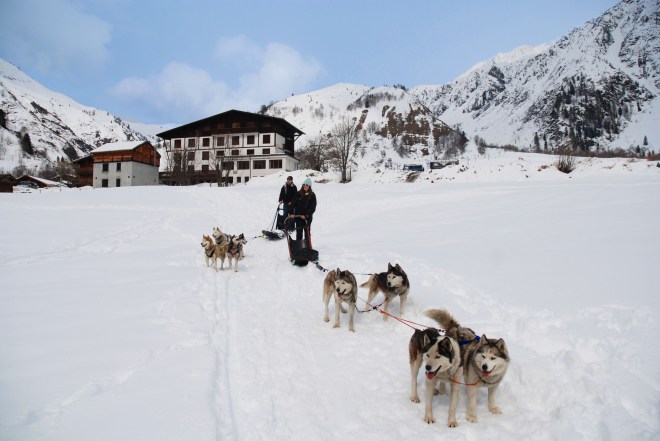
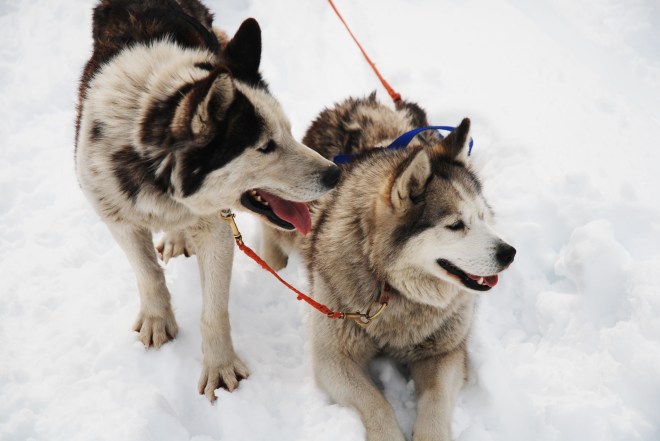
  • Husky Sledding
  • Hike the many trails/take Cable cars in the Dolomites
  • Rent a car and drive the Great Dolomite Road (anywhere from Verona to Cortina d’Ampezzo via the Lakes) There isn’t really one single route which is fine because the scenery in the area is generally stunning.
  • Eat your body weight in Speck (the local cured ham) and Spetzle

Cheap Eats:

  • Chamonix – Poco Loco . Great burgers and cheap beer pitchers (for the area) if you’re in a group.
  • Breuil- Cervinia – La Grotta. OK this one is not exactly cheap but the pizzas are amazing and huge and definitely shareable.
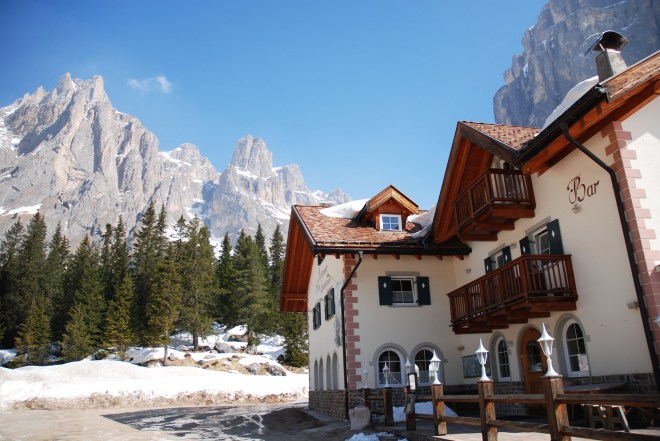
  • Dolomites – Malga Sella Alm. Home-style German food in an Alpine hut with lovely views of the Val Gardena Dolomites.

Jost Van Dyke

Girl under palm tree on sandy spit in BVIView of sandy spit in the ocean with boat in Jost van Dyke in BVIWhite BayView from hike in jost van dykeGirl on bench in jost van dykeCorsair's restaurant and barGirl on swing in jost van dyke in bviCorsair's bar and restaurantboat on sandy spit in jost van dyke in bvigirl hiking in jost van dyke in bviWhite Bay from up very highCorsair's bar and restaurantOls military jeep in jost van dyke in bvigirl in front of Corsair's bar and restaurantLittle Jost Van DykeGertrude's bar on White Bayjvd23Foxy's TabooLittle Jost Van Dyke B-Line Beach BarGirls in white bay on boat in jost van dyke bviParty in white bay in jost van dyke in bvi

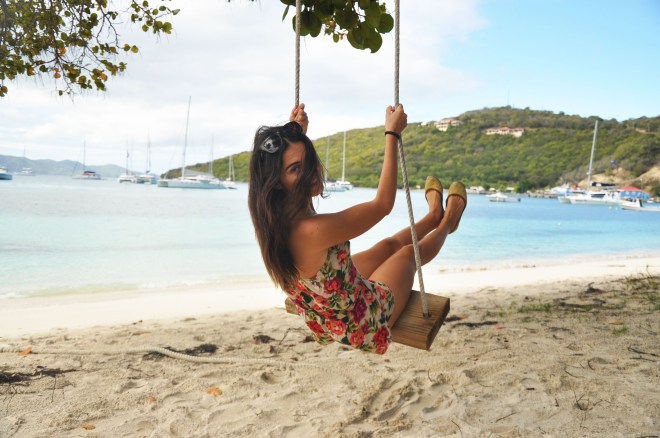
Named after a 17th Century Dutch pirate who settled there, utterly unspoilt and laid-back Jost Van Dyke is the quintessential Caribbean island. Also known as ‘the barefoot island’, Jost’s grand metropolis, Main Street, is a sandy extension of Great Harbour beach, with lazy beach bars and restaurants on one side, and hammocks so low they touch the sand on the other. When there isn’t a Reggae or Calypso band playing at the quasi-mythical Foxy’s bar, the main form of entertainment here is the hook game. A hook, connected to a string, that you must swing so as to attach it to a metal circle on a palm tree. Another past-time is watching the fishermen return to the harbour in their little boats with their less-than-little and indignant lobster spoils. Importantly, you can do both of these from your hammock.

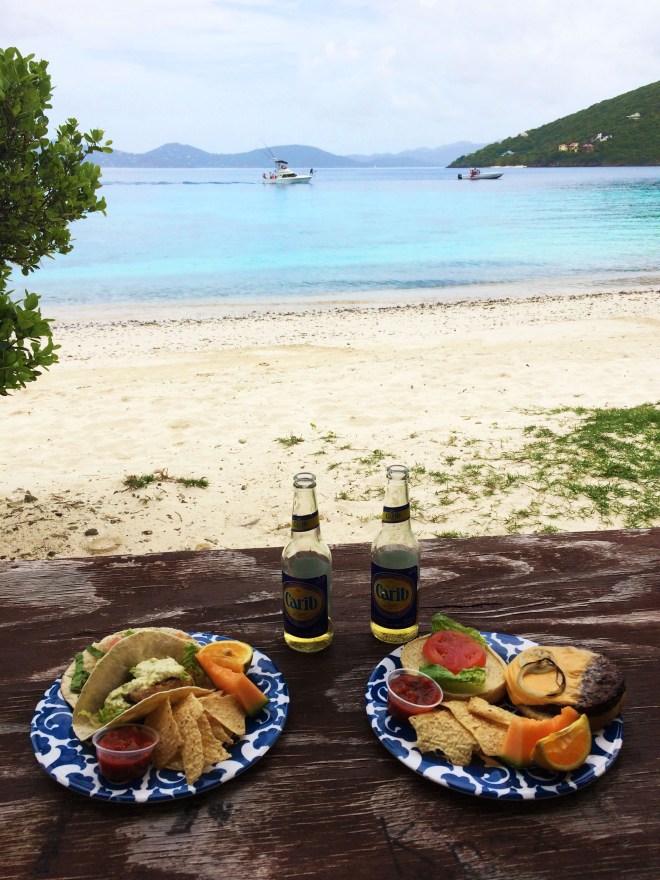
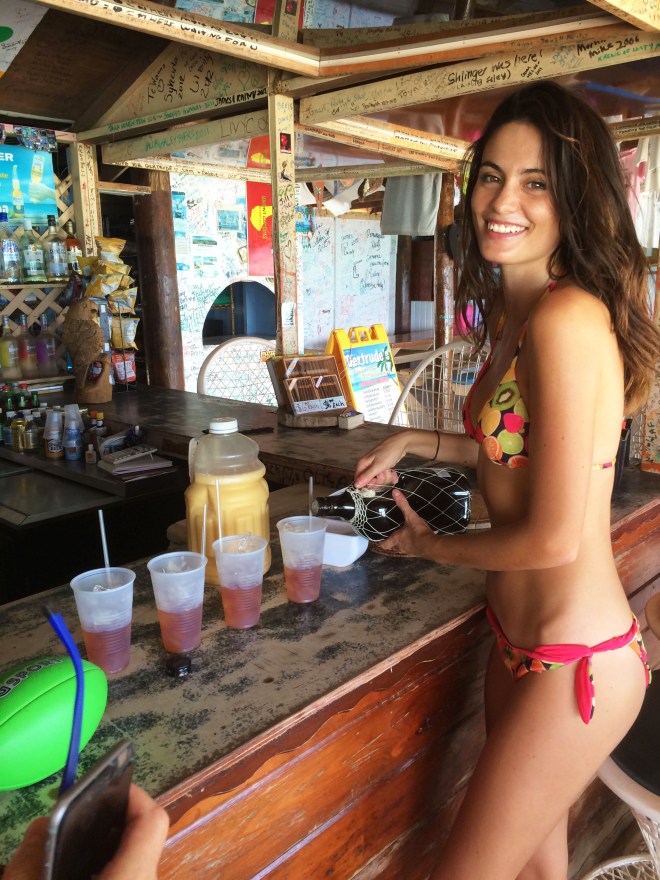
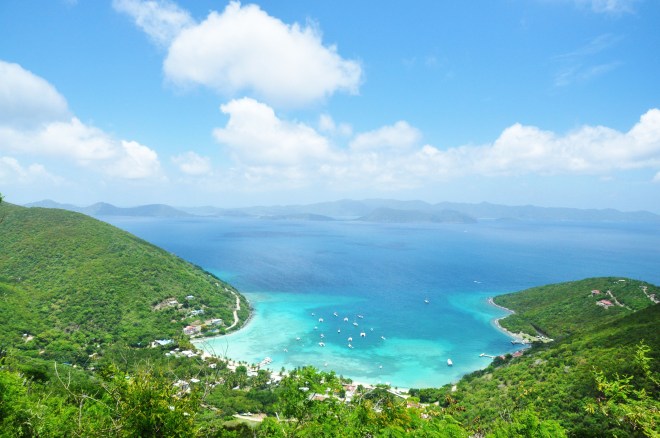
Just over the hill is White Bay, which boasts the kind of desktop-wallpaper beach where you heavily suspect someone has played fast and loose with the saturation button. Only it really does look like that – the water is that brazenly turquoise and the sand as white as the name promises. White Bay is home to the famed Soggy Dollar Bar, itself home of the Painkiller cocktail – dark rum, coconut cream, orange juice and a pinch of nutmeg. Soggy dollar is so called because if you’re arriving by boat, as most people do, the only way to the beach is by wading in and paying with perfectly acceptable soaking wet money. If that wasn’t chilled out enough, a lot of the bars here (including Gertrude’s) are honesty bars, where you go behind the bar, make your own drink with as much booze as you like, and then tell the owners what you’ve had. Needless to say, White Bay is a party beach. The sheer drinkability of a painkiller and contagious festivity of happy yachties on holiday is a heady combination. If you want to enjoy the beach minus the people, Ivan’s stress-free bar is exactly that. Though still part of White Bay, Ivan’s is separated from the main beach by rocks and is much quieter. It’s accessible either by boat or a short hill walk.

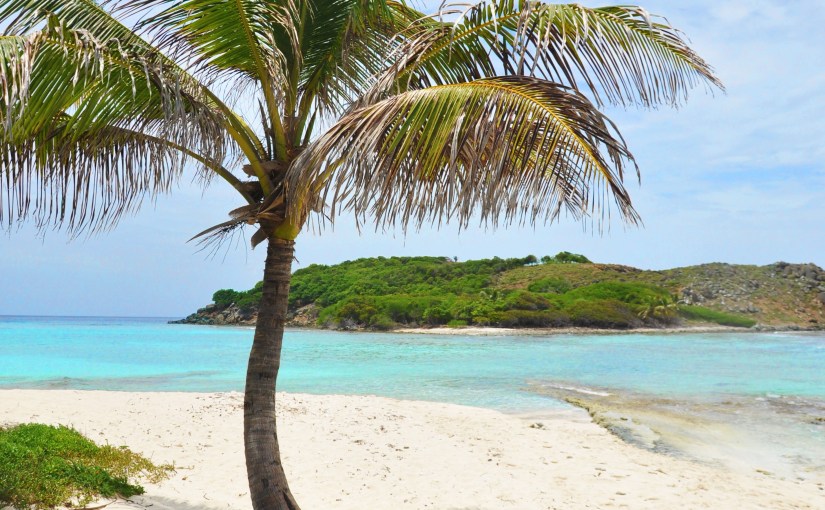
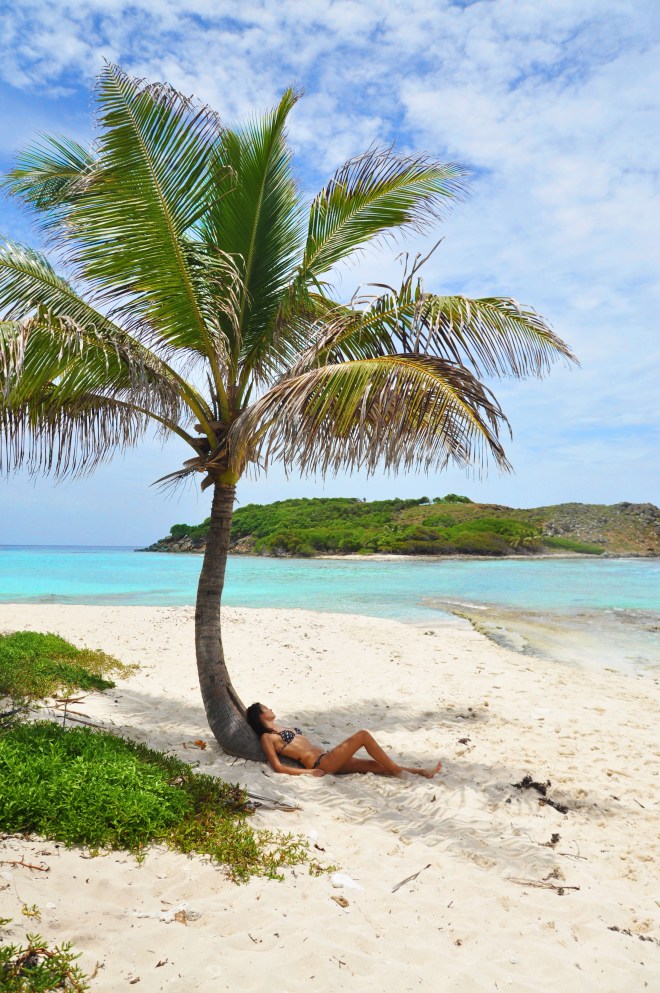
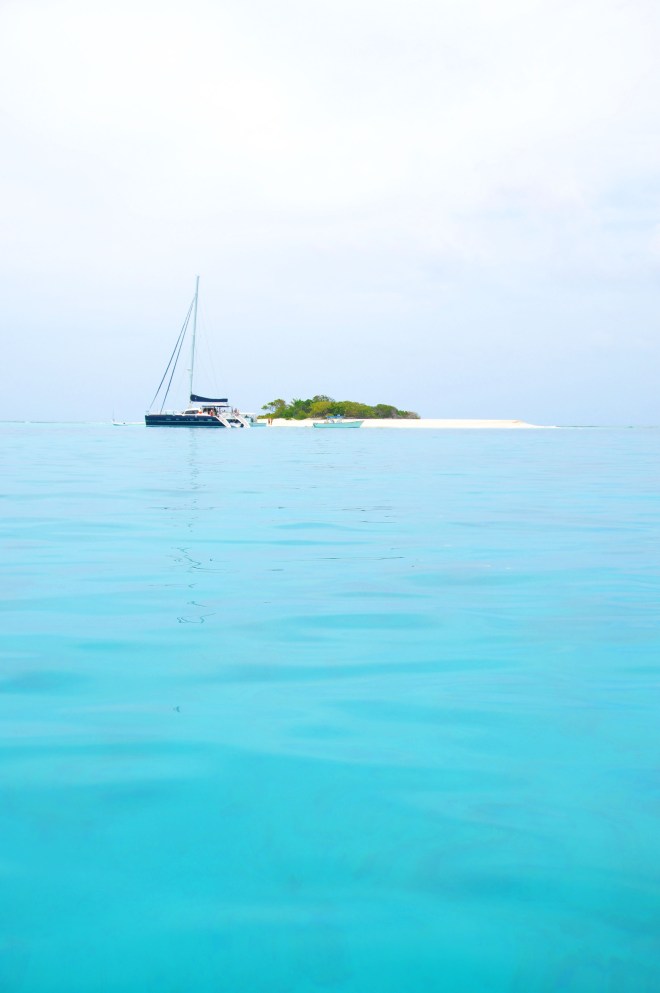
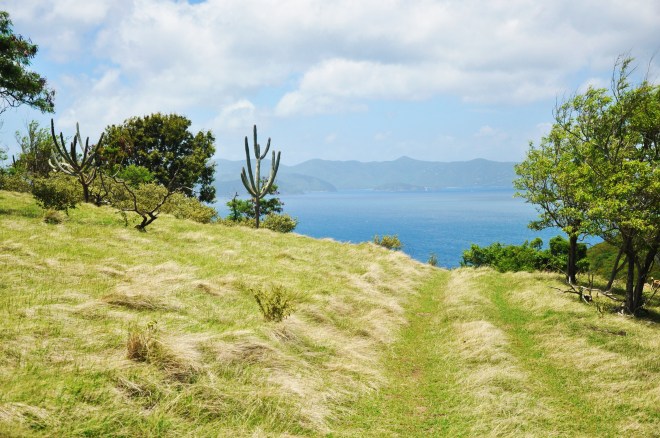
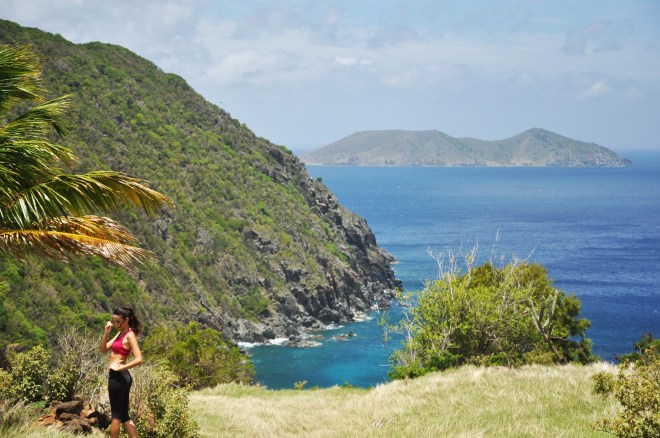
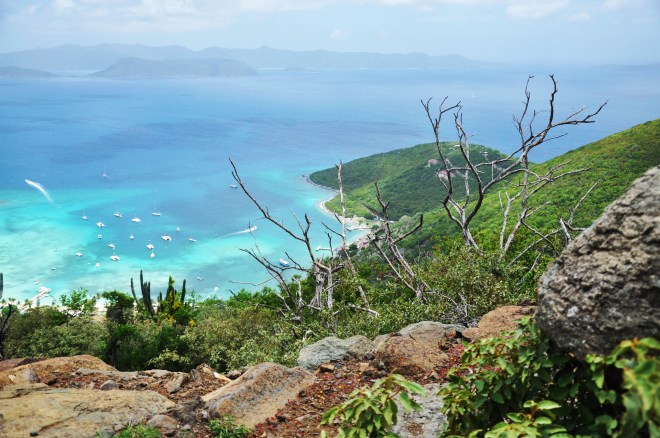
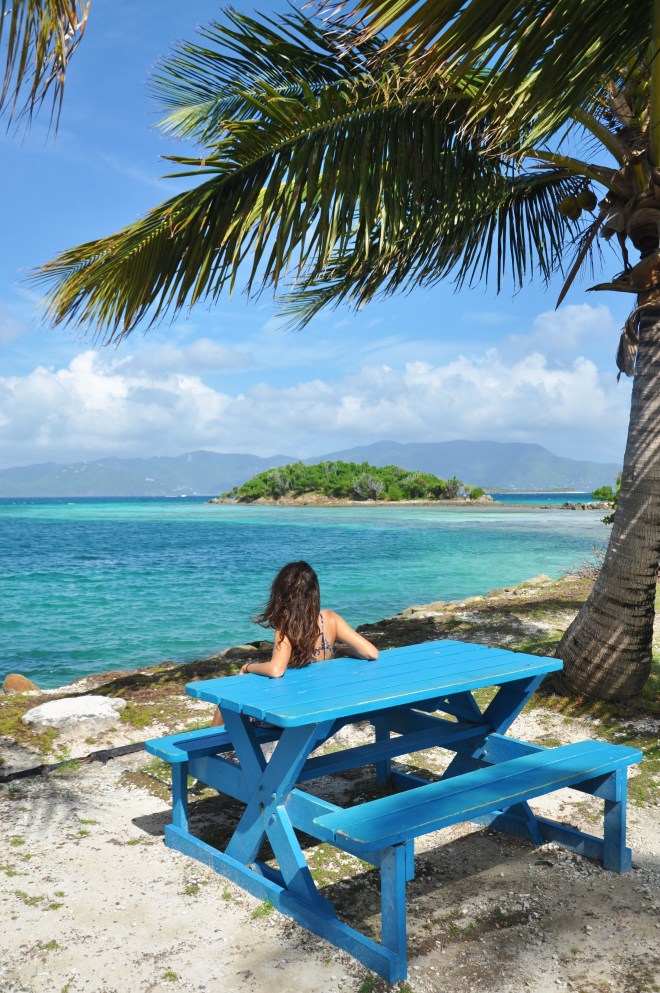
One good way to see Jost is to hike it. We’ve done this a few times and while it’s challenging, the views are absolutely worth the uphill pain. Hiking from Great Harbour to the West side of the island by Foxy’s Taboo brings you to Bubbly Pool – a sea-water pool described as a natural ‘jacuzzi’ because when the swell is up the waves enter from a crevice in the rock to create surfy bubbles. But my favourite way to see the island, a view that I’m sure is shared by many, is to sail it. Having your own boat has the added advantage of being able to go to Sandy Spit – without a doubt my favourite place to visit when we go to Jost. About a five minute sail from Great Harbour lies an almost comically beautiful and stereotypical castaway island – a tiny mound of white sand surrounded by an aquamarine sea and inhabited by a few forlorn palm trees. There is absolutely nothing to do here apart from perhaps bring a bottle of rum and pretend to be shipwrecked. If I knew any I’d sing some sea shanties. From here it’s an even shorter sail to the isolated B-line bar on Little Jost Van Dyke. Moor up on the jetty and order a Passion Confusion and either tan on the beach or play Corn hole. You’d better enjoy either of the two, the bar is the only thing on this roadless paradise island.

Things to do on Jost Van Dyke:

  • Have a Painkiller on White Bay
  • Go to Bubbly Pool
  • Hike the Island – There are a few routes. Go West from Great Harbour for the shorter 2 hour hike past Garner bay and to Bubbly pool. Go East from White Bay (starting behind Perfect Pineapple Guest Houses) for a longer, more uphill, 3 hour hike with spectacular views of Jost all-around.
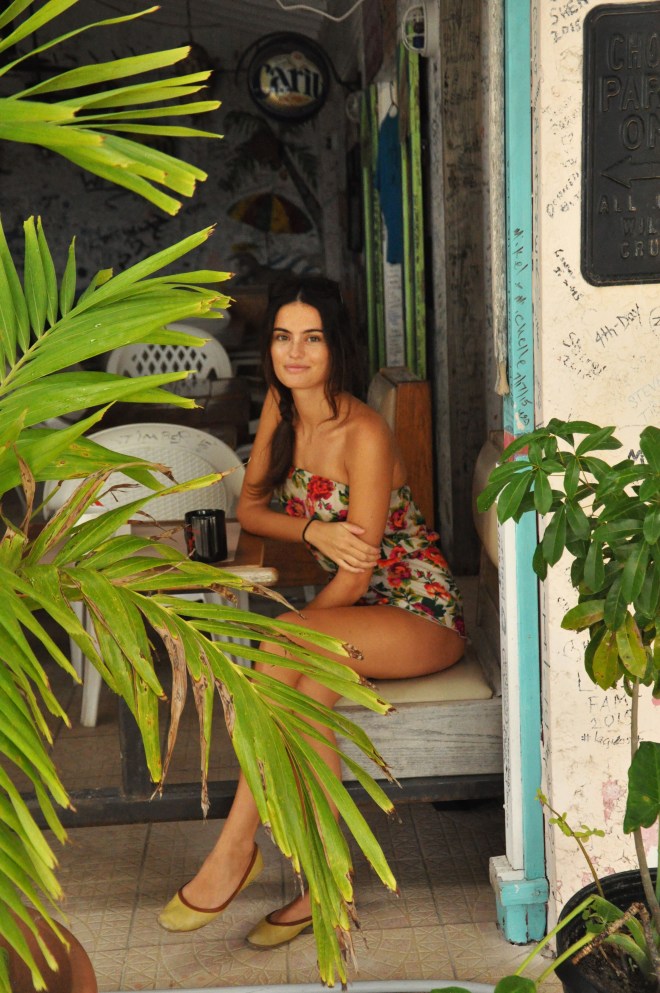
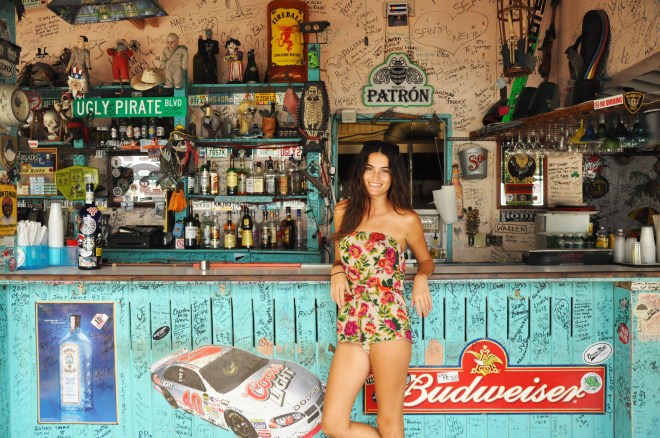
  • Have a drink at Corsair’s – Adorned all over with yachtie memorabilia and graffiti, listen to country and rock at the bar and chat.
  • Eat in Great Harbour – Corsair’s has the fanciest food but is the priciest option.
  • Go to Sandy Spit – If you’re not on a boat then you can rent a dinghy out at Great Harbour from the Scuba shop. Grab a drink/coconut while you prepare to inevitably wait for it to be fixed.